Pope Leo XIV says AI should be 'disarmed', urges ban on lethal autonomous weapons
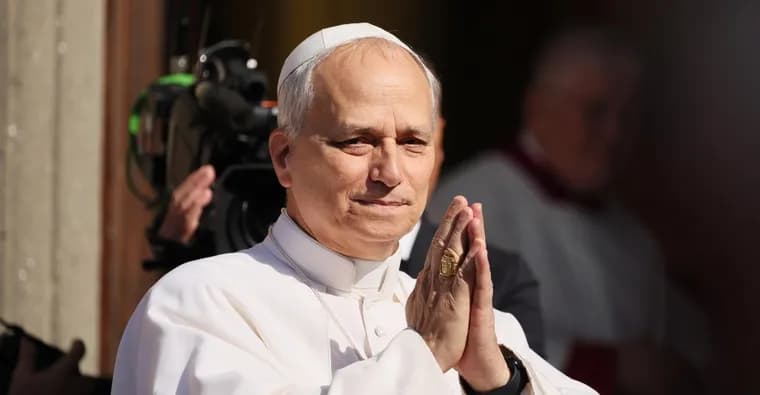
Pope Leo XIV says AI systems should be 'disarmed'. In the same address he says humans 'have the responsibility to guide, change and, when necessary, reject its applications.' The Verge's report says the address was delivered on a Friday.
The most concrete ask is aimed at governments. Pope Leo encourages United Nations member states to 'take concrete steps toward banning lethal autonomous weapons' when they meet in Geneva next month. Pope Francis made a similar call in 2024, saying: 'No machine should ever choose to take the life of a human being.'
The address reflects many of the ideas in Pope Leo's first major papal document, published in May, which highlighted 'safeguarding the human person in the time of artificial intelligence.' In line with that encyclical, he tells participants that 'Machines are tools, not persons,' and warns about the dangers of granting AI systems rights or legal personhood. He also says: 'Decisions affecting human life, freedom, and the use of force must always remain subject to effective, informed, and responsible human oversight.'
He closes by calling on international institutions to safeguard the common good from AI-related risks. That, he says, requires 'shared standards, independent oversight and clear mechanisms of accountability so that decisions concerning the development and use of AI can be examined, challenged when necessary, and accompanied by appropriate remedies for any harm caused.'
The Verge adds that AI has become a popular topic for the pope. It says he suggests he chose his name because he must confront advances in the technology, much as Pope Leo XIII presided over the church at the forefront of the Industrial Revolution.
Key facts
- Pope Leo XIV said in a Friday address that AI systems should be 'disarmed' and that humans have the responsibility to guide, change and, when necessary, reject its applications.
- He urged UN member states to 'take concrete steps toward banning lethal autonomous weapons' at their meeting in Geneva next month.
- In line with his May encyclical, he said 'Machines are tools, not persons,' and warned against granting AI systems rights or legal personhood.
- He said decisions affecting human life, freedom and the use of force must always stay under effective, informed and responsible human oversight.
- He closed by asking international institutions for shared standards, independent oversight and accountability mechanisms, including remedies for harm caused by AI.
Why it matters
The address ties a moral position to a specific diplomatic moment: the UN member states' meeting in Geneva next month, where the pope wants lethal autonomous weapons on the agenda for a ban. It also extends the line set out in his first major papal document in May, and it follows Pope Francis, who called for a ban on autonomous weapons in 2024. The Verge notes that AI has become a popular topic for Leo, who suggests he chose his name because he must confront advances in the technology, as Leo XIII did with the Industrial Revolution.
Who it affects
The direct audience is UN member states, which he asks to act on lethal autonomous weapons. He also addresses international institutions, asking them to protect the common good from AI-related risks. His warning against giving AI systems rights or legal personhood bears on anyone who debates the legal status of AI. His call for human oversight covers any use of AI in decisions about human life, freedom and the use of force.
How to use it
This is a statement of position, not a tool or a rulebook. For readers who follow AI governance, the useful part is the list of concrete asks: a ban on lethal autonomous weapons, human oversight of decisions on life, freedom and force, and shared standards with independent oversight and accountability mechanisms, so that AI decisions can be examined, challenged and remedied. The Geneva meeting next month is the next point to watch.
How solid is it
The account comes from The Verge's report on the address, and it quotes the pope directly on every main point. The address itself is a statement of intent, not a legal act. The report gives no calendar date for the address beyond 'Friday', and it does not name the Geneva meeting or give its dates. It does not explain concretely what 'disarming' AI would mean beyond the weapons ban and the oversight calls.
Risks and caveats
Nothing in the report suggests the address binds anyone: it encourages states to act, and no reactions from UN states, governments or AI companies are reported. The word 'disarmed' is used as a call, and the report does not define it beyond the ban on lethal autonomous weapons and the demand for human oversight. The Verge's reading that Leo chose his name to confront AI is its own paraphrase of what he 'suggests', not a stated reason.
“Machines are tools, not persons”
— Pope Leo XIV