Rainmaker's cloud-seeding drones draw safety questions in Alaska
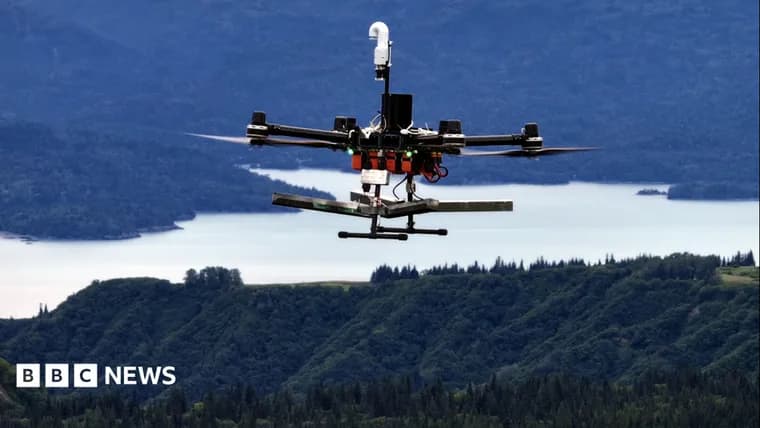
A BBC Technology of Business feature looks at drone-based cloud seeding through one episode. On 23 August, Cooper Freeman, the Alaska director of the Center for Biological Diversity, had no idea the clouds above Homer, Alaska were being filled with a silver compound to cause rainfall. Neither, the BBC says, did thousands of other residents, who later learned that San Francisco start-up Rainmaker had run an experiment there. The company claims it produced 19 million US gallons of water in the sky in three hours.
The approach to weather modification is more than 80 years old. Planes and drones disperse compounds such as silver iodide into clouds to form ice crystals, which grow large enough to fall as rain or snow depending on the temperature below. Seeding speeds up the natural condensation of water vapor in clouds. It needs suitable climates, such as mountainous or cold regions like Alaska, and it has to wait for clouds to form. Rainmaker's founder and CEO Augustus Doricko says that without clouds, "we can't do anything." The company's drones carry silver iodide flares; when lit, the burning atomizes the water particles to a size that can stay suspended in the freezing cloud for hours, eventually turning into crystals and later rain. Rainmaker operates in states such as Idaho, Utah and Colorado, and in parts of the Middle East such as Jordan. Doricko says residents of Jordan often have water from their utility for only hours per week.
Freeman objects on two grounds. Residents were not widely alerted, and he is sceptical about what was shot into the clouds and how safe it was for people and habitat. He says it does not appear there was any downstream monitoring to verify that the silver iodide did not affect the environment. He also argues that a company coming in to seed clouds will not solve the area's water problems and feels like a distraction from water conservation. Doricko answers that Rainmaker releases silver at 20 grams per flight, spread across thousands of square kilometres, so the resulting increase in concentration on the ground is in the parts per quadrillion, far below the threshold the FDA sets as allowable.
The BBC puts the scale in perspective: cloud seeding does not create rainstorms, and Rainmaker's 19 million gallons equates to around 0.01 inch of rain across 100 square miles. The wider backdrop is water stress. UN Secretary-General António Guterres said in July that the world is using freshwater faster than it can be replenished, and reports note the past five years were the driest period for global rivers in more than three decades. More than 50 countries are developing weather-modification programmes, and a surge of start-ups are building systems to create rain, though they still face hard questions on safety and efficacy.
On efficacy, Jon Meyer, an assistant state climatologist with the Utah Climate Center, says that with the right conditions seeding squeezes out about an extra five to 10% of precipitation. A landmark 2017 study found silver iodide worked as expected, and was one of the first reports to observe seeding in action using radar and precipitation gauges. Meyer is encouraged by companies like Rainmaker bringing innovation to an old industry, saying drones offer a more targeted approach to clouds that, he hopes, will be responsive. He expects more demand for such services as regions face water shortages.
The history: seeding began in 1946, when General Electric Research Laboratory researchers used dry ice. A year later silver iodide proved more effective, since dry ice quickly turns into useless gas. The agent itself may also change. Recast Systems of San Francisco is experimenting with a protein made from amino acids found in soil. It is still being tested at Texas A&M University. CEO Olivia Li says it is safe, biodegradable and nucleates ice at a higher efficiency than silver iodide. Recast currently uses silver iodide to seed clouds in several US states.
Key facts
- Rainmaker, a San Francisco start-up, ran a cloud-seeding experiment near Homer, Alaska on 23 August and claims it produced 19 million US gallons of water in the sky in three hours.
- The BBC says that amount equates to around 0.01 inch of rain across 100 square miles, since seeding does not create rainstorms.
- Cooper Freeman of the Center for Biological Diversity says residents were not widely alerted and that there appears to have been no downstream monitoring of the silver iodide; Rainmaker CEO Augustus Doricko says the ground concentration is in parts per quadrillion, below the FDA threshold.
- Jon Meyer of the Utah Climate Center says seeding under the right conditions yields about an extra five to 10% of precipitation.
- Recast Systems is testing a soil-derived protein seeding agent at Texas A&M University as an alternative to silver iodide.
Why it matters
Water security is a growing concern: the BBC cites the UN Secretary-General saying the world is using freshwater faster than it can be replenished, and reports that the past five years were the driest for global rivers in more than three decades. More than 50 countries are developing weather-modification programmes, and start-ups are adding drones to a technique that began in 1946. Drones are pitched as a more targeted way to reach clouds. The piece also sets the hype against the arithmetic: 19 million gallons is about 0.01 inch of rain over 100 square miles.
Who it affects
Residents of Homer, Alaska, who in the BBC's account were not widely alerted to the experiment, and the habitat around them. Also regions short of water that may look to seeding as a supplement; Rainmaker already operates in Idaho, Utah, Colorado and parts of the Middle East such as Jordan. Competitors such as Recast Systems, which currently seeds clouds with silver iodide in several US states, are affected as the choice of seeding agent shifts.
How to use it
This is not a product readers can try. The source describes how the method works: drones fly into existing clouds and light silver iodide flares, which seeds ice crystals that can later fall as rain or snow. Seeding needs clouds already present and suits mountainous or cold regions. The source gives no drone model, fleet size or price for Rainmaker's service. Recast's protein agent is still in testing, with no timescale given for deployment.
How solid is it
The headline figure, 19 million US gallons in three hours, is Rainmaker's own claim, and the source offers no independent verification of it. It also does not say the Homer experiment produced rain on the ground. The safety statements are also one-sided: Doricko's parts-per-quadrillion figure is his own, while Freeman only says that no downstream monitoring appears to have occurred. Meyer's 5 to 10% estimate comes from an academic climatologist, and the 2017 study supports that silver iodide works as expected. Li's efficiency claim for the protein agent is her own statement, with no test results given.
Risks and caveats
Freeman raises environmental and consent concerns: no apparent downstream monitoring of silver iodide, and residents not widely notified. He calls the approach a distraction from the urgent issues of water conservation. Technical limits are real: seeding cannot create storms, depends on clouds forming, and needs suitable climates. Even in favourable conditions the gain is modest, and the BBC notes the sector still faces thorny questions on safety and efficacy. The source does not name any regulator or permit for the Homer experiment.
“Having a company come in to do this seeding isn't going to solve our water woes, and it feels like a distraction from solving the urgent issues related to water conservation.”
— Cooper Freeman, Alaska director of the Center for Biological Diversity