Ringg raises $10M from Peak XV in Series A extension
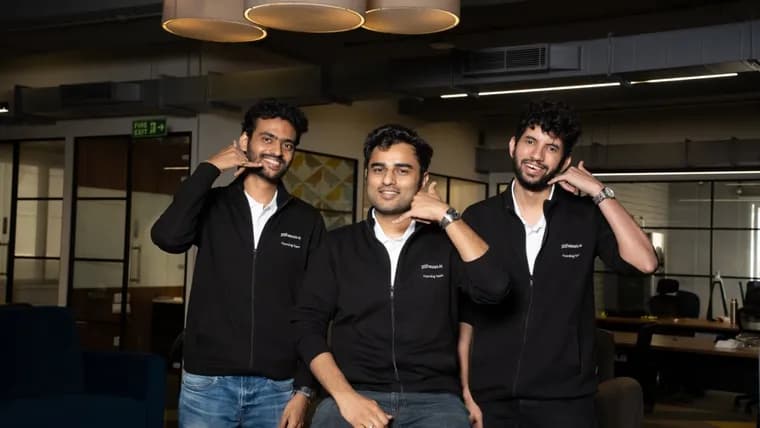
Ringg, an Indian voice AI startup that already processes 20 million call attempts a month, has raised $10 million from Peak XV Partners as an extension of its Series A. The startup had previously raised $5.5 million in a Series A round earlier this year, so the round now totals $15.5 million. The company is betting on a large market: more than 76% of consumers in India prefer talking to businesses over a phone call, according to a recent study from Truecaller.
Ringg did not start out building voice agents. It launched as a text to speech startup called DesiVocal, but training its own speech models proved too expensive, so the founders moved up the stack to build voice AI agents for enterprises instead. Indian fintech Cred became its first customer, and Ringg has since signed Indian companies including Flipkart, Practo, Groww and Policybazaar.
Co-founder Siddharth Tripathi told TechCrunch that Ringg's early work, high volume tasks like outbound calling, lead qualification and loan collection, turned out not to be sticky, since customers could always be won on price alone. So the company shifted toward more complex workflows: appointment booking for healthcare clinics, abandoned cart recovery for e-commerce sites, and onboarding and KYC (know your customer) checks for fintech apps. Tripathi said Ringg's voice agent now runs across 1,200 clinics for the healthcare app Practo, helping patients book visits and follow up after appointments.
Voice calls still make up over 70% of Ringg's business, but the startup has begun branching into other channels, including chat and WhatsApp, and for clients like Shell it is automating browser based support requests. Tripathi described the goal as positioning Ringg as a platform for agents that get outcomes done, rather than as a voice agent vendor.
Most of Ringg's customers are based in India, with a handful in the Middle East and the U.S. Rather than selling directly to American companies, the startup wants to partner with global capability centers, the offshore hubs multinationals increasingly use for back office and support work, to sell automation capacity alongside human staff. Tripathi said Ringg builds its own speech recognition and generation models and would eventually like to own the full voice stack, including infrastructure and deployment, but that remains too costly for now. The product currently works as an orchestration layer, routing tasks to different underlying models depending on the use case.
Rishen Kapoor, a principal at Peak XV, said the firm backed Ringg because its roots as a research lab building its own models give it the technical depth to handle complex, higher value tasks such as merchant onboarding and tiered (L1 and L2) support end to end, with quality and consistency.
Voice AI in India is crowded. Model makers including Deepgram, ElevenLabs, Cartesia, and local players Sarvam and Smallest.ai are competing for position, while orchestration focused startups Bolna and Blue Machines chase the same layer as Ringg, and sector focused players like Gnani and Arrowhead concentrate on finance. The article frames that layered stack, model makers, orchestrators and application layer players all trying to lock in enterprise workflows, as itself the story, with money and defensibility increasingly sitting with whoever owns the customer relationship and the outcome.
Ringg currently has 40 employees, more than 15 of them hired in the last three months. It is hiring for forward deployed engineer roles that combine technical skills with product management, along with researchers focused on lowering the cost of running its models.
Key facts
- Ringg raised $10 million from Peak XV Partners as an extension of its Series A, bringing the round's total to $15.5 million after an earlier $5.5 million raise this year.
- The startup processes 20 million call attempts a month and is moving from simple, price sensitive tasks like outbound calling toward complex workflows: healthcare appointment booking, e-commerce cart recovery and fintech KYC checks.
- Ringg's voice agent runs across 1,200 clinics for healthcare app Practo, and its customer list includes Cred (its first client), Flipkart, Groww, Policybazaar and Shell.
- Voice calls still account for over 70% of Ringg's business, but the company is expanding into chat, WhatsApp and browser based support automation.
- Ringg has 40 employees, more than 15 hired in the last three months, and is hiring forward deployed engineers and researchers as it competes in a crowded Indian voice AI field against Deepgram, ElevenLabs, Cartesia, Sarvam, Smallest.ai, Bolna, Blue Machines, Gnani and Arrowhead.
Why it matters
The raise shows investors backing not just voice AI models but the orchestration layer that turns them into enterprise workflows. Ringg's pivot from cheap, high volume calling tasks to complex, sticky workflows like KYC and appointment booking reflects a broader bet in the sector: undifferentiated voice automation is a price war, while owning a full business outcome is where the defensibility and the money sit, as Peak XV's Rishen Kapoor and the article both frame it.
Who it affects
Enterprises in India, and to a lesser extent the Middle East and U.S., that use call centers or manual support staff, particularly in healthcare (via Practo), fintech (Cred, Policybazaar), e-commerce (Flipkart) and retail-adjacent services (Shell). It also affects global capability centers, the offshore hubs multinationals use for back office work, which Ringg is targeting as partners rather than pursuing U.S. clients directly. Competing voice AI vendors in India, including Deepgram, ElevenLabs, Cartesia, Sarvam, Smallest.ai, Bolna, Blue Machines, Gnani and Arrowhead, face a rival with fresh capital and enterprise traction.
How to use it
Businesses considering voice automation can look at Ringg's current workflow set as a guide to what is already deployed at scale: appointment booking and follow-up for clinics, abandoned cart recovery for online retail, and KYC or onboarding checks for financial apps, alongside multichannel support across voice, chat and WhatsApp. The source gives no pricing or contract terms, so cost cannot be estimated from this article. Companies weighing build versus buy can also note that Ringg itself found training its own speech models too costly to run standalone, which is why it now operates as an orchestration layer over multiple underlying models rather than owning the full stack.
How solid is it
The claims come from Ringg and Peak XV themselves, speaking directly to TechCrunch, plus one third-party data point (the 76% figure) attributed to a Truecaller study rather than independently verified in the article. Figures like call volume, clinic count, employee headcount and funding amounts are stated as facts by the company rather than audited externally, which is typical for funding announcements but means they should be read as the company's own figures.
Risks and caveats
No valuation is disclosed for Ringg either before or after this round, and no equity stake for Peak XV is given, so the deal's terms beyond the dollar amount are unknown. The market is explicitly described as crowded, with model makers, orchestrators and vertical specialists all competing for the same enterprise workflows, and Ringg's own founder says the simpler end of the business risks becoming a price game. The company's ambition to eventually own the full voice stack, including infrastructure and deployment, is stated as a goal without a timeline, and is currently constrained by cost.
“At the start, we were doing high-volume, low-complexity use cases like outbound calling, lead qualification, loan collection, and more. We quickly realized these are not sticky use cases, and so it's always going to be a price game.”
— Siddharth Tripathi, co-founder of Ringg