RustDesk adds unattended remote access on Wayland
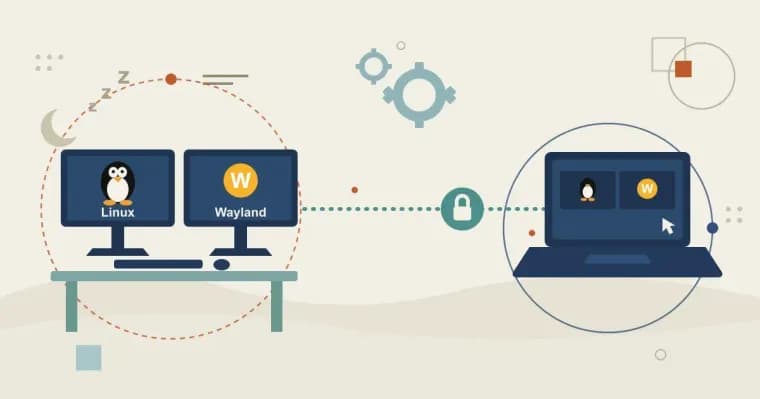
RustDesk, the open source remote desktop tool, released a separate preview build that brings true unattended remote access to Wayland, the display server that has largely replaced Xorg on modern Linux desktops. The build also supports multi-monitor setups. Once it is set up on a machine, a user can connect to that machine without anyone physically present to approve the session, and this works even from the login screen right after a reboot.
The release post frames Wayland as one of the harder problems in Linux remote desktop software. RustDesk's post contrasts its progress with two competitors: AnyDesk currently requires Xorg for incoming Linux sessions and cannot yet do this on Wayland at all, while TeamViewer still labels its Wayland support as experimental on common desktop environments.
For now the unattended Wayland access ships only as a separate preview build, limited to x86_64 Debian and Ubuntu based systems, rather than being folded into RustDesk's standard releases. The company says it wants more real-world testing before making the feature the default. Its stated plan is to extend unattended Wayland access to more Linux distributions, naming Fedora and Arch Linux specifically, and to eventually merge the capability into the standard RustDesk releases once the implementation proves stable. No release date, version number or timeline for that wider rollout is given.
Key facts
- RustDesk released a separate preview build enabling true unattended remote access on Wayland, including multi-monitor setups.
- The preview build targets x86_64 Debian and Ubuntu based Linux systems only.
- Connections work even when no one is at the remote machine, including from the login screen right after a reboot.
- RustDesk says AnyDesk still requires Xorg for incoming Linux sessions, and TeamViewer's Wayland support remains experimental on common desktop environments.
- RustDesk plans to extend the feature to more distributions, including Fedora and Arch Linux, and later fold it into the standard releases once it is stable.
Why it matters
Wayland has replaced Xorg as the default display server on most major Linux desktop environments, and unattended remote access, connecting without a human at the far end to click approve, has been hard to build. RustDesk says this has been one of the harder problems in Linux remote desktop software. Shipping a working unattended mode on Wayland closes a real capability gap that had pushed some users and administrators back onto Xorg just to keep remote access working.
Who it affects
This is aimed at Linux users and system administrators who manage machines headlessly or need to reach a desktop after a reboot without anyone physically present, for example home servers, remote workstations or lab machines running Wayland. It also matters to anyone currently forced to stay on Xorg, or to run a competing tool, purely because their remote access software could not yet do unattended sessions on Wayland.
How to use it
RustDesk is offering the capability as a separate preview build rather than in its standard release, and for now it only covers x86_64 Debian and Ubuntu based systems. RustDesk asks Wayland users, especially those running multiple monitors, to try the preview build and report what works and what does not before the feature is made the default.
How solid is it
The claims in the release come from RustDesk's own blog post, with no independent benchmarking cited. The company itself frames the build as a preview meant to gather real-world testing, not a finished, default feature, which is a reasonably candid signal about its current maturity. No version number, release date or technical explanation of the implementation is given in the source.
Risks and caveats
Coverage is narrow for now: only x86_64 Debian and Ubuntu based systems are supported, so Fedora, Arch Linux and other distributions, plus non-x86_64 architectures, are not covered by this build. RustDesk gives no timeline for when broader distribution support or a merge into the standard release will happen. As a preview build focused on gathering feedback, it should be expected to have rough edges that a stable release would not.
“Wayland support has been one of the harder parts of Linux remote desktop.”
— RustDesk Team, RustDesk blog