Scaleout Systems adapts edge AI for drone recon and attack missions
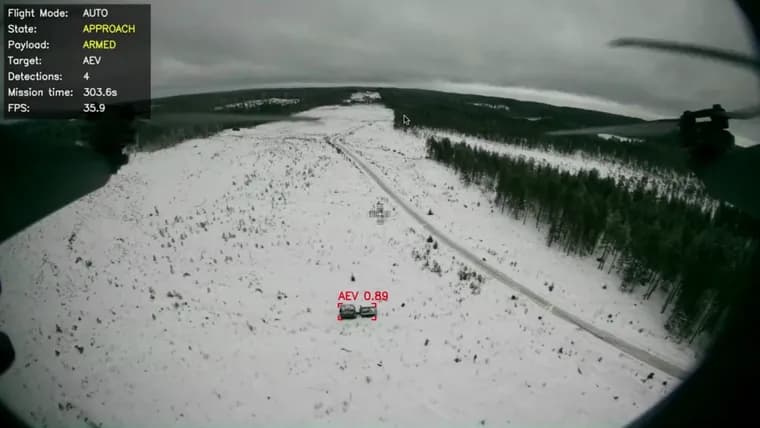
Scaleout Systems, a company founded in 2018 by researchers from Uppsala University in Sweden, is adapting machine learning models to run target detection and selection directly on small drones and other forward-deployed hardware. The company did not start out in defense: it began by training and deploying models on the hardware already found in commercial trucks and other vehicles. That changed after Russia launched its full-scale invasion of Ukraine in 2022, when Scaleout pivoted toward defense applications. Cofounder and CEO Andreas Hellander told Ars Technica that the war and a shifting geopolitical picture convinced the team that operationalizing edge and sensor data for machine learning could give NATO allies a strategic advantage. Rather than using frontier AI models from OpenAI or Anthropic, Scaleout builds leaner computer vision models sized to fit the hardware actually available in the field, which Hellander says ranges from small embedded devices to more powerful edge workstations at forward bases. In 2025, Scaleout was selected to join NATO's Defence Innovator Accelerator for the North Atlantic (DIANA) Challenge Program. Through that program, it has worked on the Federated Aerial Intelligence for Recon project, adapting machine learning models to run on the edge computing hardware found in drones, drone pilot tablets, and field command posts. The article does not name a specific drone model, weapons platform, or military unit that has fielded the software, nor does it say the system has been used in an actual combat operation.
Key facts
- Scaleout Systems, founded in 2018 by Uppsala University researchers, pivoted from commercial-vehicle machine learning to defense applications after Russia's full-scale invasion of Ukraine in 2022.
- Instead of frontier models from OpenAI or Anthropic, the company builds leaner computer vision models sized to run on small drones and forward-base edge hardware.
- Scaleout joined NATO's Defence Innovator Accelerator for the North Atlantic (DIANA) Challenge Program in 2025.
- Through DIANA's Federated Aerial Intelligence for Recon project, Scaleout adapts models to run on edge hardware in drones, drone pilot tablets, and field command posts.
- CEO Andreas Hellander says the goal is to operationalize edge and sensor data for machine learning to give NATO allies a strategic advantage.
Why it matters
The story marks a concrete case of a defense startup moving AI models out of the data center and onto the battlefield hardware itself, small drones, pilot tablets, and forward command posts, rather than routing decisions through a cloud-hosted frontier model. Scaleout's pivot dates its defense focus directly to Russia's 2022 invasion of Ukraine and ties it to a formal NATO innovation channel, the DIANA program, which the company joined in 2025.
Who it affects
The direct audience is NATO militaries and the European defense industry building drone-based surveillance and strike capability. The broader context is the war in Ukraine, which Hellander cites as the trigger for Scaleout's shift, though the article does not say the company's software has been deployed by Ukraine or any other named military in an actual operation.
How to use it
This is not a consumer product with a price or license. Scaleout's models are built to run on whatever compute a unit has on hand, from small embedded devices to more capable edge workstations, and are being adapted under the Federated Aerial Intelligence for Recon project specifically for drones, drone pilot tablets, and field command posts as part of NATO's DIANA Challenge Program.
How solid is it
The account rests on a single Ars Technica interview with Scaleout's CEO, Andreas Hellander, plus the company's own account of its history and its selection into DIANA. The article gives no independent performance data, no accuracy or error-rate figures for the leaner models Scaleout favors, and no comparison showing how they stack up against the frontier models it contrasts them with.
Risks and caveats
The source does not describe how much human control remains over the attack step: whether a person approves each target or the system can act without confirmation, despite the framing of the models letting drones act autonomously. It also names no specific drone, aircraft, or weapons platform running the software, and does not say Scaleout's system has been used in an actual combat operation by any named military. OpenAI and Anthropic are mentioned only as a contrast to Scaleout's approach, not as models the company tested or considered using.
“With the war in Ukraine and a shifting world, we realized that this technology can be very important to operationalize edge data and sensor data for machine learning to make sure that NATO allies have found that strategic advantage.”
— Andreas Hellander, cofounder and CEO of Scaleout Systems