Sherry Turkle says chatbots should be banned from saying 'I'
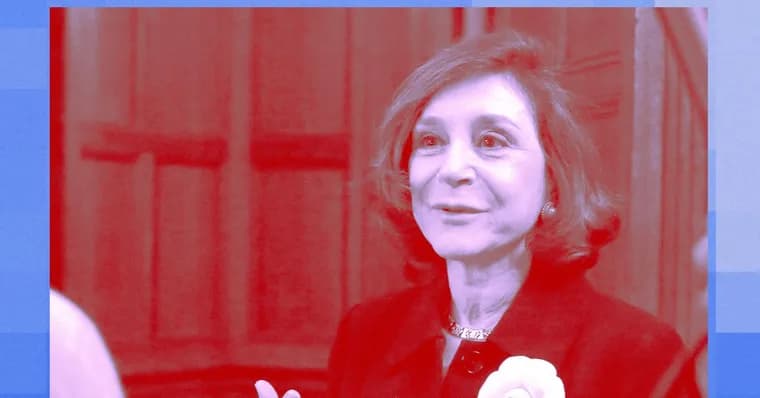
Wired's Steven Levy interviews Sherry Turkle, an MIT professor, about her new book Artificial Intimacy: Who We Become When We Talk to Machines. The interview ran in the Backchannel newsletter that Levy writes with Lauren Goode. Wired's introduction says Turkle has spent four decades studying how people interact with computers and built a reputation as a careful if critical social scientist. This book, it says, breaks that mold. It is a polemic warning of a state of emergency in which humanity is at risk from overreliance on soulless machines posing as tutors, mentors, friends, colleagues and lovers. Turkle is aiming for the bar set by Silent Spring, The Jungle and Unsafe at Any Speed, books that woke the public to coming crises. Wired frames her as taking on a multitrillion-dollar industry backed by a government eager to push AI into every corner of life.
Levy asks why the shift from reporting research results to pulling the fire alarm. Turkle says she went in curious, as with all her books, but after about 10 interviews conducted during the pandemic, 'neutral-curious' was no longer her state of mind. People whose families were suffering and reaching out told her they just wanted to hang out with their chatbot. When she could interview people face to face, she was unhappy: people did not want to do anything in politics because they wanted to live in 'chatbot-land'. The book's arc became 'reality needs you'.
She says social media softened people up by getting them used to opening a computer when they feel sad, then made them mad and kept them with their own kind. Now there is a technology that, in her words, has no reason to be first-person. Asked whether chatbots should be banned from using the first person, she answers 'Yes!' But she adds that after a career of credibility as not being 'Luddite-crazy', she will not say all chatbots are toxic all the time.
She calls the use of chatbots as therapy very dangerous and a slippery slope, saying it is being used to argue that psychotherapy need not be paid for. She also rejects the 'practice' idea, that people can rehearse talking to a boss, lover or teacher with a chatbot. People raise it in every serious interview she does, and she calls it a myth: when you bathe in the warm soup of total acceptance from LLMs, talking to chatbots becomes the endgame.
On the workplace, she dislikes the phrase 'human in the loop'. To her it means the human has been removed from the productive process and left to clean up, catching hallucinations or things the AI misses. She says that does not work, because employers keep only a couple of humans in the loop, who basically cannot change anything. They are there partly so the process sounds good when litigated, and partly to give a false sense that it has not been delegated to an AI. 'But it has been delegated to an AI.'
Levy offers the counterargument that chatbots may be a different, not worse, form of interaction, since people report feeling encouraged by the positive feedback. Turkle replies that an AI will never replace human conversation: it is not afraid of death, illness or pain, does not love its children, and does not care whether you kill yourself or make dinner. Raise kids with it or have our most intimate conversations with it, she says, and we lose contact. Levy also notes that many people have nobody to talk to. Turkle answers that a loneliness crisis exists because people are abandoning each other, and offers: give me one data center and I will turn it into resources for the elderly.
Levy notes that hundreds of millions of people use chatbots even though pushback against AI is considerable, and that even people who protest data centers use chatbots. Turkle says the goal of the book is to widen the pushback to include this more intimate connection. Asked whether growing intimacy with AI can really be stopped, she says she has more hope than six months ago, citing talk of extinction events, Hugging Face, and getting into the Australian civil service by mistake. She expects people to be willing to look at the intimate costs as well as the non-intimate ones.
Key facts
- Asked by Wired's Steven Levy whether chatbots should be banned from using the first person, MIT professor Sherry Turkle answers 'Yes!', while declining to call all chatbots toxic all the time.
- Her new book, Artificial Intimacy: Who We Become When We Talk to Machines, is described by Wired as a polemic warning of a state of emergency, modelled on books like Silent Spring and The Jungle.
- Turkle says her shift came after about 10 pandemic-era interviews in which people said they just wanted to spend time with their chatbot.
- She calls chatbot therapy a slippery slope and the 'practice' idea a myth, and says 'human in the loop' means a few powerless people doing cleanup and giving cover when decisions are litigated.
- She says loneliness comes from people abandoning each other, and that she is more hopeful than six months ago that people will weigh the intimate costs of AI.
Why it matters
Turkle has four decades of work on human-computer interaction and a reputation for rigor and distance, so Wired treats this book as a break from her usual style. Her argument moves the AI debate from data centers and jobs to intimate life: chatbots as friends, therapists and companions. Her specific proposal, that chatbots should not speak in the first person, is a pointed design and policy question, even though she answers it with a one-word 'Yes!' rather than a plan.
Who it affects
Her claims touch people who use chatbots for emotional support, especially children and the lonely, and anyone who relies on chatbots in place of paid psychotherapy. She also addresses employers and workers in AI-assisted processes, the 'humans in the loop' she says have little power. For the companies building chatbots, she is a high-profile critic of the way they present their products as a first-person 'I'.
How to use it
There is nothing to install or buy here; this is an interview. Readers can use it as a set of arguments to test against their own habits: whether a chatbot is standing in for a conversation with a person, whether 'practising' with one has become the endgame, and whether a human reviewer in an AI process can actually change anything. Turkle's own framing is that reality needs you.
How solid is it
This is a single interviewee's opinion in a newsletter Q&A, and Wired's own introduction calls the book a polemic. No specific data, study or statistic is cited in support of her claims. The line that studies show most people are skeptical about AI is Levy's statement in a question, not sourced. She does not propose a concrete mechanism, law or timetable for banning first-person chatbot speech. Her account of why she changed course rests on about 10 interviews during the pandemic.
Risks and caveats
Turkle herself limits her position: she does not want to claim all chatbots are toxic all the time. Levy pushes back that people report feeling encouraged by chatbots and that many have nobody else to talk to, and her reply is that loneliness reflects people abandoning each other. The interview does not explain why chatbots have no reason to be first-person beyond her one-line statement, and no chatbot company is quoted in response. The 'multitrillion-dollar industry' and 'government eager to accelerate AI' are Wired's characterisations, with no figures or names given.
“If there's a crisis of loneliness, it's because we're abandoning each other.”
— Sherry Turkle, in a Wired interview by Steven Levy