Slate Auto prices its no-frills electric truck under $25,000
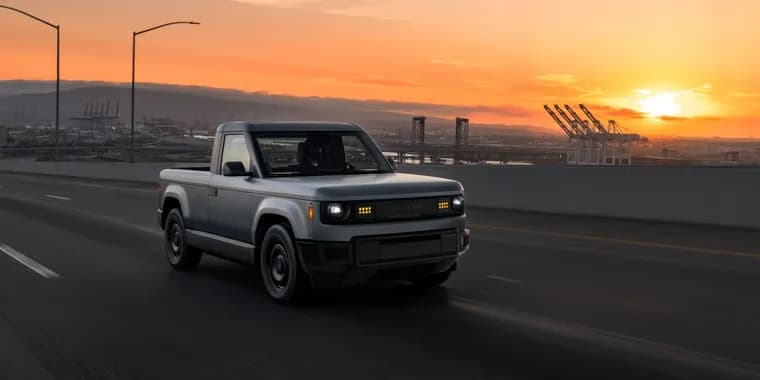
Electric vehicles account for under 10% of new-vehicle sales in the United States, and that share is declining even though transportation is the country's single biggest source of greenhouse-gas emissions. Slate Auto is betting that a small, no-frills EV can help reverse the slide by taking the opposite approach from most of the industry: instead of competing on range and features, it strips both down.
The Slate is a tiny two-door pickup, shorter than a Honda Civic, whose base model uses hand-crank windows rather than power windows, a detail that has dominated media coverage of the launch. It runs on a 65-kilowatt-hour lithium iron phosphate battery with a quoted top range of just 205 miles, well short of the over 320 miles a base Tesla Model 3 offers. By accepting that shorter range and skipping the frills, Slate can sell the base truck for under $25,000, though buyers can add options such as a Bluetooth stereo system, vinyl wraps or power windows. Even with add-ons, the price is expected to stay well below the roughly $50,000 average for a new US vehicle. Slate is set to start delivering preorders in late 2026; its factory is planned to produce 100,000 vehicles in its first year and 150,000 after that, and the company says thousands of customers have already preordered. Investors including Jeff Bezos have put nearly $1.4 billion into Slate across three funding rounds.
The strategy is a direct answer to the fate of the Ford F-150 Lightning, the electric version of the F-150 that Ford announced in 2021 as the vehicle meant to drive US EV adoption. Ford discontinued the Lightning in December 2025, four years after launch. The article attributes the failure partly to the second Trump administration's cuts to EV tax credits and other support, and partly to price: the base Lightning cost roughly $40,000 when shipments began in 2022, and its price had topped $54,000 by its final year. Reaching the Lightning's nearly 300-mile range required a battery with roughly twice the capacity of the Slate's 65-kilowatt-hour battery.
The piece argues that the range Americans chase is largely unnecessary: the average US driver covers under 35 miles a day, and nearly 90% of personal-vehicle trips are 20 miles or less. One recent study found that EV drivers typically use less than 20% of their vehicle's range on a given day. That argument may carry more weight now given US affordability pressures: roughly half the country is struggling to cover basics like gas and groceries, and a recent Harris poll found 95% of Americans believe the country is in an affordability crisis.
Affordable, shorter-range EVs have already found buyers elsewhere. China has over 40 million EVs and plug-in hybrids on the road and roughly half of its new-vehicle sales are electric, even though the average range of new EVs sold there in 2025 was just 247 miles, compared with 329 miles in the US and 281 miles in Europe over the same period. Ford is preparing its own small electric truck in response, expected to debut in 2027 at a retail price of around $30,000. The piece frames Slate's success or failure as a test of whether US drivers will accept a small, short-range vehicle in exchange for a lower price, and concludes that they will.
Key facts
- Slate Auto's base electric pickup is priced under $25,000, running on a 65-kilowatt-hour battery with a 205-mile range, compared with over 320 miles for the base Tesla Model 3.
- Ford discontinued its rival F-150 Lightning in December 2025, four years after its 2021 launch, after the price climbed from about $40,000 in 2022 to more than $54,000 in its final year.
- The average US driver covers under 35 miles a day, and nearly 90% of personal-vehicle trips are 20 miles or less, undercutting the industry's usual focus on maximizing range.
- Slate has raised nearly $1.4 billion from investors including Jeff Bezos and plans to start delivering preorders in late 2026, with factory capacity for 100,000 vehicles in its first year and 150,000 after.
- Ford is preparing its own small electric truck for a 2027 debut at around $30,000, while China's average new-EV range (247 miles in 2025) trails the US (329 miles) and Europe (281 miles) despite EVs making up roughly half of its new-car sales.
Why it matters
EV sales are stalling in the US at under 10% of new-vehicle purchases, even though transportation is the country's single largest source of greenhouse-gas emissions, and the industry's highest-profile attempt to fix that with a big, feature-rich truck already failed: Ford discontinued the F-150 Lightning in December 2025 after its price climbed from about $40,000 to over $54,000 in four years. Slate Auto is testing the opposite strategy, offering a stripped-down truck under $25,000 with a 205-mile range on the argument that most American driving does not need the range automakers keep chasing. If it works, it suggests EV adoption in a stalled, affordability-squeezed market depends more on price than on range or features.
Who it affects
US car buyers, especially the roughly half of the country the piece says is struggling with basic costs like gas and groceries, are the direct audience for a sub-$25,000 EV. Ford is affected directly: it walked away from the premium-truck approach with the Lightning and is now developing its own small electric truck for a 2027 debut at around $30,000, effectively following Slate's lead. Slate's backers, including Jeff Bezos, who have put nearly $1.4 billion into the company across three rounds, have a direct stake in whether the simplicity bet pays off, as does the wider EV industry watching for a viable low-range, low-cost segment in the US market.
How to use it
The Slate is open for preorder now, with deliveries planned to start in late 2026; the company says thousands of preorders are already in. The base model ships with hand-crank windows and minimal features to hit the under $25,000 price, and buyers can add options such as a Bluetooth stereo system, vinyl wraps or power windows, which raise the price but are expected to keep it well below the roughly $50,000 average for a new US vehicle. Slate's factory is planned to produce 100,000 vehicles in its first year and 150,000 after that, though that capacity is a plan rather than a delivered track record.
How solid is it
The piece is an MIT Technology Review analysis rather than a Slate press release, and its vehicle specifications and the Ford comparison read as drawn from public figures rather than company claims alone; the affordability figures come from a cited Harris poll. Still, several key numbers are projections rather than results: the preorder count Slate cites, described only as in the thousands, and the planned 100,000-to-150,000-vehicle factory capacity are the company's own figures, and deliveries have not started. The piece also closes on the writer's personal bet that drivers will accept the trade-off, which is opinion rather than a settled outcome.
Risks and caveats
Slate's price advantage depends partly on federal policy that has already turned against EVs once: the piece says the second Trump administration cut the tax credits and other support that helped drive the Lightning's early adoption, and the same headwind applies to Slate. Scaling from preorders to 100,000, then 150,000, vehicles a year is unproven, and Slate has not yet shipped a single truck. Ford's own small electric truck, expected in 2027 at around $30,000, could arrive as a direct, better-resourced competitor before Slate's approach has time to prove out. Finally, the case for accepting less range rests on averages: drivers who occasionally need a longer trip may find 205 miles too restrictive regardless of what the typical American drives.