SpaceX's AI business beats investor expectations in Q3, now 52% of income
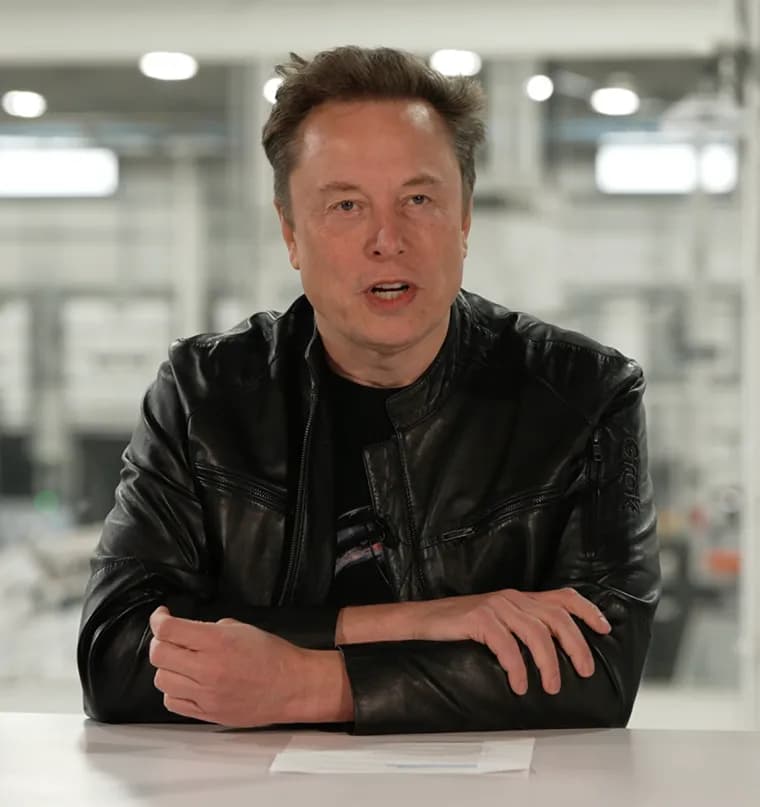
SpaceX's data centers and Grok agents were more profitable than investors expected in the third quarter, according to TechCrunch's reading of the company's regulatory filing. The company is moving away from its roots as a space company to focus on artificial intelligence, which now makes up 52% of its income. The source states that figure as a share of income, not revenue.
CEO Elon Musk's company reported $14.6 billion in third-quarter revenue on Tuesday. Growth came in all segments, but especially in the renamed "Super Intelligence" business line, which generated $7.5 billion in revenue from the recently acquired Cursor coding tool, the Grok bot and the neocloud business. TechCrunch calls the neocloud the most important of the three; it now has 1.7 GW of compute. The AI business made $431 million in profit, a number that would have been higher without $1.2 billion in one-time stock-based compensation expenses tied to the Cursor acquisition.
Top-line revenue was also helped by about $1 billion in income related to the recovery of Bitcoin prices, plus unspecified related-party income that might be attributed to a SpaceX investment in another company.
The growth is set against capital expenditures of $19.6 billion, as SpaceX keeps building a second data center project, Colossus II, and increases investment in Starship, the heavy-lift rocket it sees as vital to deploying a new generation of Starlink satellites and developing orbital data centers. CFO Bret Johnsen said the company would spend $35 billion to $40 billion on new capital investments in the fourth quarter.
In a live-streamed discussion of the results with investors, Musk said he was spending four days a week in Memphis, Tennessee, the site of Colossus II, working to bring the data center online. He argued that people are starting to realize the constraint on deploying super intelligence is more in power, cooling and infrastructure than in chips, and said he had tasked a team of SpaceX engineers with solving that problem. In his words, "This is a bit like the New York Yankees playing in Little League. It's not fair, but the net result is being able to deploy power cooling infrastructure at a rate that is vastly faster than any anyone else." As an example, Musk noted that makers of turbines for powering data centers face 12 to 18 month delays in getting the metal blades and vanes those machines need. SpaceX is now using its metal casting capabilities to make those components and get turbines faster.
Musk also said the next Starship test flight, expected in November, would see SpaceX try to recover both the first-stage booster and the second stage. Recovering both would be a "massive technology milestone," he said, but the true milestone will be reflying both stages. Starlink grew to 13.6 million consumer subscribers, and Musk predicted that the growth of AI agents would lead to more demand for connectivity.
The revenue boost was enough to put SpaceX back in profit for the quarter: net income was $4.4 billion, a turnaround from a $1 billion loss in the same quarter last year. The full year is a different picture. Over the first nine months, SpaceX still had a net loss of $413 million, so it has catching up to do to stay profitable for the year.
Musk was bullish on the Super Intelligence segment, predicting that SpaceX's annual recurring revenue by the end of 2027 will be "somewhere between $500 billion and $1 trillion." Johnsen was more concrete, forecasting total revenue for the first quarter of 2027 of $33 billion to $37 billion.
Key facts
- SpaceX reported $14.6 billion in third-quarter revenue and $4.4 billion in net income, against a $1 billion loss a year earlier; nine-month net result is still a $413 million loss.
- The renamed Super Intelligence line (Cursor, Grok, neocloud) generated $7.5 billion in revenue and $431 million in profit, after $1.2 billion in one-time Cursor-related stock compensation. The neocloud now has 1.7 GW of compute.
- AI now makes up 52% of SpaceX's income, per TechCrunch; about $1 billion of top-line revenue came from the recovery of Bitcoin prices plus unspecified related-party income.
- Capital expenditures were $19.6 billion; CFO Bret Johnsen said $35 billion to $40 billion of new capital investment is planned for the fourth quarter.
- Musk predicted annual recurring revenue of $500 billion to $1 trillion by the end of 2027; Johnsen forecast first-quarter 2027 revenue of $33 billion to $37 billion.
Why it matters
The filing shows a company best known for rockets and Starlink now getting more than half its income from AI, with Cursor, Grok and a large compute business folded into one line. The AI unit is profitable even after a $1.2 billion one-time Cursor charge, and TechCrunch says results beat what investors expected. Musk also framed the bottleneck for deploying AI as power, cooling and infrastructure rather than chips, and said SpaceX is moving faster on that than anyone else, including by casting turbine components itself.
Who it affects
Investors, who now have a regulatory filing and a live-streamed discussion to judge the company's AI pivot by. Rivals building data centers, since Musk says turbine makers face 12 to 18 month delays on blades and vanes. Users of Cursor and Grok, which sit inside the Super Intelligence unit. Starlink's 13.6 million consumer subscribers, whose growth Musk ties to demand from AI agents.
How to use it
This is a financial report, not a product, so there is nothing to switch on. The practical use is as a reference: the compute figure (1.7 GW), the capital plans ($35 billion to $40 billion next quarter) and the two forecasts (Musk's 2027 recurring revenue range and Johnsen's first-quarter 2027 revenue range) are the numbers to track against later results.
How solid is it
The core figures come from SpaceX's own regulatory filing, as reported by TechCrunch, and the forecasts come from Musk and CFO Johnsen on a live stream. The article is marked as a developing story that TechCrunch will update. It gives no consensus figures for what investors expected, so the claim of beating expectations rests on TechCrunch's say-so. Musk's 2027 range is a prediction, and Johnsen's first-quarter range is a company forecast.
Risks and caveats
The 52% figure is a share of income, while the only revenue breakdown given is $7.5 billion of $14.6 billion, so the two should not be treated as the same measure. Part of the top line came from Bitcoin price recovery and unspecified related-party income that might come from an investment in another company, and the company in question is not named. The quarter's profit sits against $19.6 billion in capital spending, more is planned, and the nine-month net result is still a $413 million loss. Musk's $500 billion to $1 trillion recurring revenue range is a very bullish prediction, not a result.
“This is a bit like the New York Yankees playing in Little League.”
— Elon Musk, CEO of SpaceX, on deploying power and cooling infrastructure