Stanford study finds AI-exposed entry-level jobs now down 19%
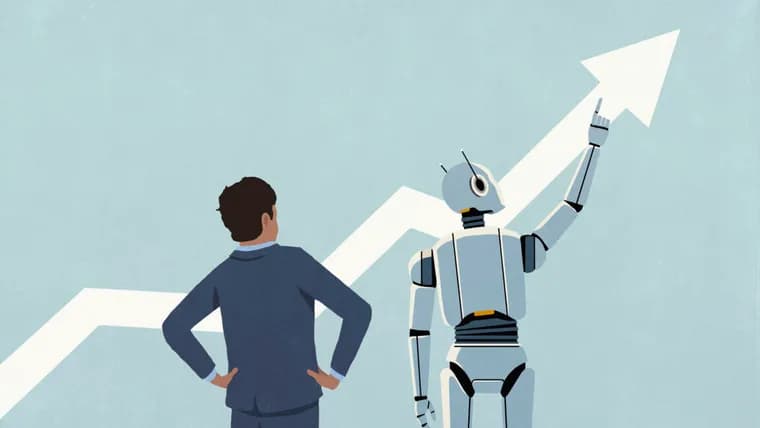
Stanford University economists have released an August 2026 update to their paper "Canaries in the Coal Mine? Six Facts about the Recent Employment Effects of Artificial Intelligence," which revises last year's edition with fresh data and refined statistics. The update finds that the entry-level job losses the researchers first identified a year ago are persisting and expanding. Employment for workers aged 22 to 25 in the occupations most exposed to AI is now 19 percent below employment levels for their peers in occupations less exposed to AI disruption. A year ago, that same gap measured just 13 percent. Older workers, by contrast, appear largely unaffected so far, though the study does not give a numeric figure for how small that effect is. To reach these numbers, the researchers drew on a large subsample of anonymized, high-frequency payroll data regularly aggregated by HR management company ADP. They rated each occupation's exposure to AI disruption using two separate measures: a potential labor market impact gauge built by earlier researchers, and the Anthropic Economic Index, which tracks how different occupations actually use the Claude model in day to day work. The piece notes that Google released a similar report last month based on occupational Gemini usage. The source does not name the individual researchers behind the study, does not specify which occupations count as most AI-exposed, and does not explain a mechanism for why entry-level workers are affected while older workers are not.
Key facts
- Updated Stanford paper: workers aged 22 to 25 in the most AI-exposed occupations now have employment 19 percent below peers in less-exposed fields.
- That gap was 13 percent in the prior year's version of the same study, so the effect has grown, not stabilized.
- Older workers appear largely unaffected so far, based on the same data.
- Methodology combines ADP's anonymized payroll data with two AI-exposure measures: a prior labor-impact gauge and the Anthropic Economic Index, which tracks real-world Claude usage by occupation.
- Google published a comparable report on occupational Gemini usage the month before this update.
Why it matters
This is one of the first pieces of hard payroll evidence, rather than survey sentiment or anecdote, that AI is already reshaping who gets hired at the bottom of the career ladder. The update matters specifically because the gap widened: a 13 percent employment shortfall a year ago becoming a 19 percent shortfall now suggests a trend that is accelerating rather than leveling off, in occupations the researchers classify as most exposed to AI.
Who it affects
The direct subjects are young workers, aged 22 to 25, trying to enter occupations the study classifies as highly AI-exposed. The source does not name which occupations those are. Older workers in the same fields appear largely unaffected so far, which the study frames as a divide between entry-level hiring and existing employment rather than a broad-based AI jobs shock.
How to use it
The study is a research paper, not a product or service, so there is nothing to buy or subscribe to. Its relevance for entry-level job seekers and for employers is as evidence: a young worker weighing which field to enter, or a company setting hiring plans, now has one more data point suggesting AI exposure correlates with reduced entry-level hiring, though the source itself does not identify the specific occupations to avoid or target.
How solid is it
The study updates a paper the same Stanford team already published a year earlier, using a large subsample of ADP's anonymized, high-frequency payroll data rather than surveys or self-reported outcomes, and it cross-checks AI exposure with two independent measures: an established labor-impact gauge and Anthropic's Economic Index of real Claude usage by occupation. The fact that a second, similarly-styled report from Google using Gemini usage data appeared around the same time adds an independent point of comparison, though the source does not describe whether the two studies agree in detail. The source names no individual authors, only "Stanford researchers" and "Stanford University economists."
Risks and caveats
The source offers no mechanism for why the effect concentrates on entry-level workers while sparing older ones, so any causal story is speculation the study itself does not make. It also does not name the specific occupations counted as most AI-exposed, does not give a numeric figure for how small the effect on older workers is, and does not state the exact publication date of the original paper beyond "published last year." Correlation between AI exposure and a hiring gap is not the same as proof that AI adoption caused the gap.