Startups put small batteries in e-bike cabinets and stoves to help the grid
MIT Technology Review's weekly climate newsletter, The Spark, looks at a group of startups that are bringing energy storage to the grid in small pieces. The starting point is New York City, where installing a big battery means cutting through a notoriously tough tangle of regulations. That has made large storage projects hard to get onto the grid. Utility-scale batteries are coming online quickly around the world, the newsletter says, but communities, especially dense ones like New York, have pushed back over concerns about relatively rare but high-profile battery fires.
So some startups are using relatively small batteries in unexpected places. At a New York Climate Week event on September 24, PopWheels cofounder David Hammer put the problem for big projects this way: "The number-one challenge that large-scale centralized energy storage providers have is the fact that their benefits are abstract and their costs are concrete."
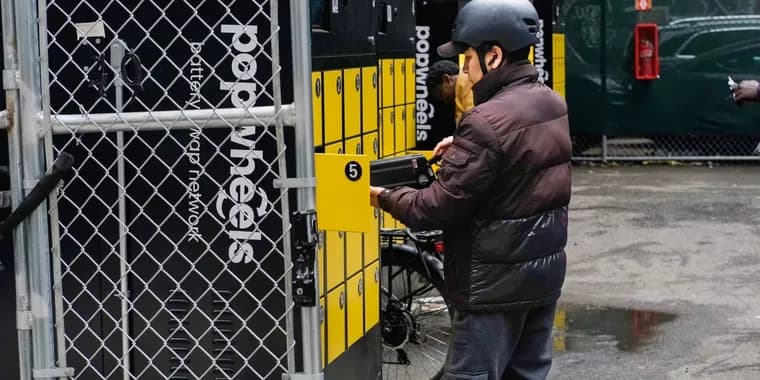
PopWheels built a battery-swapping system for delivery drivers on e-bikes. A driver swaps a depleted battery for a fresh one at a cabinet instead of stopping to charge. Hammer says there are about 50 cabinets across New York City and about 2,500 batteries in circulation. The company recently started providing batteries to food cart operators so they can replace the gas generators they rely on now. About four of its batteries can supply five kilowatt-hours, enough to roughly cover a day's operation for many carts.
Copper builds induction stoves with integrated batteries. The appliances let residents cook if the power goes out, and they could help homeowners avoid expensive electrical upgrades, because the battery provides some of the power when the stove is in use. Copper cofounder and CEO Sam Calisch said at the event that the company is not just selling a battery for resilience, but for cost savings.
Every Electric and David Energy sell plug-in batteries for homes and businesses. Every's battery is designed to plug into an air-conditioning unit; the company provides the batteries and pays customers to reduce use during high-stress times. David Energy has a similar business model but focuses on businesses such as laundromats, parking garages and gyms.
Because these batteries are small or built into another device, they generally do not require grid upgrades or extensive permitting. The newsletter likens this to balcony solar, where small plug-in modules offset a home's or business's demand. James McGinniss, cofounder and CEO of David Energy, called the shift "the biggest thing to happen in the power grid sector in the last 20 years." Calisch offered a scale estimate: if every stove in America shipped with a battery, it would add up to tens of gigawatts, capacity that could be aggregated and tapped when the grid is stressed.
The newsletter's author is upbeat but measured. As batteries get cheaper they will likely spread into more areas of life, with cleaner air and lower power bills. Yet the need for large-scale storage is not going away, because larger installations will support intermittent renewables like wind and solar. The author says they are interested to see how far an aggregated horde of stoves, e-bikes and window AC units could go in helping the grid, which is getting more congested, especially in dense cities like New York.
Key facts
- Installing a big battery in New York City means cutting through a notoriously tough tangle of regulations, so startups are turning to small, device-sized batteries.
- PopWheels says it has about 50 battery-swapping cabinets across New York City and about 2,500 batteries in circulation; about four of its batteries supply five kWh, roughly a day for many food carts.
- Copper makes induction stoves with built-in batteries, Every Electric sells batteries that plug into an air-conditioning unit, and David Energy targets laundromats, parking garages and gyms.
- Small batteries generally do not require grid upgrades or extensive permitting; Calisch says a battery in every US stove would add up to tens of gigawatts.
- The newsletter says large-scale storage is still needed to support wind and solar, and the author is curious how far aggregated small batteries could go.
Why it matters
Big batteries are hard to site in dense cities. The article names New York's regulatory tangle and community worries about relatively rare but high-profile battery fires. Small batteries built into e-bike cabinets, stoves and AC units sidestep much of that, since they generally need no grid upgrades or extensive permitting. Each unit is small, but the units could add up to a lot of capacity, and the newsletter notes that capacity can be aggregated and tapped when the grid is stressed. The grid is getting more congested, especially in cities like New York, and the author says anything that helps avoid summer blackouts is welcome.
Who it affects
Delivery drivers on e-bikes, who swap batteries at PopWheels cabinets instead of stopping to charge. Food cart operators, who can replace gas generators with batteries. Homeowners, who could cook during outages and possibly avoid expensive electrical upgrades with a Copper stove. Customers of Every Electric and David Energy, including homes and businesses such as laundromats, parking garages and gyms, who are paid to reduce use at stressful times. Grid operators and utilities in congested cities are the indirect audience.
How to use it
This is a trend piece, not a how-to. The models it describes are concrete, though. PopWheels offers swappable batteries from cabinets, and food carts can use its batteries in place of gas generators. Copper sells induction stoves with batteries inside. Every Electric provides a battery that plugs into an air-conditioning unit and pays customers to cut use when the grid is strained; David Energy runs a similar model for businesses. The article gives no prices, battery capacities for the stove or plug-in units, or payment sizes.
How solid is it
The reporting is a newsletter column from MIT Technology Review, built on remarks by founders at a New York Climate Week event on September 24. The numbers come from the founders themselves: Hammer's cabinet and battery counts, and Calisch's tens-of-gigawatts figure, which is a hypothetical about every US stove shipping with a battery, not deployed capacity. McGinniss's claim that this is the biggest thing in the power grid sector in 20 years is his own view as a CEO of one of the companies. The article gives no customer counts, funding figures or aggregate capacity actually deployed.
Risks and caveats
The newsletter itself says large-scale storage is not going away, since larger installations do the crucial work of supporting wind and solar. Fire concerns are the stated reason communities push back on big batteries, and the article does not give fire-safety data for small ones or claim they are free of fire risk. No timescale is given for when distributed batteries might reach significant scale. The author's closing line is curiosity about how far aggregated small batteries could go, not a finding. The article also does not name the specific New York regulations involved.
“This is the biggest thing to happen in the power grid sector in the last 20 years”
— James McGinniss, cofounder and CEO of David Energy