TechCrunch Equity panel asks if AI CEOs like Mayer and Altman are out of touch
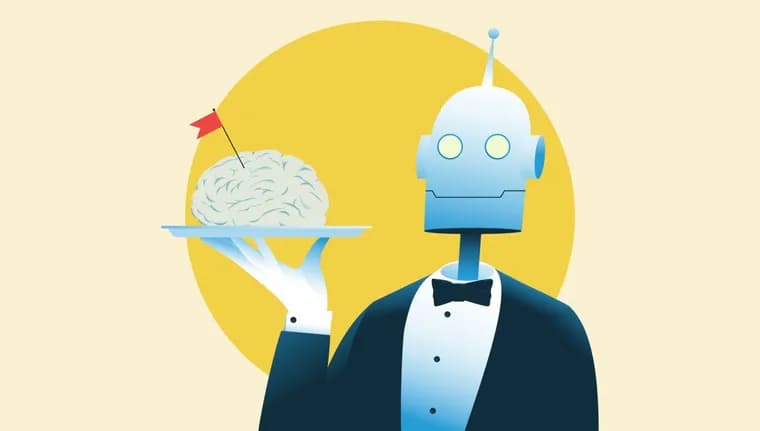
TechCrunch has published an edited preview of a conversation from its Equity podcast about why tech leaders so often sound tone deaf when they praise AI.
The trigger was Dazzle AI CEO Marissa Mayer, described as the latest tech CEO to face criticism over seemingly out-of-touch comments about AI. In her case, the comments involved asking an AI tool for help with a school-assigned description of her daughter. The article adds two more examples. OpenAI CEO Sam Altman has suggested that parents create personalized podcasts for their kids' drive to school, and has declared that he could not imagine parenting without ChatGPT. Meta CEO Mark Zuckerberg has suggested it will become increasingly acceptable to meet your social and romantic needs through AI. These remarks are paraphrased by TechCrunch, not given as direct quotes.
The piece says this led TechCrunch's Amanda Silberling to wonder whether AI executives are too out of touch to build products for normal people. It calls that a crucial question with Anthropic set to go public just as Wall Street begins losing its appetite for heavy AI spending. Kirsten Korosec, Sean O'Kane and a writer speaking in the first person talked it through with Silberling; the transcript opens under Anthony Ha's name.
Korosec asked whether this is a marketing problem or a product problem. Silberling's answer was 'A little bit of both.' She argued the industry is pushing toward a future 'where basic human interaction gets more and more optimized out of actually occurring.'
In the transcript, Ha says there is a lot of societal skepticism about AI, a sense that the people running these companies don't have our best interests at heart. He sees CEOs walking a delicate balance: there is a tremendous financial incentive to argue that people should use the technology in every aspect of their lives, but the picture that argument paints is often unappealing, sometimes 'downright dystopian.' Korosec says AI tools pitched as making personal relationships easier often overcomplicate something like simply observing your child. The pitches can seem disconnected from everyone else, and she asks who the executives are speaking to.
Silberling adds more examples. Bumble CEO Whitney Wolf Heard has floated AI concierges where your AI dates the other person's AI and, if the AIs have a good date, they introduce the people. Mayer, in a New York Times article, mentioned the idea of her AI coordinating with her husband's AI; Silberling recalls this from memory rather than quoting the article exactly. Silberling says people seem to be trying to over-optimize away ordinary conversations with other people. She notices it in herself: ordering takeout online feels normal, while calling a restaurant feels weird. She says she thinks that 'humans being able to talk to each other is probably a net positive for society.'
O'Kane jokes by asking what the ROI is, and how much revenue a conversation in 'meatspace' can generate. Silberling concedes that dating is inefficient and that you can see why people wonder if an AI could go on dates for them. But she says something human is missing, and that it means outsourcing the choice of whom to date to a computer you trust to know you better than you know yourself, which she does not think is true.
On marketing versus product, Silberling says the marketing problem appears when high-up people at massively valuable companies sit in a room and discuss their own pain points, such as making dinner reservations and booking flights. She doesn't book flights weekly or make reservations constantly, and doesn't find them a particular challenge. People do get value from ChatGPT and Claude, she says, but the average person's value is not necessarily booking a flight.
Ha then brings in Uber. When it launched for tech early adopters in San Francisco, he recalls being very confident it would never catch on more broadly. The tech industry often wins by betting that it reflects the consumer and family of the future. In this case he says the bet 'is not borne out yet,' partly because people are starting to say they want to live their own lives and parent their own children.
Silberling closes by pointing to a counter-movement: people reverting to flip phones, and people buying CDs because they are tired of an algorithm telling them what to listen to. She calls it a cultural tension in which we haven't yet found which optimization actually helps us and which just makes us feel less human than we want to be.
Key facts
- Marissa Mayer, CEO of Dazzle AI, drew criticism for comments about asking an AI tool to help with a school-assigned description of her daughter.
- The article cites Sam Altman (personalized podcasts for the school drive; cannot imagine parenting without ChatGPT) and Mark Zuckerberg (AI for social and romantic needs becoming more acceptable) as similar examples.
- Asked whether this is a marketing problem or a product problem, Amanda Silberling answers 'A little bit of both.'
- Anthony Ha says there is a tremendous financial incentive for CEOs to push AI into every part of life, but the picture it paints can be 'downright dystopian.'
- Silberling points to people returning to flip phones and buying CDs as a counter-trend to over-optimization.
Why it matters
This is a commentary piece, not a product or research announcement. Its point is that the people selling AI may be describing uses that ordinary people do not recognise as their own problems. The article ties the question to money: Anthropic is set to go public just as Wall Street begins losing its appetite for heavy AI spending, so whether executives can build for normal people is called crucial. Ha adds a historical angle: the industry has often won by betting it represents the consumer of the future, as with Uber, which he once doubted. Here, he says, that bet has not been borne out yet.
Who it affects
Mainly the executives and companies named: Mayer at Dazzle AI, Altman at OpenAI, Zuckerberg at Meta, and Whitney Wolf Heard at Bumble. It also touches anyone who is the intended customer of AI assistants for parenting, dating and daily errands. Ha describes a wider public skepticism that the people running AI companies do not have our best interests at heart.
How to use it
There is nothing to install or adopt here. It is a discussion to read for framing: the panel's questions (who are executives speaking to, and are they optimizing the wrong things?) are a way to judge AI pitches. The article presents an edited preview of the Equity podcast conversation.
How solid is it
This is opinion and conversation, not reporting with data. The article gives no survey figures or numbers on public skepticism. Altman's and Zuckerberg's remarks are TechCrunch's paraphrases, not direct quotes. Mayer's line about her AI coordinating with her husband's AI is recalled by Silberling from a New York Times article, not quoted by TechCrunch directly. No dates are given for the comments, and the preview is edited for length and clarity, so it is not the full episode.
Risks and caveats
The speakers' views are their own, and the Bumble idea is relayed by Silberling, not by Wolf Heard herself. No response from Mayer, Altman, Zuckerberg or Wolf Heard is included. The panel itself allows that some people may relate to the pitches ('Maybe there are') and that people do find value in ChatGPT and Claude. The Anthropic public offering is mentioned as context only, with no timing given.
“call me old school, but I think that humans being able to talk to each other is probably a net positive for society”
— Amanda Silberling, TechCrunch, on the Equity podcast