TechCrunch's AI glossary covers 'opaque recurrence' in OpenAI's Astra
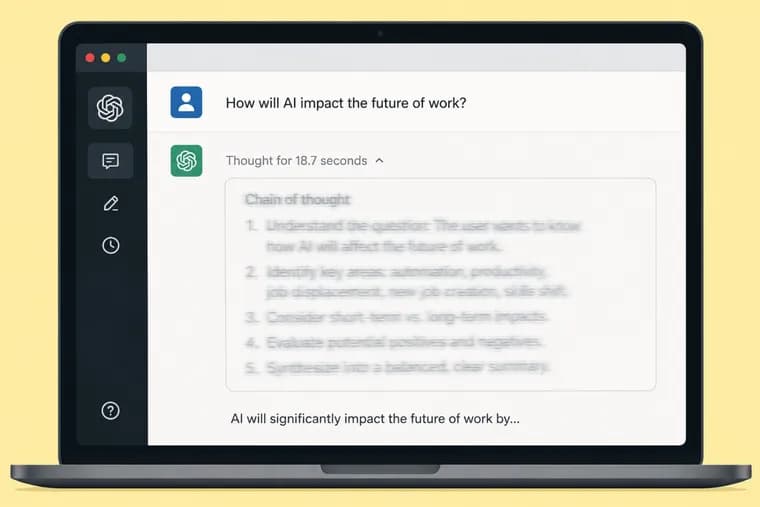
TechCrunch published a glossary of AI terminology that it describes as a living document, updated regularly as the field evolves. The piece opens by noting that industry conversation now moves fast enough to make even seasoned tech people feel behind, citing as its trigger example "opaque recurrence," a term that TechCrunch says surfaced last week as the reasoning technique in OpenAI's new Astra model and has left AI safety researchers rattled. The captured text does not go on to define what opaque recurrence actually is or does; it is introduced only as the reason people are suddenly hearing the phrase, and it does not name which researchers are unsettled by it or cite a specific statement from them.
The bulk of the glossary works through more than a dozen established terms in plain language. On artificial general intelligence (AGI), it lays out three competing definitions rather than settling on one: OpenAI CEO Sam Altman has described AGI as the "equivalent of a median human that you could hire as a co-worker," OpenAI's charter defines it as "highly autonomous systems that outperform humans at most economically valuable work," and Google DeepMind frames it as "AI that's at least as capable as humans at most cognitive tasks." The entry notes that even experts at the forefront of AI research remain unsettled on which definition holds.
Other entries cover an AI agent (a tool that performs multistep tasks on a user's behalf, such as filing expenses or booking a table, though the concept still means different things to different people and the infrastructure to fully deliver on it is still being built); API endpoints (the interfaces that let programs, including AI agents, trigger actions in other software); chain-of-thought reasoning (breaking a problem into intermediate steps, illustrated with a classic word problem involving a farmer's chickens and cows totaling 40 heads and 120 legs, which resolves to 20 of each); coding agents (a specialized AI agent that writes, tests and debugs code with minimal human oversight, compared to "a very fast intern who never sleeps"); compute (the GPUs, CPUs, TPUs and related hardware that train and run AI models); deep learning (multi-layered neural networks that can identify features in data without human-defined rules, at the cost of needing millions of data points and longer training); diffusion (systems that learn to reverse a noise-adding process to generate images, music or text); distillation (training a smaller "student" model on a larger "teacher" model's outputs, which the article says is likely how OpenAI built the faster GPT-4 Turbo from GPT-4, and which it says usually violates API and chat-assistant terms of service when used to copy a competitor, even though all AI companies use distillation internally); fine-tuning (further training a model on specialized data for a narrower task); GANs (Generative Adversarial Networks, where a generator and a discriminator neural network compete to produce and detect realistic synthetic data, used in deepfakes and best suited to narrow applications); hallucination (models generating incorrect information, a risk the article ties to gaps in training data and to the push toward narrower, domain-specific models); inference (running a trained model to make predictions, which cannot happen without prior training, and which can run on hardware from smartphone chips to data-center GPUs at very different speeds); large language models (LLMs, the deep neural networks with billions of parameters behind assistants such as ChatGPT, Claude, Gemini, Llama, Copilot and Le Chat, trained on encoded patterns from books, articles and transcripts); memory cache (an optimization, including KV caching in transformer models, that reduces the calculations needed to answer repeat or related queries); and Model Context Protocol (MCP), introduced as an open standard letting AI models connect to outside tools and data such as files and databases, where the captured text ends mid-sentence.
Key facts
- The glossary opens with 'opaque recurrence,' which TechCrunch says is the reasoning technique behind OpenAI's new Astra model and has AI safety researchers rattled, though the captured text does not explain what the technique does.
- Three organizations define AGI differently: Sam Altman's 'median human' co-worker standard, OpenAI's charter language on outperforming humans at most economically valuable work, and Google DeepMind's 'as capable as humans at most cognitive tasks.'
- Distillation, training a smaller model on a larger one's outputs, is described as likely how OpenAI built GPT-4 Turbo from GPT-4, while distilling from a competitor's model usually breaks that competitor's API and chat-assistant terms of service.
- The chain-of-thought entry illustrates the concept with a word problem, chickens and cows totaling 40 heads and 120 legs, resolving to 20 of each animal.
- The stored text cuts off mid-definition inside the Model Context Protocol entry, so the article covers further terms beyond what is captured here.
Why it matters
AI vocabulary is expanding faster than most people outside research labs can track, and TechCrunch is using a fresh, unsettling-sounding term, opaque recurrence in OpenAI's Astra model, as the news hook to relaunch a reference glossary. The framing itself is a data point: a major tech outlet judged that readers now need a standing explainer just to follow product meetings, pitches and panels.
Who it affects
Builders, investors and general readers trying to keep up with AI coverage are the direct audience. The AGI section in particular matters to anyone tracking OpenAI, since the company's charter definition of AGI, tied to contractual and governance commitments around when the technology is reached, is presented in full alongside Altman's more casual 'median human' framing and Google DeepMind's separate standard.
How to use it
The article functions as a reference: readers look up a term such as fine-tuning, distillation or KV caching and get a plain-language definition with a concrete example, plus cross-references to related entries. TechCrunch says it updates the glossary regularly as the field evolves, so it is meant to be revisited rather than read once.
How solid is it
The definitions given for established terms, AGI, chain of thought, deep learning, diffusion, distillation, fine-tuning, GANs, hallucination, inference, LLMs and memory cache, are the standard industry usage and carry specific, checkable examples like the GPT-4 Turbo distillation claim. The opaque recurrence claim is thinner: the captured text names it and its source (OpenAI's Astra model) but does not define the technique itself or identify which safety researchers are concerned, so that specific claim rests on TechCrunch's framing rather than a documented technical description.
Risks and caveats
Because the glossary blends settled technical definitions with a same-week reference to a brand-new model term, readers should not assume opaque recurrence has the same level of established, peer-reviewed meaning as chain of thought or a GAN. The article also does not name the AI safety researchers it says are rattled by the technique, so that characterization cannot be independently checked from this text alone.
“the “equivalent of a median human that you could hire as a co-worker.””
— Sam Altman, OpenAI CEO