TeraWulf's $3.2bn AI data center exposes gaps in fire safety
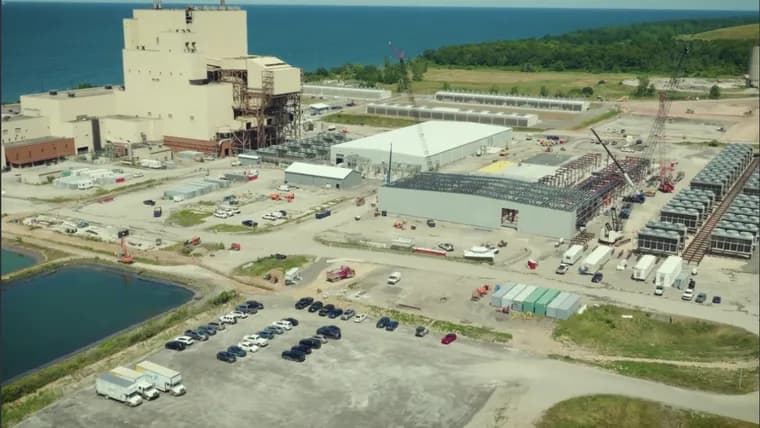
In early June, a fire broke out in a still unfinished building at the Lake Mariner data center in Somerset, New York, a site built on a former coal mine on Lake Ontario. Firefighters reportedly found no working alarm, no suppression system and three dead hydrants; the safety documents they are legally entitled to see reportedly burned up in the blaze. Steve Matisz, chief of the Barker Fire Department, said his crew went in "kind of blind," facing heavy black smoke from chemicals they could not identify because the safety sheets meant to inform them had apparently burned. He was not sure what to think about the claim that the sheets had actually burned. "It's been a difficult situation," he said.
The $3.2 billion campus is one of the largest AI data center buildouts in New York, and its ownership is split across several companies. TeraWulf owns and operates the data center, on land it leases from a company owned by its own CEO. Fluidstack, a UK based AI company, will run the center. Google holds warrants for a future 14 percent equity stake in the project and has agreed to guarantee Fluidstack's lease payments. Anthropic is among the AI companies whose compute demand the facility exists to serve.
TeraWulf told the reporter it was responsible "for operational safety and emergency preparedness at the Lake Mariner Data Campus, including required safety systems and coordinating with local first responders." Kerri Langlais, the company's chief strategy officer, said TeraWulf had since installed Knox boxes, added hydrants and put together safety data sheet "go-bags" following an after-action review with the county. But when the reporter reached Matisz again in mid-August, the picture on the ground had barely moved: a Knox box representative had visited the site and a meeting was scheduled to build out that program, but on the hydrants he was blunt: "As far as I know, [they] are still dry... I haven't seen work done on them."
Key facts
- A June fire at the Lake Mariner data center in Somerset, New York, found no working alarm, no suppression system and three dead hydrants; safety documents the fire department was legally entitled to see reportedly burned up in the blaze.
- The $3.2 billion campus, built on a former coal mine on Lake Ontario, is one of the largest AI data center buildouts in New York.
- Ownership and use are split across four companies: TeraWulf owns and operates the site (leasing the land from a company owned by its own CEO), Fluidstack will run it, Google holds warrants for a future 14 percent equity stake and guarantees Fluidstack's lease payments, and Anthropic is among the AI companies whose compute demand it serves.
- TeraWulf says it has since installed Knox boxes, added hydrants and assembled safety data sheet "go-bags" after an after-action review with the county.
- As of mid-August, Barker Fire Department chief Steve Matisz said the hydrants were "still dry" and he had not seen work done on them, though a Knox box representative had visited the site.
Why it matters
The AI data center boom is producing facilities whose ownership, financing, operation and end use are split across separate companies, and the Lake Mariner fire shows what that split can mean in practice: when something goes wrong, the local fire department was left facing an unfamiliar building with no working alarm or suppression system and no readable safety sheets, while responsibility for having prevented that was distributed across a landowner, an operator, a financier and the AI companies buying the compute.
Who it affects
The Barker Fire Department and other local first responders who have to enter these buildings without reliable information; residents and emergency services near the growing number of AI data center campuses being built at this pace; and the companies with a stake in Lake Mariner, TeraWulf, Fluidstack, Google and Anthropic, whose names are now tied to a facility whose emergency preparedness fell short.
How to use it
There is no product or price here; the practical use of this reporting is as a due diligence question. Anyone evaluating an AI data center deal, as a partner, a financier or an AI company buying compute from it, has reason to ask specifically who is contractually responsible for fire alarms, suppression systems, hydrant maintenance and coordination with local first responders, since those roles can be split across landowner, operator and financier with no single party clearly accountable.
How solid is it
The account comes from Ars Technica's own reporting, including a direct, on the record statement from TeraWulf and two rounds of comment from fire chief Steve Matisz, in June and again in mid-August. The claims about missing alarms, a missing suppression system and dead hydrants are attributed to firefighters and reported as such rather than independently confirmed by the reporter; TeraWulf's account of the safety upgrades it made is also a company statement, not independently verified.
Risks and caveats
The article does not give a specific calendar date or the cause of the fire, only that it happened in early June. It gives no information on injuries, casualties or the extent of the damage. It does not confirm that the safety sheets actually burned, only that the claim was made and that Matisz was unsure what to think of it. And it does not establish whether the hydrants have since been fixed, only that as of mid-August Matisz said they were still dry and he had not seen work done on them.
“As far as I know, [they] are still dry... I haven't seen work done on them.”
— Steve Matisz, chief of the Barker Fire Department