The Download: Generation Lab's secretive antiaging drug and how to join a virtual power plant
MIT Technology Review's August 28, 2026 edition of its daily newsletter, The Download, opens with two feature items before running its usual must-reads list, a quote of the day, and a longer feature.
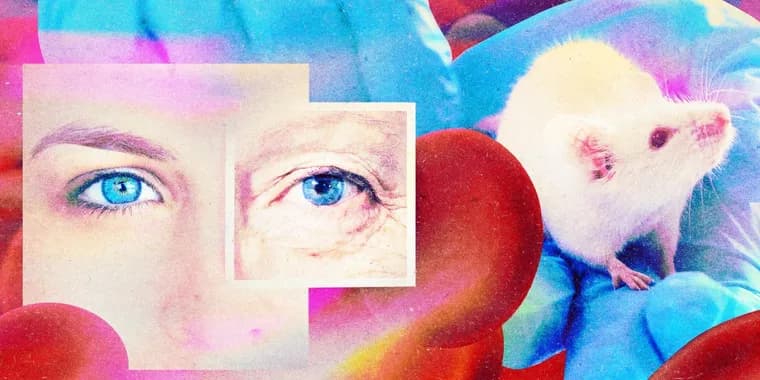
The first item, by Antonio Regalado, covers Generation Lab, a startup whose scientific founder is Irina Conboy. Conboy's earlier research found that joining the circulatory systems of old and young mice improved the old mice's ability to heal from injury. Generation Lab now says it has found a combination of two existing drugs that produces similar youthful effects without needing to exchange any bodily fluid between individuals. A company fact sheet claims the treatment 'blocks the systemic spread of aging in the bloodstream, reawakens the body's own repair mechanism and restores health and youth to multiple tissues.' Generation Lab will not say which two drugs make up the combination, which the article says makes the claim hard to take seriously; the company had offered the writer a chance to write about, and even receive, the treatment.
The second item, by Eshan Raul, part of the newsletter's How To series, explains virtual power plants (VPPs): networks of household devices such as smart thermostats, EV chargers, home batteries and solar panels that a utility can remotely control, usually by drawing less power from them during peak hours. In exchange, participants get a discount on their energy bills and, in some cases, a signing bonus. The piece walks through how to sign up for a VPP and how to weigh whether it is worth doing.
The newsletter's must-reads list of ten headlines leads with a federal judge blocking the Pentagon's blacklisting of Anthropic, ruling that the designation violated the company's First Amendment rights; a separate report says the designation was also found to be based on retaliation, and Anthropic still faces another case in Washington, DC. Over 100 companies have called for a defensive surge against AI-driven hacking, warning that a wave of cyberattacks is imminent and urging governments and industry to act quickly, with more AI tools cited as the main proposed defense. Anthropic has launched an AI tool that conducts scientific experiments, letting AI agents autonomously operate microscopes, lasers and robotic arms under rules meant to keep lab operations safe; the newsletter calls it Anthropic's first tool built for the physical world. A separate headline covers India's data center boom, arguing that communities displaced to build the centers are being left with nothing as policymakers court big tech companies. OpenAI is reported to be testing a 'persistent' AI agent, built on its Codex coding tool, that can keep working on a task until it is deliberately 'put to sleep' and can generate follow-up tasks on its own without being prompted. A lawsuit alleges that the Grok chatbot was trained on child sexual abuse material, claiming victims' images entered its training data; a federal judge is quoted as saying that AI has outpaced child-abuse laws. Other headlines note that AI-written commentary has reached what the newsletter calls a turning point in media coverage, sparked by the Wall Street Journal defending an AI-written opinion piece; that China's robotic racers are exposing the physical limits of human speed; that young workers are turning to hands-on traditional crafts seen as harder for AI to replicate; and that Italian researchers released 150,000 baby octopuses into the Adriatic Sea as an effort to control invasive crab populations.
The newsletter's quote of the day comes from a preprint by researchers at Samsung and the University of Warsaw, warning that 'the academic record is being quietly haunted' by a growing volume of AI-generated study papers credited to fake researchers that is contaminating academic publishing.
The longer 'One More Thing' feature, by Ben Crair, revisits the idea that many people carry an 'inner Neanderthal': the theory that Homo sapiens interbred with Neanderthals, leaving some people today with traces of Neanderthal DNA, described as one of the most celebrated discoveries in human evolution research. In 2024, a pair of French geneticists challenged the theory's foundations, proposing that what scientists interpret as interbreeding could instead be explained by population structure, the way genes concentrate within smaller, isolated groups.
A lighter closing section pointed readers to wildlife photography, trash-collecting bowerbirds in Australia, an over-40s skate park in a Los Angeles Costco parking lot, and a museum cataloguing the sound of mechanical keyboards.
Key facts
- Generation Lab, founded by scientist Irina Conboy, claims a combination of two existing drugs produces antiaging effects in the bloodstream without any fluid exchange between people, but the company will not name the drugs.
- A virtual power plant lets a utility remotely control household devices like thermostats, EV chargers and solar panels, usually cutting their draw during peak hours, in exchange for bill discounts and sometimes a signing bonus.
- A federal judge blocked the Pentagon's blacklisting of Anthropic, ruling it violated First Amendment rights, while a separate ruling found the designation was based on retaliation.
- Anthropic launched an AI tool that lets AI agents autonomously operate microscopes, lasers and robotic arms, its first tool built for the physical world.
- OpenAI is reportedly testing a persistent AI agent built on its Codex tool that keeps working until deliberately 'put to sleep' and can generate follow-up tasks unprompted.
Why it matters
The edition pairs an unverified health claim with two solid pieces of AI news. Generation Lab's promise of stopping the spread of aging is impossible to evaluate while the drugs themselves stay secret, so the item works better as a caution about how longevity claims get marketed than as medical news. Anthropic's court win narrows how far a US government agency can go in penalizing an AI company over its output, and its new lab tool marks the company's first step from software into operating real lab equipment. OpenAI's persistent Codex agent points at the same direction the industry is heading: agents meant to keep running unattended rather than respond to a single prompt.
Who it affects
Anyone offered a longevity treatment to test, and the 'longevity influencers' Generation Lab courts for coverage; homeowners weighing whether to enroll a thermostat, EV charger or home battery in a utility's VPP program; Anthropic, now shielded from this particular blacklisting but still facing a separate Washington, DC case; OpenAI's Codex users, whose workflow changes if agents run unattended; the parties in the Grok child sexual abuse material lawsuit; and researchers whose published record is put at risk by AI-generated fake studies, per the Samsung and University of Warsaw preprint.
How to use it
The VPP item is the actionable one: check with a local utility whether it runs a VPP program, which devices qualify, and what discount or signing bonus applies before enrolling. The antiaging item is not actionable. With the drug combination undisclosed, there is nothing a reader could look up, buy or replicate, and the piece itself treats the lack of disclosure as reason for skepticism rather than as a treatment worth seeking out.
How solid is it
The two banner items are original MIT Technology Review reporting with named bylines, Antonio Regalado and Eshan Raul respectively. The antiaging claim itself rests entirely on Generation Lab's own fact sheet and Conboy's say-so; with the drugs unnamed, the mechanism cannot be verified independently. The ten-item must-reads list is secondhand: each headline credits another outlet, among them the New York Times, CNBC, Reuters, the BBC, Quartz, Gizmodo, Wired, Ars Technica, the Washington Post, the Atlantic, Rest of World and New Scientist, rather than Technology Review's own reporting, so any number drawn from that list should be traced to the outlet named beside it.
Risks and caveats
Generation Lab does not disclose which two existing drugs make up its antiaging combination, so its safety and even its basic plausibility cannot be independently assessed. The newsletter gives no timeline or typical size for a VPP signing bonus or bill discount. The Samsung and University of Warsaw preprint on AI-generated fake research papers is not named, and no publication date or DOI is given. The lawsuit over Grok's training data does not specify a count or identity for the alleged victims. Anthropic's new scientific-experiment tool is not named in the item. The octopus release meant to control invasive crabs is placed only in 'the Adriatic Sea', with no more specific location given.
“The academic record is being quietly haunted.”
— a preprint from Samsung and the University of Warsaw, MIT Technology Review's Quote of the Day