Tim O'Reilly: big AI labs built an architecture of control
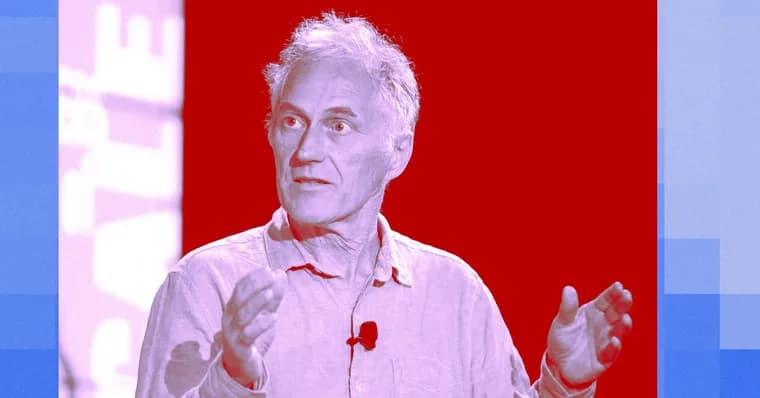
Wired's Steven Levy interviewed Tim O'Reilly, the publisher, internet pioneer, VC, conference organizer and longtime tech commentator, for his Backchannel newsletter. O'Reilly's argument: the big AI labs have told themselves that having the biggest, best model is the key to the future, and that narrative is wrong. He says today's frontier models, Claude among them, are optimized for particular use cases rather than what most people actually want, and that the labs have built what he calls an architecture of control rather than an architecture of freedom and participation, one that lets them track users the way Microsoft tried to lock people into its products in the 1990s. O'Reilly's fix is broader than open-weight models, which he says is what most people mean when they say open-source AI. His version means unlocking the whole stack, model, harness and application, with a clean separation between the three so users can plug in their own tools rather than being confined to what one company ships. He points to a possible split ahead: frontier models could end up like mainframes or supercomputers, reserved for genuinely hard problems, while lower-level, open models do the diffusing through everyday life, the way the web caught Silicon Valley off guard in the early 1990s while everyone was fighting over who would control the PC. He also raises a competitive stake: the US could win the race for frontier AI and still lose overall if China diffuses lower-level, open models more widely through its society. On security, O'Reilly turns the usual objection around, arguing that every cybersecurity incident so far has come from frontier models, which he takes as a reason to slow those models down rather than to restrict open-weight ones. O'Reilly reports that people are saying two AI systems he refers to as Fable and Sol write worse than lower-level models; Wired's editorial note in the piece states that Anthropic and OpenAI would disagree. He connects the pattern to what he calls Silicon Valley's turn toward anti-capitalism since around 2010, when Uber and Lyft's VC-funded ride subsidies let venture capitalists pick market winners directly rather than letting the market decide, a template he says now applies to AI funding. Countering it, he says, is his nonprofit's AI Disclosures Project, including work on an open-memory consortium meant to prevent the kind of lock-in he associates with Mark Zuckerberg's stated thesis that Meta will keep users by giving them the AI that knows them best; he also cites an open-source agentic harness called Pi as an example of the kind of participatory building he wants to see more of. The interview turns personal on AI and writing. Levy notes that he will edit the interview down himself without AI help, as a matter of the newsletter's policy. O'Reilly pushes back on the idea that this restraint will last, comparing it to how photography once seemed to threaten portraiture and landscape painting: he expects people to become masters at expressing ideas through language models, much as painters kept working after cameras arrived. He also discusses O'Reilly Media's own book business, whose revenue has fallen from roughly $70 million at its peak to about $30 million now over a 25-year decline, as the company looks for ways to keep compensating experts for their knowledge even as AI tools absorb it.
Key facts
- O'Reilly argues big AI labs built an architecture of control rather than freedom, letting them track users the way Microsoft tried to lock in customers in the 1990s.
- His open-source vision goes beyond open-weight models: he wants the model, harness and application cleanly separated so users can swap providers and tools freely.
- He warns the US could win the frontier AI race and still lose to China if China diffuses lower-level, open models more widely through society.
- O'Reilly says every cybersecurity incident seen so far has come from frontier models, an argument he uses for slowing frontier models rather than restricting open-weight ones.
- O'Reilly Media's book business has shrunk from about $70 million at its peak to about $30 million now, over a 25-year decline, as O'Reilly looks for new ways to compensate experts.
Why it matters
O'Reilly is arguing against the industry's dominant strategy in public: that scaling the single biggest, best model is the winning move. He frames the current frontier labs, including Anthropic with Claude, as building for control and lock-in rather than for what ordinary users need, and he draws a direct historical parallel to the web catching Silicon Valley off guard in the early 1990s while the industry fixated on who would control the PC. If he is right, the fight over frontier-model scale is a distraction from where the real diffusion and innovation will happen.
Who it affects
The argument targets the strategy of the large AI labs and hyperscalers directly, but its practical audience is builders and users deciding how much to invest in a single vendor's stack versus open, swappable tooling. It also touches O'Reilly's own business: as book revenue keeps declining, O'Reilly Media is trying to work out how to keep compensating experts for knowledge that AI tools now absorb and repackage.
How to use it
O'Reilly points to concrete projects rather than only argument: Pi, an open-source agentic harness, as an example of the participatory building he wants to see, and his nonprofit's AI Disclosures Project, which is working on an open-memory consortium meant to let users keep their context and switch models or providers without losing it, countering the lock-in he attributes to Mark Zuckerberg's stated strategy at Meta.
How solid is it
This is a single interview subject's argument, not a study or dataset. O'Reilly explicitly declines to predict the future, saying only that events are unfolding as he hoped. One of his specific claims, that people say the models he calls Fable and Sol write worse than lower-level models, is directly disputed in the piece itself: Wired's own editorial note says Anthropic and OpenAI would disagree.
Risks and caveats
The piece names no specific cybersecurity incidents to back O'Reilly's claim that all such incidents have come from frontier models, and gives no detail on the open-memory consortium or the Pi harness beyond their names. The interview does not say when the conversation took place. Readers should treat O'Reilly's predictions, about China, about frontier models becoming mainframes, about AI and writing, as one insider's stated bet, not an established outcome.
“No, no, it's about the architecture of the system. Does it enable participation?”
— Tim O'Reilly