Trump orders government to say 'Super Intelligence' instead of AI
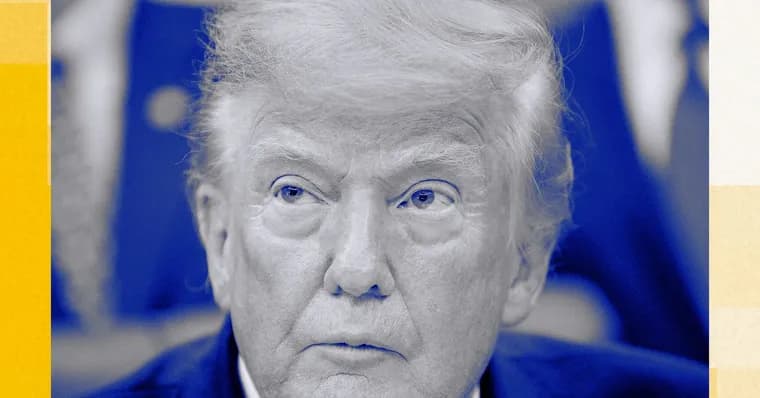
This is an opinion column from Steven Levy's and Lauren Goode's Backchannel newsletter at Wired, written in the first person. Its account: at a White House lunch with top AI leaders this week, President Donald Trump issued an executive order declaring 'artificial intelligence' a verboten coinage. The government will call the field 'Super Intelligence' instead, and the author says the president clearly expects the private sector to follow suit. Trump had hinted at the idea in a September 23 speech at the United Nations.
The author sets this against history. Seventy years ago last summer, scientists met at Dartmouth College to discuss whether machines might one day think in humanlike ways, and John McCarthy suggested the name 'artificial intelligence' for the new field. A Google Scholar search for the term returns approximately 7,420,000 results. In 1956, the author writes, McCarthy used the word to distinguish human intelligence from the machine version.
Trump's stated reason, per the column, is that 'the word 'artificial' makes intelligence fake. And it is not fake.' After the lunch he called it 'a fake word, it's not good, an inappropriate term.' The author speculates that this impulse may be linked to Trump's decision to bounce CNN, Politico and MSNow from the White House because he perceives their news as 'fake'.
The column's main target is the executives. Apparently not a single person in the room objected, the author says, naming Jeff Bezos, Jensen Huang, Dario Amodei, Mark Zuckerberg, Sundar Pichai, Greg Brockman, Alex Karp and Elon Musk. Jacob Weisberg, author of the recent book Profiles in Cowardice: A Study of Collaboration in the Trump Era, views the episode as a classic Trump loyalty test, meant to assess whether powerful people will demean themselves to curry the president's favor and avoid his wrath. Weisberg says: 'The only way to resist this kind of thing is by acting collectively.' The author adds that, because of the silence, Trump could claim the leaders actively blessed his idea. When a reporter in the post-lunch press gaggle mentioned AI agents, Trump corrected her: 'The name has been changed by the biggest, the smartest, the greatest people anywhere in the world.'
The author says he could not find a single instance of any of those executives previously arguing that the term should be put to rest. Satya Nadella did once say he would have preferred AI to be called 'different intelligence', but still uses the term repeatedly. Zuckerberg recently established a Superintelligence Lab, yet Meta pushes a product called Meta AI to its billions of users and sells what it calls AI glasses. The author asked Google, Microsoft, Anthropic, Meta, Amazon, OpenAI and xAI whether they would change instances of AI in product names, research papers and communications; he asked OpenAI and xAI whether they would change their company names. As he wrote, none had replied.
His bet, which he labels a bet, is that the companies will do the minimum to avoid presidential ire while trying to run out the clock until the next administration. He is skeptical that executives welcome the rebrand, since 'super intelligence' sounds, in his words, a lot scarier than the original term.
On the science, he cites Nick Bostrom, the philosopher who popularized the term superintelligence in an eponymous book. In an email, Bostrom said superintelligence 'refers specifically to systems that greatly surpass all the best human brains', while 'AI' covers a much broader category including email spam filters, spell checkers, simple navigation systems, early LLMs and the chess engines of the '70s. He finds it awkward to call those 'superintelligent'.
The author closes with policy. He argues that the executives left with the prize of self-regulation instead of strict oversight, but not with their dignity, and that failing to defend the freedom to say 'artificial intelligence' (as California governor Gavin Newsom decreed in his own Trump-trolling executive order) casts doubt on even that agreement. He also says mandating a clear distinction between human and AI output, with watermarks and labels, should be one element of the AI regulation that the White House seems allergic to.
Key facts
- Per a Wired Backchannel column, Trump issued an executive order at a White House lunch with AI leaders declaring 'artificial intelligence' a verboten term; the government will say 'Super Intelligence'.
- The author says apparently nobody in the room objected, naming Bezos, Huang, Amodei, Zuckerberg, Pichai, Brockman, Karp and Musk; Jacob Weisberg calls it a classic Trump loyalty test.
- Trump argued that 'artificial' makes intelligence fake; Nick Bostrom told the author that superintelligence refers specifically to systems that greatly surpass all the best human brains, while AI is a much broader category.
- The author asked seven companies (Google, Microsoft, Anthropic, Meta, Amazon, OpenAI, xAI) whether they would change names or communications; none had replied when he wrote.
- The author bets the companies will do the minimum to avoid presidential ire and wait out the administration; he also says the executives left with self-regulation instead of strict oversight.
Why it matters
Per the column, this is the government choosing to rename the field at the center of the AI industry, a term used since the 1956 Dartmouth era. The author sees it as less a naming question than a test of whether powerful executives will push back on a presidential demand. He also argues the executives got self-regulation instead of strict oversight in the same meeting, so the silence has a policy price tag in his reading. All of this is his interpretation in an opinion piece.
Who it affects
Directly, the federal government, which per the column will now say 'Super Intelligence'. The author says the president clearly expects the private sector to follow, which puts the biggest AI companies in question: Google, Microsoft, Anthropic, Meta, Amazon, OpenAI and xAI, plus names like Meta AI and OpenAI itself. Researchers and the public would be affected if the new term spreads, since Bostrom says superintelligence and AI mean different things.
How to use it
There is nothing to adopt or install here. The practical points for a reader following the story: the government will use 'Super Intelligence' in its own wording, and the companies' responses on product names, papers and communications are still unknown. The author's own policy suggestion is that watermarks and labels should make the human versus AI distinction explicit.
How solid is it
This is a first-person opinion column from the Backchannel newsletter, not a straight news report. The core event rests on the author's account of the lunch; the text of the order is not quoted, and no order number, title or exact date is given. Quotes from Trump, Weisberg and Bostrom are attributed in the piece, and the author says he found no earlier calls from the executives to retire the term. The line about the executives' silence is hedged by the author himself ('apparently'). The Newsom reference is a parenthetical, and the order's contents are not described.
Risks and caveats
The column is openly critical, with charged language ('lamblike silence', 'crank-in-chief'), so tone should not be read as fact. The link between Trump's view of 'fake' and his bouncing of CNN, Politico and MSNow is the author's speculation. His forecast that companies will do the minimum and wait out the administration is a bet, not a report. No legal effect or enforcement mechanism of the order on private companies is described, none of the seven companies had responded at the time of writing, and the terms of the self-regulation agreement are not described.
“The only way to resist this kind of thing is by acting collectively”
— Jacob Weisberg, author of Profiles in Cowardice: A Study of Collaboration in the Trump Era, in Wired's Backchannel newsletter