Vijay Pande left a16z's nearly $4bn practice for tiny VZVC
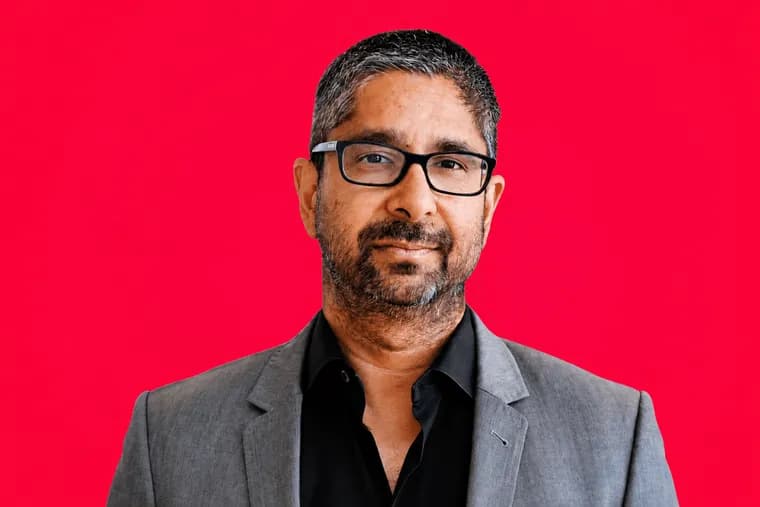
Vijay Pande spent years as a Stanford chemistry professor best known for Folding@home, the distributed-computing project that turned millions of home PCs into a supercomputer for disease research. About a dozen years ago, Marc Andreessen and Ben Horowitz, whose venture firm had explicitly avoided healthcare and life sciences for its first five years, decided the category was worth betting on after all and handed the practice to Pande. Over the following decade-plus he built it into a practice at Andreessen Horowitz, known as a16z, managing close to $4 billion.
In June 2025, Pande left a16z to co-found a much smaller firm, VZVC, with longtime investor Zach Werner. He tells TechCrunch that VZVC makes about five concentrated bets a year rather than the roughly 30 he says a typical fund might make. The firm has no associates on the investment side and relies heavily on AI for its day-to-day work; Pande says VZVC had planned to hire associates but decided against it once its own AI agents made that unnecessary. He describes the difference in commitment with two analogies: adding a company at a typical fund, he says, is like adding a friend on Facebook, something done quickly, while for him and Werner it is closer to wanting to have another child.
Pande argues biology is shifting from what he calls a 'science of discovery' to something that can be engineered. AI and machine learning, he says, now help identify which targets a drug should hit for a given disease, help design the drug itself, and increasingly assist with clinical trials, which he calls the most expensive part of the process. He puts the odds of a drug succeeding all the way from the first trial through the end of the third at just 20%, meaning roughly eight in ten fail, with a single trial able to cost hundreds of millions of dollars. The usual cause of failure, he says, is not that biologists made a mistake, but that the drugs were designed and tested on animal models, such as mice, that turn out not to predict human outcomes very well. He expects AI models used in their place to be imperfect but still far better than animal models.
On precision medicine, Pande says blood test results are typically compared only to population averages, when they should be compared against what is normal for that individual patient. Genomics alone will not get there, he argues, because a person's genome is like the blueprint for a house on the day it was built, while the house itself, meaning the body, changes substantially afterward. He points to newer measurements such as proteomics, combined with AI-linked robotic lab automation, as more relevant for tracking a person's current state of health.
Pande also describes what he sees as one of AI biotech's central problems: unlike text, biological data cannot simply be scraped from the internet, so almost every company ends up building its own closed, proprietary dataset that cannot be distilled from one model into another. He expects that to change as the field builds shared 'atlases' of biological information, typically structured as foundation models, and predicts open-source foundation models in biology will eventually have the kind of broad impact that open-source large language models have already had against corporate ones.
Pande says he remains involved with Genesis Therapeutics, a company that came out of his Stanford lab, and with Insitro, the drug-discovery company founded by Daphne Koller, a former Stanford colleague. He also says he is incubating a company with a founder he has known for 20 years, whom he does not name. Asked who inspires VZVC's model, he points to Antonio Gracias of Valor, well known now for the SpaceX deal but running a similarly concentrated approach for 20 years, and to the firm Thrive's more concentrated portfolio, alongside a16z itself, which he calls 'sort of in my DNA.'
Asked what is overhyped right now in AI and biotech, Pande says it is the claim that AI is going to 'cure all everything.' The problem, he says, is not doubt about AI itself but doubt about the underlying data: when the data needed simply is not there, AI cannot magically solve the problem.
Key facts
- Vijay Pande built a16z's healthcare and life sciences practice into one managing close to $4 billion, then left in June 2025 to co-found VZVC with longtime investor Zach Werner.
- VZVC makes about five concentrated bets a year instead of the roughly 30 a typical fund might make, has no associates on the investment side, and uses AI agents to do work the firm once expected associates to handle.
- Pande says a drug's odds of succeeding from the first clinical trial through the end of the third are just 20%, largely because drugs are designed and tested on animal models, such as mice, that poorly predict human outcomes.
- Because biological data cannot be scraped from the internet the way text can, Pande says biotech companies end up with siloed, proprietary datasets, though he expects a shift toward shared 'atlas' foundation models similar to open-source large language models.
- Pande remains involved with Genesis Therapeutics, which came out of his Stanford lab, and Insitro, founded by former Stanford colleague Daphne Koller, and cites Antonio Gracias of Valor and the firm Thrive as models for VZVC's concentrated approach.
Why it matters
A marquee health tech investor walking away from a practice managing close to $4 billion to run a two-person, AI-heavy fund is a visible data point in a broader venture capital shift toward fewer, more concentrated bets, and Pande frames his firm's AI use as a direct substitute for hiring associates rather than a side experiment. His account of AI in biotech carries its own weight too: he argues AI models could soon outperform the animal models that drug development has relied on for decades, and he lays out why biological data resists the scraping and distillation that built today's large language models, a structural difference that shapes how AI-driven drug discovery is likely to develop.
Who it affects
Founders raising money see a concrete example of what a concentrated fund expects: fewer investments, but a much closer and longer relationship than a typical fund doing dozens of deals a year. Other investors watching the trend get named reference points in Antonio Gracias's Valor and the firm Thrive, both cited by Pande as models for concentration. Biotech and health-tech entrepreneurs building AI-driven drug discovery or precision medicine products get a direct read on the data and clinical trial problems Pande says the field still has to solve. More broadly, patients and drug developers stand to benefit if AI-assisted trial design and precision medicine actually cut into a clinical failure rate Pande puts at roughly eight in ten.
How to use it
For founders pitching venture funds, Pande's account suggests that a concentrated fund like VZVC competes less on speed than a typical fund and more on long-term trust, so positioning a pitch around a multi-year relationship matters more than around a fast close. For anyone building AI tools in biotech, the practical lesson he draws is that access to a usable biological dataset matters more than it does for text-based AI, since that data cannot be scraped or distilled the way language-model training data can; shared 'atlas' foundation models are the emerging alternative worth tracking. For clinicians or health systems, his point about comparing a patient's lab results to their own baseline rather than to population averages describes a specific, actionable difference from current practice.
How solid is it
This is a TechCrunch interview transcript, edited for length and clarity, so every figure in it is Pande's own account, not independently verified or sourced to a study in the piece. The close-to-$4-billion AUM figure, the 20% trial-success rate, the hundreds-of-millions-of-dollars trial-cost estimate, and the five-versus-roughly-30 bets a year comparison all rest on his say-so as the interview subject. His view that open-source biology foundation models will eventually rival corporate ones, and that AI will beat animal models at predicting drug outcomes, are explicitly framed in the interview as his own expectations rather than established results.
Risks and caveats
The interview does not disclose VZVC's fund size or how much capital it has raised, so how much money backs those five or so bets a year is unknown. Pande does not name the founder or company he says he is incubating, and his own formal title at VZVC is not stated either. His central caution, that AI cannot substitute for missing data no matter how capable the model, cuts both ways: it applies just as much to his own optimism about AI-driven drug discovery and precision medicine as it does to the 'AI cures everything' claims he says are overhyped.
“The probability of a drug going successfully from the first trial to the end of the third trial is just 20%.”
— Vijay Pande