Virtual power plants pay you to let a utility adjust your thermostat
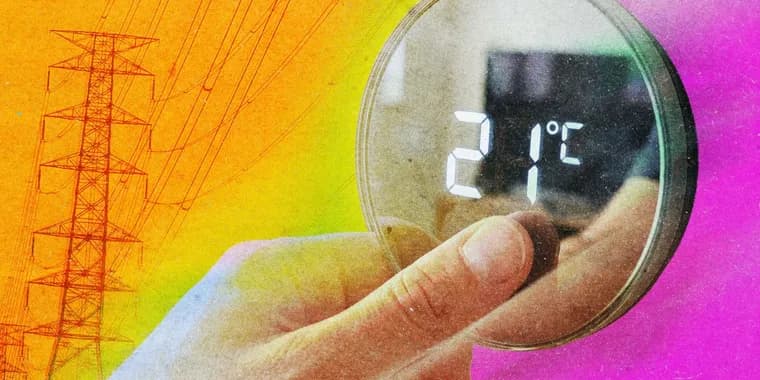
MIT Technology Review published a consumer guide, part of its How To series, on joining a virtual power plant and deciding whether you should. A virtual power plant, or VPP, is a collection of household devices such as smart thermostats, electric-vehicle chargers, home batteries, and solar panels that a utility can control. Usually that means commanding the devices to draw less electricity during peak hours: the utility might adjust your thermostat, or delay or slow EV charging, when demand is high. In exchange, participants get a discount on their energy bills and, in some cases, a signing bonus.
The payout depends on the device. Seth Frader-Thompson, CEO and cofounder of EnergyHub, a software company that helps utility companies run VPP programs, says a smart thermostat program may offer an initial bonus of roughly $50 to $150, plus about $25 to $50 per year, while home battery and EV devices could yield hundreds or thousands of dollars in annual savings. The amount of power a utility throttles in any single home is small, but it adds up. "When you put it together at the scale of hundreds of thousands, or millions, it has a pretty profound impact," Frader-Thompson says, equivalent to "firing up a power plant."
As of 2023 there were already more than 500 VPP programs operating in the US alone, and the number has only grown since, especially with big players like Google starting to invest in the technology to help power their data centers. An estimated 4 million households with smart thermostats were enrolled in a VPP program as of last year. Most consumer VPPs today are less dramatic than the name suggests and do not actively send energy from your EV or home battery to the grid, though battery-to-grid programs are on the rise and potentially offer even larger savings for consumers in future.
Step one in the guide is to check whether your utility has a program and whether it actually supports your devices. The phrase "virtual power plant" may not appear anywhere on the utility's site, so the guide suggests searching the utility's name plus terms like "demand response," "peak rewards," "connected solutions," "battery storage," "smart thermostat rewards," "managed charging," or "bring your own device." The utility is not where most people find out, Frader-Thompson says: "The way most people actually learn about this and sign up is through the manufacturer of the device they have." The offer often surfaces in a thermostat, EV, or battery app, or in an email from the company that made the device. Enrollment can be as simple as clicking through an app, filling out a utility form, or confirming account and device details on a third-party enrollment page; EV drivers may see the terms and payment in their automaker app and enroll "with a click of a button," says Joseph Vellone, CEO of the EV-focused VPP company ChargeScape. Eligibility gets annoyingly specific: a thermostat program could require an approved Wi-Fi thermostat, an EV program may depend on your automaker, charger, utility territory, or rate plan, and a battery program may depend on the battery brand, inverter, or installer and whether the system can communicate with the utility. Programs are not evenly distributed either. Most are established where there are lots of flexible devices, stressed grids, supportive utilities, or strong state policies, especially California, Texas, New England, and increasingly parts of the mid-Atlantic region.
Step two is asking how much flexibility you can afford, even though the utility typically adjusts a device only a few times a week. If an EV sits plugged in all night but needs only two hours to charge, shifting when that charging happens may be almost invisible. A home battery program could be lucrative if you understand how often the battery will be used, how much backup power you can keep, and whether extra cycling affects your equipment. Other households, says Sanya Carley, a professor at the University of Pennsylvania and faculty director of the Climate Center for Energy Policy, "do not have the flexibility to engage in one of these programs": people who work night shifts, have caregiving responsibilities or health needs, or are already aggressively limiting their energy use to save money.
Step three is the opt-out rules and the fine print. Programs generally give participants the ability to override temporary changes, which is what makes them workable: skipping a day on the thermostat when guests are coming, telling the car to charge immediately before a road trip, keeping a battery reserve for outages. Utilities are typically motivated to keep that process simple, with few rules and restrictions. Data is the other half of the fine print. EV and battery programs may collect charging status and schedule or how much power a device is drawing, while thermostat data may reveal patterns about when people are home, sleeping, or using appliances. The Electronic Frontier Foundation, a nonprofit focused on digital rights, has warned that this data could be used to infer private routines inside a home, and that depending on the program it may travel beyond the utility to device manufacturers, software platforms, or other third parties involved in running it. ChargeScape and EnergyHub say the data used is limited and functional. EV data is focused on "the physics and the energy of the asset itself," Vellone says, and Frader-Thompson adds: "It doesn't really matter what any one customer is doing. It matters what the average customer is doing."
Step four is deciding whether the offer is worth it to you. Compensation varies widely and may not arrive as a regular check: it might be a signup bonus, a gift card, a monthly bill credit, a discounted thermostat, free or cheaper EV charging, an annual performance payment, or additional "export credits" for energy sent back to the grid. The most expensive devices, namely EVs and home batteries, are often what yield the greatest savings, which adds a barrier to entry for people who cannot afford those products in the first place; a smart thermostat program is the low-stakes way to start. Severin Borenstein, faculty director of UC Berkeley's Energy Institute at Haas and a member of the board of governors of the California Independent System Operator, which manages most of that state's electric grid, cautions that the approach is still new and some programs may have kinks to work out. If a program is not implemented well, he says, a utility may incorrectly predict when participants plan to use more electricity and pay them for not using energy they weren't planning to use anyway, potentially increasing energy bills for nonparticipants. Still, "if we do it well, I think it can really be a benefit," Borenstein says, one that could help utilities avoid an expensive grid upgrade or emergency measures to conserve power. The guide's closing advice: the best VPP program is not necessarily the one that pays the most, but the one that clearly states what it can control, how much money you get, how easily you can say no, and how well it supports a community's energy goals.
Key facts
- A smart thermostat VPP program may offer an initial bonus of roughly $50 to $150 plus about $25 to $50 per year, while home battery and EV devices could yield hundreds or thousands of dollars in annual savings, says EnergyHub CEO and cofounder Seth Frader-Thompson.
- As of 2023 more than 500 VPP programs were operating in the US alone, and an estimated 4 million households with smart thermostats were enrolled in one as of last year.
- The phrase "virtual power plant" often does not appear on a utility's website, so the guide suggests searching the utility's name plus terms like "demand response," "peak rewards," "managed charging," or "bring your own device"; Frader-Thompson says most people actually sign up through the maker of the device they already own.
- Adjustments typically happen only a few times a week and can generally be overridden, but Sanya Carley of the University of Pennsylvania says night-shift workers, people with caregiving responsibilities or health needs, and households already cutting energy use hard often lack the flexibility to take part.
- The Electronic Frontier Foundation warns that thermostat, EV and battery data could be used to infer private routines inside a home, and that it may be distributed beyond the utility to device manufacturers, software platforms, or other third parties running the program.
Why it matters
The bargain is control for cash: a utility gets to trim what your thermostat, charger, or battery draws during peak hours, and pays you for the privilege. One home barely registers, but Frader-Thompson argues the aggregate does: "When you put it together at the scale of hundreds of thousands, or millions, it has a pretty profound impact," equivalent to "firing up a power plant." The market is already sizeable. More than 500 VPP programs were running in the US as of 2023, the count has grown since, and big players like Google have started investing in the technology to help power their data centers. Borenstein's version of the upside is a grid one: done well, VPPs could help utilities avoid an expensive grid upgrade or emergency measures to conserve power. Today's consumer programs are mostly about drawing less rather than exporting power back, but battery-to-grid programs are on the rise and could pay consumers more in future.
Who it affects
Anyone who owns a smart thermostat, an EV or EV charger, a home battery, or solar panels is a candidate, and roughly 4 million households with smart thermostats were already enrolled as of last year. Geography narrows it: programs cluster where there are lots of flexible devices, stressed grids, supportive utilities, or strong state policies, especially California, Texas, New England, and increasingly parts of the mid-Atlantic. Household circumstances narrow it further. Carley points to night-shift workers, people with caregiving responsibilities or health needs, and households already cutting their energy use hard as those with little room to let a utility shift heating, cooling, or charging. Money narrows it too: the biggest savings come from EVs and home batteries, the very hardware that costs the most to buy. Nonparticipants are in the picture as well, because Borenstein warns a badly run program could push their bills up. On the other side sit the utilities and the companies that run these programs for them, such as EnergyHub and ChargeScape.
How to use it
Start with your utility's website, but expect the words "virtual power plant" to be missing. Search the utility's name alongside "demand response," "peak rewards," "connected solutions," "battery storage," "smart thermostat rewards," "managed charging," or "bring your own device." Then check the app for the device you already own, since Frader-Thompson says that is how most people actually hear about these programs. Signing up can mean clicking through an app, filling out a utility form, or confirming your account and device details on a third-party enrollment page, and EV drivers may find the terms and payment in their automaker app and enroll "with a click of a button," per ChargeScape CEO Joseph Vellone. Check eligibility carefully: a thermostat program could require an approved Wi-Fi thermostat, an EV program may hinge on your automaker, charger, utility territory, or rate plan, and a battery program on brand, inverter, installer, and whether the system can talk to the utility. Before signing, work out how often you can absorb an adjustment (typically a few times a week), read the opt-out rules, ask where the data goes, and look at the form the money takes. It might be a signup bonus, a gift card, a monthly bill credit, a discounted thermostat, free or cheaper EV charging, an annual performance payment, or extra "export credits." A smart thermostat program is the low-stakes way in. No specific utility company is named as running a VPP program; the source gives only categories of search terms to try.
How solid is it
This is a consumer how-to from MIT Technology Review's How To series, not new research or a product announcement, and the article carries no named byline in the text. Its facts come from named, on-the-record sources rather than a dataset: the payment ranges are Frader-Thompson's, and he runs EnergyHub, a company that sells software to utilities for running these very programs, while Vellone leads ChargeScape, an EV-focused VPP company. The independent counterweight is Borenstein, faculty director of UC Berkeley's Energy Institute at Haas and a member of the board of governors of the California Independent System Operator, plus Carley at the University of Pennsylvania and the EFF on privacy. Two market figures are dated: the 500-plus programs are stated as of 2023, and no calendar year is given for the 4 million households figure, since the text says only "as of last year" with no anchor date. The dollar ranges are given as "roughly" and "about" and describe what a program may offer, not a guaranteed rate. No contract length or minimum commitment period for enrolling in a VPP program is mentioned.
Risks and caveats
The economic risk is not to participants but to everyone else. Borenstein's caution is that a utility may incorrectly predict when participants planned to use more electricity and pay them for not using energy they weren't planning to use anyway, potentially increasing energy bills for nonparticipants. The privacy risk is direct: EV and battery programs may collect charging status and schedule or how much power a device is drawing, thermostat data can reveal when people are home, sleeping, or using appliances, and the EFF warns the data could be used to infer private routines inside a home and may get distributed to device manufacturers, software platforms, or third parties involved in running the program. ChargeScape and EnergyHub counter that the data is limited and functional, with Vellone describing EV data as "the physics and the energy of the asset itself" and Frader-Thompson saying it matters what the average customer is doing rather than any individual one. On the hardware side, the guide tells prospective battery participants to check how often the battery will be cycled, how much backup power they can keep, and whether the extra cycling affects their equipment. Payment may be a gift card or bill credit rather than cash, the fine print on eligibility is fussy, and equity cuts through the whole thing: the devices that earn the most are the ones many households cannot afford. No dollar figure is given for battery-to-grid program savings, only that they "potentially offer even larger savings" than current programs.
“When you put it together at the scale of hundreds of thousands, or millions, it has a pretty profound impact”
— Seth Frader-Thompson, CEO and cofounder of EnergyHub