Washington shelves AI regulation after executives call Trump
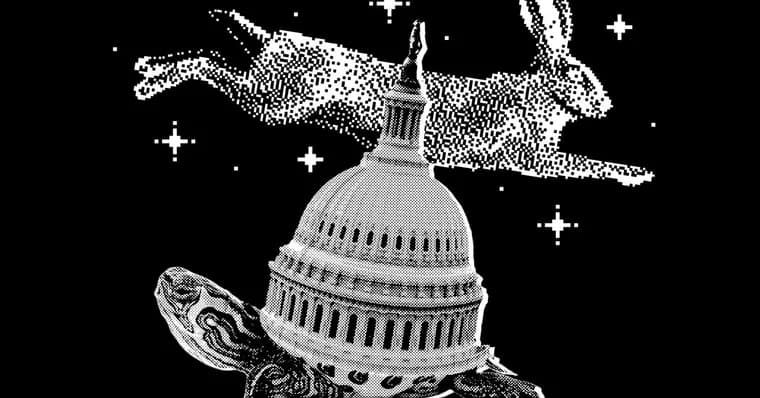
White House aides began sketching a framework for a federal AI oversight agency soon after Google DeepMind cofounder Demis Hassabis floated the idea in a July 14 essay and in briefings to senior officials. The Treasury Department and the White House Office of Science and Technology Policy drafted a preliminary version in which leading AI labs would self-regulate frontier model development. When a group of tech executives, including Trump's former AI czar David Sacks and Meta CEO Mark Zuckerberg, learned of the effort, they each called President Trump in August to object, and the proposal has sat in limbo since. According to sources familiar with the matter, no new AI oversight proposal has been seriously considered at the White House since then. Trump has instead hardened his opposition to regulation, calling AI safety concerns a "hoax" in a recent Truth Social post. His irritation stems partly from a 3,822 word essay by Anthropic CEO Dario Amodei on the dangers of frontier AI; aides reportedly viewed it as stoking anxiety and creating unnecessary headaches for the administration, even though it represents a comparatively moderate position within AI policy circles.
With the White House sidelined, several bills are pending in Congress, but the House calendar has no voting days left until after the midterm elections, and no single bill has unified support. The bipartisan Frontier Act, introduced by House Democratic senior whip Lori Trahan and Republican Jay Obernolte of the House Energy and Commerce Committee, has the most backing inside the House Democratic caucus and among AI executives, including public support from OpenAI. As drafted, it would let the Commerce Department embed auditors at AI labs who could report critical safety incidents and let the administration halt development of a model judged to pose catastrophic risk. The White House remains undecided, facing skepticism from AI accelerationists worried about regulatory capture and from national security hawks who argue that pausing a dangerous model in the US gives China no reason to pause its own development or stop trying to reverse-engineer frontier AI weights. House Democratic leadership aides say that even if the Frontier Act gathers enough votes, Republican Speaker Mike Johnson has no interest in bringing it to the floor; House Democrats are looking at attaching some of its audit provisions to must-pass legislation such as a continuing resolution. Support is not unified even among Democrats: New Jersey congressman Josh Gottheimer, who served on the House Democrats' AI commission, has not signed on.
A separate track is so-called kill-switch legislation, which would let the government force an AI model offline. It has bipartisan and bicameral support but only modest interest from Silicon Valley executives, and there are two competing proposals: one from House Democratic caucus vice chair Ted Lieu and another introduced this week by Louisiana Republican senator John Kennedy. Sources say tech leaders are largely ambivalent because the main worry among AI engineers is not a model misbehaving while observed, but how it behaves when it believes no one is watching and is incentivized to take extreme steps to complete a task; the Hugging Face hack, for instance, was not discovered until after it was already over. Some tech executives have privately told the piece's outlet that if a kill switch is meant to stop a rogue model, there is little point flipping it after the damage is done. For now, despite heavy public discussion of AI models going rogue, nothing suggests the US government is about to act, short of an event forcing its hand.
Key facts
- The White House paused work on a FINRA-style AI oversight agency after tech executives, including David Sacks and Mark Zuckerberg, called Trump in August to object.
- Trump has since called AI safety concerns a "hoax" on Truth Social, irritated partly by a 3,822 word essay from Anthropic CEO Dario Amodei.
- The bipartisan Frontier Act, from Rep. Lori Trahan and Rep. Jay Obernolte, would let Commerce Department auditors embed at AI labs and could force a catastrophically risky model offline, but Speaker Mike Johnson reportedly has no interest in a floor vote.
- Opponents of independent auditors argue that pulling a dangerous US model offline would not stop China from continuing its own frontier AI development.
- Two competing kill-switch bills, from Rep. Ted Lieu and Sen. John Kennedy, have drawn only modest interest from tech executives, who worry more about models acting differently when they believe they are unobserved.
Why it matters
This is the clearest evidence yet that federal AI regulation in the US has stalled, not from lack of proposals but because the industry's own leaders intervened directly with the president to kill the most developed one. It shows that a personal call from a handful of executives can override an entire interagency drafting process, and that the administration currently has no active alternative in motion.
Who it affects
AI labs like OpenAI and Anthropic, whose oversight exposure hangs in the balance; tech executives such as David Sacks and Mark Zuckerberg, who lobbied against the FINRA-style body; members of Congress including Lori Trahan, Jay Obernolte, Ted Lieu and John Kennedy, whose competing bills are going nowhere without floor time; and, more broadly, anyone relying on a functioning federal safety backstop for frontier models.
How to use it
There is no product, price or license here. The practical takeaway for anyone tracking US AI policy is that no near-term regulatory requirement is coming from Washington: the Frontier Act's audit provisions could still surface attached to must-pass legislation like a continuing resolution, which is the one procedural path House Democrats are actively pursuing.
How solid is it
The account comes from Wired's Inner Loop newsletter, citing named lawmakers' staff and unnamed sources familiar with the White House deliberations. Direct, named quotes are sparse; much of the White House and Trumpworld reasoning is sourced anonymously, and details such as the exact vote count behind the Frontier Act or the identities of the accelerationists and security hawks opposing auditors are not given.
Risks and caveats
The piece does not specify a year for the July 14 Hassabis essay or the August calls to Trump, and it does not quote more of Trump's Truth Social post beyond the word "hoax." The described opposition to auditors and the parties involved rely on unnamed sources, so the internal White House debate could shift or be characterized differently by other reporting.
“hoax”
— Donald Trump, in a Truth Social post