Wikipedia's AI Cleanup founder on finding and removing AI-written articles
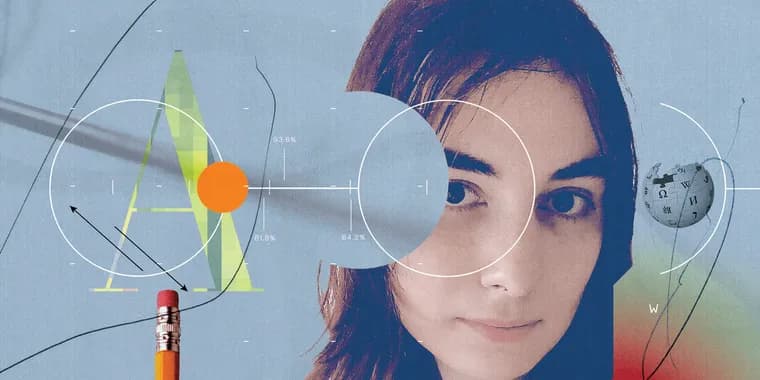
IEEE Spectrum interviewed Ellia Lebleu, a founding member of WikiProject AI Cleanup, a volunteer effort launched in 2023 to find and remove AI-generated material from Wikipedia that breaks the site's guidelines. Lebleu is pursuing a Ph.D. in AI at the Inria Center of the University of Rennes.
Lebleu says the problem became clear around December 2023. A few editors chatting on Wikipedia's Discord server had all seen strange articles with the same traits: repeated phrases such as 'stands as a testament' or 'rich cultural heritage', conclusion sections, and sections titled 'Why is this important?'. That was typical of ChatGPT in 2023 and early 2024, and easy to spot. Lebleu then proposed an official project so more people could deal with it.
By 2025 the signs were subtler and more structural. AI loves the 'rule of three', negative parallelisms and similar structures that are not conclusive alone but become meaningful as they accumulate. Editors also look beyond the article: someone who writes five articles of thousands of words each in 5 minutes gives reason to suspect AI.
Citations are a major worry. Fully hallucinated citations are much rarer now because retrieval-augmented generation lets AI find sources. More often the AI finds a real source but gets its content completely wrong, and citations that do not support the text are, in Lebleu's words, extremely commonplace.
On volume, Lebleu has worked with the AI-detection company Pangram. Lebleu tested it on Wikipedia content from before ChatGPT and found no false positives, so its results are a very conservative lower bound. In late 2025 it flagged perhaps 20 percent of new articles and drafts as AI-generated; in early 2026 that fell to 15 or 16 percent. Lebleu says it is not yet known whether the fall reflects Wikipedia's recent policies or models getting more powerful while Pangram has not had time to adapt. The interviewer's question notes that English Wikipedia recently prohibited editors from using LLMs to generate articles. Asked whether the rule works, Lebleu says it is still a little early to tell, pointing to possible effects such as prompt refusal and the apparent slight drop. The vast majority of AI-generated content comes from beginner editors, so the project has made the rule very visible in welcome messages, editing help and advice.
Wikipedia is also using AI against AI. Another editor built an AI source verifier that goes through a page's sources and checks whether they match the claims. Since it is itself an AI model it can be wrong, but Lebleu calls it a good first step for filtering obvious cases at scale. The Wikimedia Foundation is working on Paste Check, a tool that can flag text pasted directly from some AI chatbots. Lebleu notes that Claude sometimes replies, 'I can't write a Wikipedia article; it would go against Wikipedia's policies.' If all major AI companies did this, it would not solve the problem, since open-weight models can be tweaked to avoid restrictions, but it would help with users of commercial models who are not familiar with the technology.
Looking ahead, Lebleu says the guideline was passed for practical reasons: the site was flooded with AI content and lacked good tools. Since then it has taken on a more philosophical dimension, because many people have called Wikipedia 'the last good place on the internet' and being free from AI slop has become part of its identity. Even AI companies find a purely human-written corpus interesting for training. Lebleu asks whether readers and contributors would want Wikipedia to become partly AI-generated if that made it more comprehensive, and suggests Wikipedia could preserve its identity as a human-written corpus while also offering an AI-assisted option.
On the 'Google Zero' scenario, where websites lose search traffic, Lebleu worries that people who see Wikipedia cited in Google's AI Overviews may not realize it is a living project they can edit. The Wikimedia Foundation is working on an attribution framework that could show AI users when the cited article was last edited, how comprehensive it is, whether editors have flagged problems, and perhaps a call to action. Readers might even contribute through AI models by filing an edit request. Lebleu does not see Wikipedia disappearing but sees it taking a very different shape, and ends: 'Yesterday, AI was something to clean up. Today, it's a tool to help us with the cleanup. Tomorrow, it will be the air we breathe.'
Key facts
- WikiProject AI Cleanup, a volunteer effort launched in 2023, hunts AI-generated material on Wikipedia that breaks the site's guidelines; early tells were phrases like 'stands as a testament' and 'rich cultural heritage'.
- Pangram flagged perhaps 20 percent of new articles and drafts as AI-generated in late 2025 and 15 or 16 percent in early 2026; Lebleu calls this a very conservative lower bound and says the cause of the drop is unknown.
- Fake or misleading citations are a major worry: fully invented ones are rarer thanks to retrieval-augmented generation, but real sources with wrongly described content are extremely commonplace.
- Tools in play include an AI source verifier built by another editor and the Wikimedia Foundation's Paste Check, which can flag text pasted from some AI chatbots.
- Lebleu says the ban on LLM-written articles is too new to judge, notes most AI content comes from beginner editors, and floats a human-written Wikipedia alongside an AI-assisted option.
Why it matters
Wikipedia is widely used and, as Lebleu notes, frequently cited in Google's AI Overviews, so the quality of its text feeds into what AI answers say. The interview shows a frontline view of the problem: the obvious clichés of 2023 have given way to subtler structural patterns, and the citations are often the weak point. Lebleu also says a purely human-written corpus is valuable for training AI systems, which gives the site's human-written identity practical weight beyond sentiment.
Who it affects
Wikipedia's volunteer editors, who do the detection and cleanup. Beginner editors, who per Lebleu submit the vast majority of AI-generated content and are the target of the welcome messages and editing advice. Readers, who may see only an AI answer citing Wikipedia without realizing it can be edited. AI companies and model users, since prompt refusal and the human-written corpus both bear on them.
How to use it
The interview describes practical signals editors use: accumulating structures such as the rule of three and negative parallelisms, repeated stock phrases, and editing behaviour like thousands of words across five articles in 5 minutes. Citations should be checked against what the cited source actually says, not just whether it exists. Tools mentioned are an editor-built AI source verifier, useful as a first filter for obvious cases at scale, and Paste Check from the Wikimedia Foundation. No release timing is given for Paste Check or the attribution framework.
How solid is it
This is a first-person interview with a founding member of the project, so the claims are Lebleu's own account rather than independent measurement. The Pangram figures come from Lebleu's work with the company; Lebleu says no false positives appeared on pre-ChatGPT Wikipedia content. The source does not describe Pangram's methodology or sample sizes. The percentages cover new articles and drafts, not all of Wikipedia.
Risks and caveats
Lebleu says the drop from about 20 percent to 15 or 16 percent might come from Wikipedia's policies, or from models improving faster than Pangram can adapt, and it is not yet known which. The ban's effect is described as still a little early to tell. The AI source verifier is itself an AI model and carries no guarantee of being correct every time. Prompt refusal would not stop open-weight models that can be tweaked to avoid restrictions. The date the English Wikipedia prohibition was adopted is given only as 'recently'.
“Yesterday, AI was something to clean up. Today, it’s a tool to help us with the cleanup. Tomorrow, it will be the air we breathe.”
— Ellia Lebleu, founding member of WikiProject AI Cleanup, in IEEE Spectrum