WNISR 2026: solar out-generated nuclear worldwide for the first time
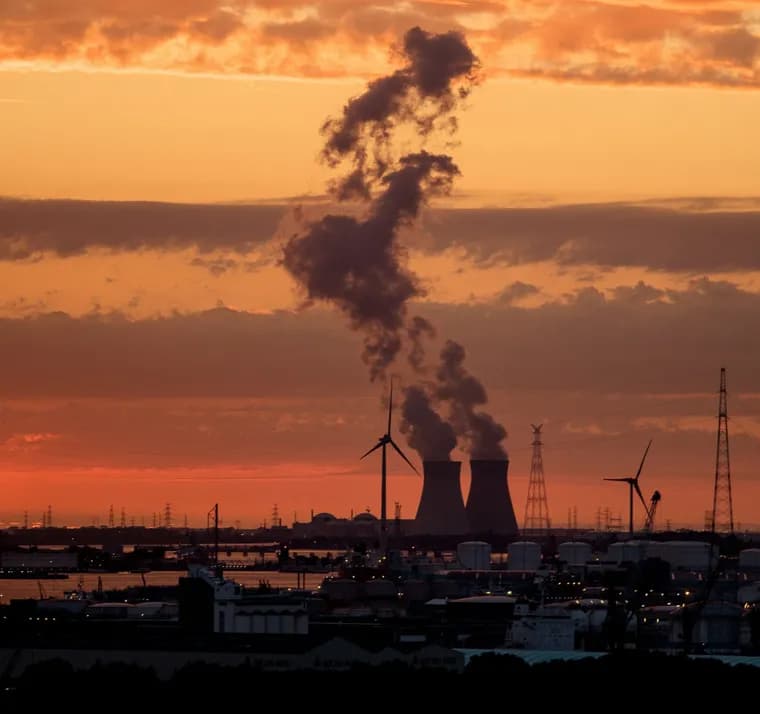
The World Nuclear Industry Status Report (WNISR) 2026, overseen by French nuclear energy consultant Mycle Schneider, says wind alone passed nuclear generation on a monthly basis in March 2025, and solar followed in April 2025. That was the first time global monthly solar generation exceeded nuclear output. From March 2025 through June 2026, either solar or wind individually out-generated nuclear every month, and in March, April and May 2026 both did so independently. The findings were reported by pv magazine.
The capacity gap widened sharply in 2025. Global solar capacity grew by 510 GW to 2,383 GW, up 27% year on year. Wind added a record 159 GW to reach 1,291 GW, up 14%. Installed nuclear capacity rose by just 1.5 GW to 399.5 GW, while operating nuclear capacity fell by 0.5 GW to 368.6 GW. The report notes that nuclear capacity has been essentially flat for more than 25 years. Its PV figures rest on relatively conservative estimates: more recent IEA PVPS data put global PV additions in 2025 at around 690 GW, about 180 GW above the figure WNISR used, so the real gap may be wider still.
Schneider told pv magazine that the reality of the nuclear industry on the ground is "quite sobering for those who expected to find a booming sector". He pointed to Holtec, a U.S. nuclear company that put an IPO on hold days before its planned listing, having hoped to raise almost $1 billion, and to its peer Fermi, which has lost about 80% of its stock value since listing in October 2025. His explanation: these companies have little or nothing to show on the ground to convince investors to keep providing cash. Meanwhile, he said, the world's operating nuclear fleet raised output by 1.1%, with output falling outside China, while global solar generation jumped 30%, surpassing nuclear's annual electricity production for the first time. His summary: "It's the growth rates, stupid!"
The report also names falling battery costs as a potential enabler of continued PV expansion, as grids deal with more variable generation and periods of low or negative prices. Grid-scale battery deployment accelerated in 2025, with 104 GW and 257 GWh connected during the year, and more than 78% of cumulative battery energy storage capacity was installed between 2023 and 2025.
On the nuclear side, 411 reactors were operating in 31 countries as of July 1, 2026 (excluding 30 units in long-term outage), with operating capacity of 374.7 GW. Nuclear plants generated 2,703 TWh in 2025, up 1.1%, driven largely by a 7.6% rise in China; outside China generation fell 0.2%. Nuclear's share of global electricity slipped to 8.8%, the lowest in four and a half decades and roughly half its 1996 peak of 17.5%. Four reactors started supplying power in 2025 and seven closed, the first negative annual reactor balance since 2021. Across 2006 to 2025, 104 reactors started and 106 closed; China accounted for 53 startups and no closures, so the rest of the world lost a net 55 reactors. Net global capacity rose 21.5 GW over those two decades, China alone added 52.3 GW, and capacity outside China fell by almost 30.7 GW.
The construction pipeline has grown nonetheless. Seventy-three reactors were under construction as of July 1, the most since 1987, 37 of them in China. Russian technology is involved in 29 reactors under construction worldwide, 22 of them outside Russia, and nine of every 10 reactors being built are in Asia or Eastern Europe. Construction starts hit 12 units in 2025, the highest annual total since 2010: nine in China, two in Russia, one in South Korea. Of 52 construction starts worldwide from 2020 to 2025, all but one involved the Chinese or Russian nuclear industries. Delays persist: none of the 16 reactors connected to the grid from 2023 to 2025 was on schedule, with an average construction period of 10.9 years, and only four of 13 reactors scheduled to start generating in 2025 did so. Slovakia's Mochovce-4 began construction more than 40 years ago, and Iran's Bushehr-2 originally started in 1976.
The report is sceptical of small modular reactors. Its authors say: "For decades, small modular reactors have been held out as holding great promise for expanding nuclear power into various new markets. Remarkably similar claims have been made by the nuclear industry in multiple countries. Nowhere have these claims come true." They challenge claimed advantages including lower costs, modular construction, improved safety, reduced waste and easier siting. Many commercially proposed designs are 300 MW or larger, and an analysis cited in the report suggests some SMR designs could generate between two and 30 times more nuclear waste than larger reactors. Projects still advance: Canada began building GE-Hitachi's BWRX-300 in 2026, China continued testing its Linglong One demonstration reactor, Russia is developing floating and land-based SMRs, and the Czech Republic and Sweden are pursuing Rolls-Royce projects. The report questions whether the EU can deploy its first SMRs by the early 2030s. The UK has committed £2.6 billion ($3.5 billion) to advance three Rolls-Royce reactors at Wylfa, with a final investment decision expected in 2029; at 470 MW the design exceeds the usual 300 MW SMR threshold. In the U.S., federal funding supports projects involving GE Vernova, TerraPower, X-energy and Kairos Power, though many remain years from commercial operation. Overall, the report says SMR development depends heavily on public funding and that commercial deployment, construction timelines and the benefits of modular construction remain uncertain.
The rest of the report covers country-level assessments of major nuclear markets and potential newcomers, decommissioning, the Fukushima disaster 15 years on, and the industry's technology, fuel and supply-chain links with Russia.
Key facts
- WNISR 2026 says global monthly solar generation first exceeded nuclear in April 2025 (wind did so in March 2025); from March 2025 to June 2026, solar or wind beat nuclear every month.
- In 2025 solar capacity grew by 510 GW to 2,383 GW (up 27%), wind by a record 159 GW to 1,291 GW, while installed nuclear capacity rose only 1.5 GW to 399.5 GW.
- Per Schneider, solar generation rose 30% in the year versus 1.1% for the operating nuclear fleet, and solar's annual output surpassed nuclear's for the first time.
- Nuclear's share of global electricity fell to 8.8%, the lowest in four and a half decades and about half the 1996 peak of 17.5%.
- Construction is up (73 reactors under way, most since 1987, 37 in China), but the 16 reactors connected in 2023 to 2025 averaged 10.9 years to build and none was on schedule.
Why it matters
This is a milestone in the global power mix: the report says it is the first time monthly solar output beat nuclear, and Schneider says solar's annual generation also passed nuclear's for the first time. Nuclear capacity has been essentially flat for more than 25 years, and its share of world electricity has dropped to 8.8% from 17.5% in 1996. Solar added 510 GW in 2025 alone, against 1.5 GW of installed nuclear capacity.
Who it affects
Energy investors and nuclear developers are the most directly touched. Schneider links the shelved Holtec IPO (almost $1 billion sought) and Fermi's roughly 80% share-price fall since October 2025 to the lack of results on the ground. Governments funding small modular reactors, such as the UK with £2.6 billion for three Rolls-Royce reactors at Wylfa, are also in the frame. Grid operators face growing variable generation and low or negative price periods, where the report sees falling battery costs as a potential enabler. China and Russia dominate nuclear construction.
How to use it
Treat the article as a digest of the WNISR 2026 numbers: capacity, generation share, reactor starts and closures, construction times. When comparing solar and nuclear, keep the measures apart: installed nuclear capacity (399.5 GW) and operating capacity (368.6 GW at end 2025, 374.7 GW as of July 1, 2026) are different figures. For solar additions in 2025, note that IEA PVPS data give around 690 GW against WNISR's 510 GW.
How solid is it
The findings come from WNISR 2026, overseen by Mycle Schneider, as relayed by pv magazine, which also quotes him directly. The annual-generation claim and the commentary on Holtec and Fermi are Schneider's statements to pv magazine. The article itself says the report's PV figures are relatively conservative and that IEA PVPS data suggest a wider gap. It gives an absolute generation figure only for nuclear (2,703 TWh), none for solar or wind, and no reaction from the nuclear industry or the IEA.
Risks and caveats
The nuclear picture is not uniformly bleak. Construction starts reached 12 units in 2025, the highest since 2010, and 73 reactors are under construction. Nuclear generation rose 1.1% to 2,703 TWh, driven by a 7.6% rise in China, while outside China it fell 0.2%. Much of the SMR criticism rests on the report's authors' assessment; projects continue in Canada (BWRX-300), China (Linglong One), the Czech Republic, Sweden and the U.S., and the report itself calls outcomes uncertain rather than settled. Battery costs are described only as a potential enabler of solar growth.
“The reality of the nuclear industry on the ground is quite sobering for those who expected to find a booming sector”
— Mycle Schneider, overseer of the WNISR 2026, to pv magazine