Zuckerberg, Amodei clash over blame for the AI backlash
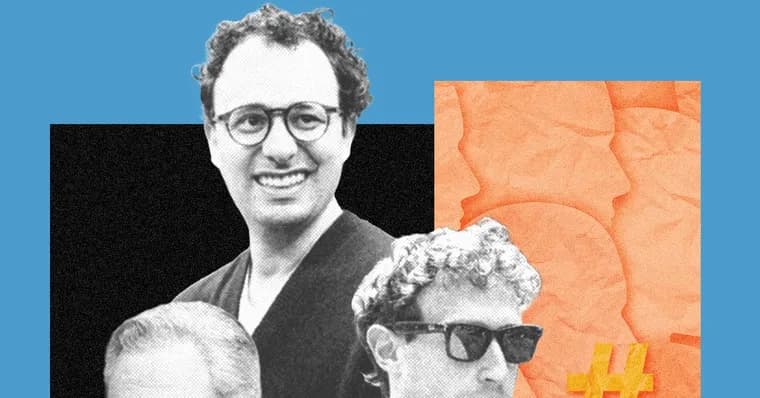
Wired’s Maxwell Zeff, writing in his Model Behavior newsletter, argues that Silicon Valley is struggling to explain why so much of the public has turned against artificial intelligence, and that recent attempts by CEOs like Meta’s Mark Zuckerberg and Anthropic’s Dario Amodei to diagnose the backlash show they do not understand what is actually driving it. Zeff opens with a piece of pop culture as evidence that the backlash has gone mainstream: a commercial for Liquid Death and Garage Beer featuring former Philadelphia Eagles player and Taylor Swift’s brother-in-law Jason Kelce, who invites viewers to pee in bottles and mail them to AI data centers. Liquid Death’s creative lead, not named in the piece, told the trade outlet Marketing Dive that the data center backlash was “literally the one thing that unites all Americans right now.”
That framing is backed by new survey data. A Pew Research Center survey published earlier this week found that more than half of Americans under 30 say they are more concerned than excited about AI, a share that has grown 24 percent over the last five years, and that more than 70 percent of respondents in every age group believe AI will lead to fewer jobs. Zeff cites further polling showing the concern runs wider than jobs and data centers: Americans surveyed also think AI will harm young people’s ability to form meaningful relationships, that tech companies should be required to compensate creators whose work trained their models, and that AI could damage students’ critical thinking skills. A separate survey from the Searchlight Institute found that hearing different messaging about AI made little difference to people’s opinions of its effect on society, which Zeff takes as evidence against the tech industry’s common explanation that the backlash is fundamentally a communication and branding problem.
Zeff sets that data against Zuckerberg’s own diagnosis. Earlier this month, Zuckerberg published a 6,500-word essay laying out an optimistic vision of AI’s future. He describes a world where everyone has a personalized AI assistant that knows them intimately, drawing, Zeff suggests, on the personal data Meta’s own apps have already collected, and helping with a person’s career, hobbies, and perhaps even raising their children. Zeff points out that such a product does not exist yet, and reads Zuckerberg as essentially arguing that giving everyone unfettered access to highly capable AI is the best-case scenario for the technology. Zuckerberg also took a swipe at Amodei, saying he was surprised that “discourse from many developing AI is so filled with doom.” Tech investor Gavin Baker echoed and sharpened the point on social media and during an appearance on the All-In podcast, writing that “Dario’s messaging has been massively helpful to efforts to ban data centers here in America.” White House AI adviser and All-In co-host David Sacks added, also in writing, that Anthropic’s “narratives have done more than anything to shape public fear.”
The criticism drew what Zeff calls a rare public response from Amodei, who rejected the idea that his own messaging was the cause of the AI backlash. “I think it is fundamentally a crisis of trust,” Amodei wrote, adding: “I think that ordinary people don’t trust companies, governments, or the tech industry and always suspect that we are cooking up some new way to screw them over. The causes of this go back decades and AI is just the latest iteration of it.” Amodei also conceded that “the most accurate criticism of AI companies including Anthropic is that we haven’t yet delivered on our big promises to benefit the world,” citing as one example a cure for cancer, an outcome he has previously said people should reasonably expect AI to deliver.
Zeff’s own verdict splits the difference. He credits Amodei’s trust framing as closer to the truth than Zuckerberg’s, but says Amodei loses him on the cancer point. In Zeff’s reading, the AI backlash was not caused by CEOs’ doom-laden warnings, or by the fact that OpenAI and Anthropic have not cured cancer; it is a reaction to the ways AI is already changing everyday life, in directions many Americans see as harmful. He argues that despite heavy corporate investment in making data centers more publicly acceptable, through pledges on water use, clean energy and local community investment, the data center buildout has become, in his account, the physical stand-in for public anger at AI and at how tech companies treat communities more broadly. Zeff writes that rank-and-file employees at AI companies already hear these concerns from their own friends and families, but that industry leadership still seems unprepared to confront the full scope of how AI is changing the world. He closes by arguing that Silicon Valley will need to face these issues more directly if it wants the public to fully embrace what it is building.
Key facts
- A Pew Research Center survey published earlier this week found more than half of Americans under 30 are more concerned than excited about AI, a share that has grown 24 percent over the last five years, while more than 70 percent of respondents in every age group expect AI to mean fewer jobs.
- A separate Searchlight Institute survey found that varying the messaging around AI barely changed people’s opinions of its societal impact, undercutting the tech industry’s common explanation that the backlash is a communication problem.
- Zuckerberg’s 6,500-word essay, published earlier this month, envisions a personalized AI assistant intimate enough to help raise a person’s children, a product Zeff notes does not exist yet; Zuckerberg also took a jab at Amodei, saying he was surprised that “discourse from many developing AI is so filled with doom,” a line tech investor Gavin Baker and White House AI adviser David Sacks separately amplified.
- In a rare public reply, Amodei called the backlash “fundamentally a crisis of trust” that predates AI by decades, while also conceding that AI companies including Anthropic have not delivered on big promises like curing cancer.
- Zeff points to a Liquid Death and Garage Beer commercial fronted by Jason Kelce, inviting people to mail urine to AI data centers, as evidence the data center backlash has become, in the words of Liquid Death’s creative lead, “literally the one thing that unites all Americans right now.”
Why it matters
The piece captures a widening gap between how Silicon Valley’s most influential AI leaders explain public hostility toward AI and what the polling actually shows. Zuckerberg treats the backlash largely as a vision and messaging problem: if people saw what a good enough personal AI assistant could do for them, the argument goes, they would come around. Amodei’s public response reframes the backlash as a decades-old crisis of institutional trust that predates AI entirely. Zeff argues both diagnoses miss the actual driver: concrete, already-visible changes AI is making to jobs, creative compensation, education and physical communities near data centers. Since public adoption of consumer AI products depends on trust, a misdiagnosis by industry leadership carries a direct commercial cost. Arguing about messaging and abstract futures while the concrete complaints go unaddressed, in Zeff’s account, keeps the industry from closing the very trust gap it needs closed for people to adopt what it is building.
Who it affects
Meta’s Mark Zuckerberg and Anthropic’s Dario Amodei, whose public essay and rebuttal frame the dispute; tech investor Gavin Baker and White House AI adviser David Sacks, who amplified criticism of Amodei’s messaging on social media and the All-In podcast; the American public broadly, especially Americans under 30, among whom concern about AI is rising per the Pew data, and communities near AI data centers; creators whose work trains AI models and students, both singled out in the polling Zeff cites; and rank-and-file employees at AI companies, whom Zeff says already hear these concerns from their own friends and families, unlike, in his account, the leadership above them.
How to use it
There is no product, price or license to weigh here; the practical use of the piece is as a diagnostic for anyone building or messaging AI products aimed at the public. The Searchlight Institute finding that varied messaging barely shifts opinion suggests that changing the branding will not by itself close the trust gap; the concrete complaints in the polling (jobs, creator compensation, data centers, and effects on relationships and critical thinking) are the actual surface area to address instead. Readers who want the primary material behind Zeff’s argument can go to the Pew Research Center survey published earlier this week, Zuckerberg’s 6,500-word essay from earlier this month, and Amodei’s own public response.
How solid is it
This is an opinion and analysis piece, an edition of Zeff’s Model Behavior newsletter for Wired, not a straight news report, and its central argument, ranking competing explanations for the backlash, is Zeff’s own interpretation rather than something itself tested or surveyed. The polling claims rest on named, checkable sources: the Pew Research Center survey, said to be published earlier this week, and the Searchlight Institute survey, described only as “recent,” with no date, sample size or methodology given. The quotes from Zuckerberg, Baker, Sacks and Amodei come from public essays, social media posts and a podcast appearance, all attributable, though the piece gives no absolute dates for any of them, only relative markers like “earlier this month.” The Liquid Death executive quoted is unnamed in the piece and sourced secondhand, through an interview the executive gave to Marketing Dive.
Risks and caveats
Treat the piece’s central ranking, that a crisis of trust and AI’s already-visible effects explain the backlash better than a messaging problem does, as one journalist’s argument rather than a settled finding. The Searchlight Institute survey is cited without sample size, methodology or exact figures, so its precise strength cannot be checked from this piece alone. The source does not say whether the 24 percent growth in under-30 concern is a percentage-point shift or a relative change from the earlier baseline, so that figure should not be restated more precisely than the piece itself states it. The Liquid Death commercial is marketing content built to draw attention, not itself survey evidence, even though the piece opens with it as an illustration of the backlash’s reach. Zuckerberg’s essay, for its part, describes an AI assistant capability that, as the piece notes explicitly, does not exist yet.
“I think that ordinary people don’t trust companies, governments, or the tech industry and always suspect that we are cooking up some new way to screw them over. The causes of this go back decades and AI is just the latest iteration of it.”
— Dario Amodei, in a public social media post responding to criticism from Zuckerberg, Gavin Baker and David Sacks