1872 launches robotic factory for automated steel fabrication
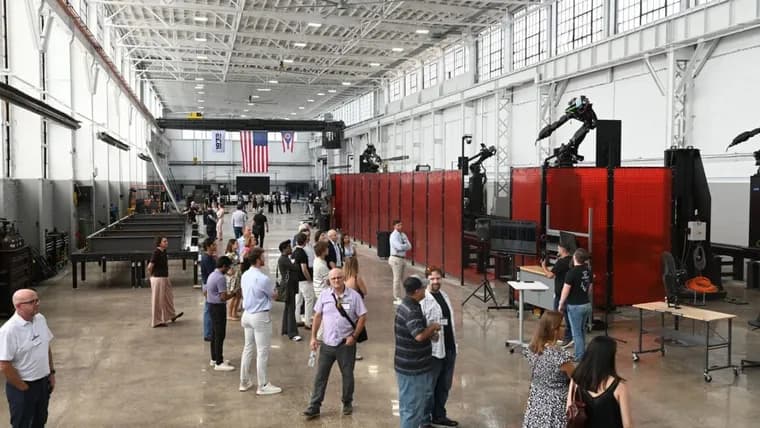
Three former SpaceX engineers have founded a startup called 1872 to bring AI-driven software and robots into steel fabrication, a trade they previously applied to building rocket engines. The company officially launched on July 22 with a ribbon-cutting ceremony at its Factory One facility in Cincinnati, Ohio. Its immediate goal is a prototype factory that can automate most of the steel fabrication process for critical infrastructure components by 2027.
1872 is starting with steel skids, the rectangular steel frames that serve as a moveable foundation for modular buildings. The company is targeting customers who are building AI data centers or small modular nuclear reactors, both categories that need this kind of prefabricated steel structure.
CEO Dan Summers told Ars Technica that the company is not chasing full automation for its own sake. "We're building towards autonomy, but we're not necessarily building in a dogmatic fashion towards full autonomy," he said. "We may achieve 80 percent autonomous operations, and we may decide that it makes sense to stop there because there's just diminishing returns to go to full 100 percent."
The push is framed as a response to a labor shortage rather than only a cost play. Industry associations have warned for years of a growing shortage of skilled labor able to support the buildout of AI data centers, semiconductor fabs, automotive factories and shipyards in the United States. The American Welding Society estimates the country will need 320,500 new welding professionals by 2029 because of retirements from an aging workforce combined with rising demand for welding work. The Trump administration's tightening of legal immigration and its crackdown on undocumented immigration are further narrowing the labor pool available to welding-intensive industries such as shipbuilding. "The problem that we are trying to solve is how do we build more things with a decreasing pool of skilled labor to do it with, and this is a good place to start in terms of implementing automation," Summers said.
Key facts
- Three former SpaceX engineers founded 1872, which officially launched on July 22 with a ribbon-cutting at its Factory One facility in Cincinnati, Ohio.
- The startup is starting by automating manufacture of steel skids, moveable foundation frames for modular buildings, targeting customers building AI data centers or small modular nuclear reactors.
- 1872's immediate goal is a prototype factory that automates most of the steel fabrication process for critical infrastructure components by 2027.
- CEO Dan Summers says the company may settle for 80 percent autonomous operations rather than push for full 100 percent, citing diminishing returns.
- The American Welding Society estimates the US will need 320,500 new welding professionals by 2029, a shortage the article ties to an aging workforce, rising demand, and tighter immigration policy.
Why it matters
It is a case of AI moving off the screen and onto the factory floor, applied to a decidedly unglamorous but load-bearing part of the economy: the steel structures that AI data centers and other infrastructure projects are physically built on. The founders' pitch is not that robots make steel work cheaper, but that a shrinking pool of skilled welders makes automation necessary to keep building at the pace AI infrastructure now demands.
Who it affects
Directly, it affects 1872 and the customers it is courting: companies developing AI data centers and small modular nuclear reactors, who need steel skids as prefabricated foundations. More broadly, it touches the welding trade and other welding-intensive industries such as shipbuilding, where the article says a shrinking labor pool, partly a result of tightened immigration policy, is already a constraint.
How to use it
1872 is a prototype-stage operation, not yet a general supplier. The article does not give pricing, funding, headcount or the size of Factory One, so none of that can be stated here. What is known is the target: a factory automating most steel fabrication for infrastructure components, aimed at customers building AI data centers or small modular nuclear reactors, with a 2027 milestone for the prototype.
How solid is it
The account comes from a single interview with CEO Dan Summers, given to Ars Technica shortly after the company's July 22 launch. There is no independent data here on output, contracts or timelines met so far, and the 80 percent autonomy figure is described by Summers as a possible target, not a measured result.
Risks and caveats
The company is only weeks old at the point of this report, and its 2027 milestone is a stated goal rather than a demonstrated capability. No financial backing, customer contracts or production volumes are disclosed. The labor-shortage context, including the American Welding Society's 320,500 figure and the immigration-policy point, is presented by the article rather than by 1872 itself.
“We're building towards autonomy, but we're not necessarily building in a dogmatic fashion towards full autonomy. We may achieve 80 percent autonomous operations, and we may decide that it makes sense to stop there because there's just diminishing returns to go to full 100 percent.”
— Dan Summers, CEO of 1872