Aina announces Aina Ring, a smart ring for approving AI agent actions
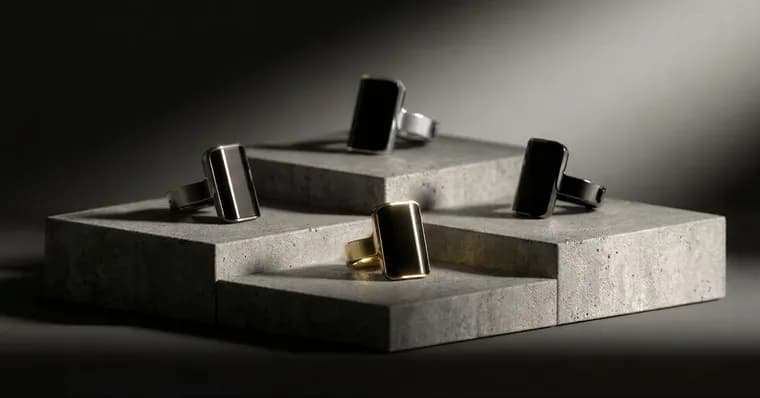
Apoorv Shankar believes humans will soon deal with technology mostly through approvals and rejections. AI agents will come to people proactively, and people will answer things like "Yes, order that Uber" or "No, don't get lunch from that spot." His worry is that pulling out a phone for every ping from an agent becomes a "bottleneck." His answer is the Aina Ring, which has a small display and a joystick-like button for quickly accepting or rejecting an agent's actions with your hands, so the phone can stay in your pocket. Wired carries the story as an exclusive.
Aina has been in stealth for the last 15 months. At CES 2026 it showed a few experimental products under a different name, Project Mirage. One of them, Dune, is the precursor to the ring: connected to a Mac, its three buttons become context-aware controls, so in a meeting they can turn into shortcuts for mute, camera off or record. Aina studied how people used Dune and built the ring from that. Preorders are live now at $399 for a limited time; the retail price rises to $499 when shipping starts in January 2027.
The titanium ring connects to Macs or iPhones. At any moment, the onboard assistant is looking for the three things you need next. It learns routines from personal data such as location, calendar and email, and from third-party services you connect in the Aina app, such as Uber or Spotify. Examples from Wired: if you usually run at 6 am, putting on your running shoes prompts a suggestion to continue last night's podcast or play music (the joystick doubles as a music-playback controller). If you usually take an Uber to work at 8:30 am, it suggests the ride, and a flick of yes on the ring handles it. If you are running late for a Zoom meeting, it offers to send an email saying so. Shankar calls these suggestions Aina Cues, powered by the ring's Context Aware Operating System.
Many Cue actions will likely be limited by which apps and features are supported, though Shankar says users can write their own Cues in natural language, for example a prompt to turn on the coffee machine every morning at 8 am. If a favorite app or service does not work through Aina, the user can connect a preferred AI agent, such as Muse or Instinct, which will handle the task through virtual browsers. The display matters, Shankar says, because "Agents today don't respond immediately," and to trust that what you said actually happened, "you need display confirmation."
The ring does more than Cues. Aina Voice lets you talk to your AI agents by pressing the center button, or ask Aina to take notes, similar to smart rings like the Sandbar Stream or Pebble Index 01. A tiny speaker allows phone calls, started with a voice command. Like Dune, the ring also becomes a context-aware remote: Zoom controls if you are in a Zoom call on your Mac, or a TV remote if the TV system can be connected to Aina.
This is not Shankar's first smart ring. He was previously vice president of hardware at Ultrahuman, a fitness- and health-tracking ring that competed with Oura; Ultrahuman was briefly banned in the US after a patent dispute with Oura. The team looked at smart glasses and pendants but decided a ring was the most convenient way to interact with agents.
Wired puts the ring against a record of failed AI gadgets: Humane and Rabbit are named as notable examples, nothing has stuck so far, and OpenAI is developing a product with ex-Apple designer Jony Ive. Many of those devices claimed to replace the phone, and some, like the Rabbit, felt awkward to carry alongside one. The Aina Ring is not trying to replace anything; Shankar says phones are "too perfect." It is meant to stop the user from being a bottleneck so agents can keep working on their behalf.
Key facts
- The Aina Ring is a titanium smart ring with a small display and a joystick-like button for quickly accepting or rejecting AI agent actions; it connects to Macs or iPhones.
- Preorders are live at $399 for a limited time; the retail price rises to $499 when shipping starts in January 2027.
- The onboard assistant suggests the three things you need next (Aina Cues), learned from location, calendar, email and connected services such as Uber or Spotify; users can write their own Cues in natural language.
- Aina has been in stealth for 15 months; its precursor device, Dune, was shown at CES 2026 under the name Project Mirage. Maker Apoorv Shankar was previously vice president of hardware at Ultrahuman.
- The ring also offers Aina Voice (talk to agents, take notes), a tiny speaker for calls, music control and context-aware remote functions such as Zoom or TV controls.
Why it matters
The ring bets on a specific idea: as AI agents act on their own, the human job shifts to approving or rejecting what they propose, and doing that on a phone is slow. Aina's answer is a dedicated approval device rather than another phone replacement. Wired sets this against Humane and Rabbit, which tried to replace the phone and failed to stick, and notes OpenAI is developing a product with Jony Ive. Aina positions the ring as a companion, not a substitute.
Who it affects
People who use AI agents and get frequent prompts through the day, and who own a Mac or iPhone, the two platforms the source names. It also touches the agent makers: users can connect their preferred agent, such as Muse or Instinct, to handle tasks through virtual browsers when an app is not supported directly.
How to use it
Preorders are open now at $399 for a limited time, with the price going to $499 when shipping begins in January 2027. After pairing with a Mac or iPhone, you connect third-party services such as Uber or Spotify in the Aina app. The ring then proposes actions, and you flick the joystick-like button to say yes or no, with the display confirming the result. Press the center button to talk to an agent or take notes. You can create your own Cues in natural language, such as a coffee machine prompt at 8 am.
How solid is it
This is a launch announcement carried by Wired as an exclusive, with price, date and features stated by the company and Shankar. No hands-on testing or independent review of the ring is reported, so claims about how well Cues work are the company's own. The shipping date is January 2027, so the product is not yet in customers' hands.
Risks and caveats
Wired says many Cue actions will likely be limited by which apps and features are supported. The assistant draws on personal data such as location, calendar and email, and the source mentions no data-privacy terms. Only Macs and iPhones are named as compatible. The preorder price is temporary and rises to $499. And the category has a poor record: Humane and Rabbit are cited as failures, and Wired says nothing has stuck so far.
“Approvals are going to be the future of interfaces and interaction, and we wanted to build a device that just made it easy to approve stuff”
— Apoorv Shankar, maker of the Aina Ring