Al Gore says the real AI risk isn't data centers
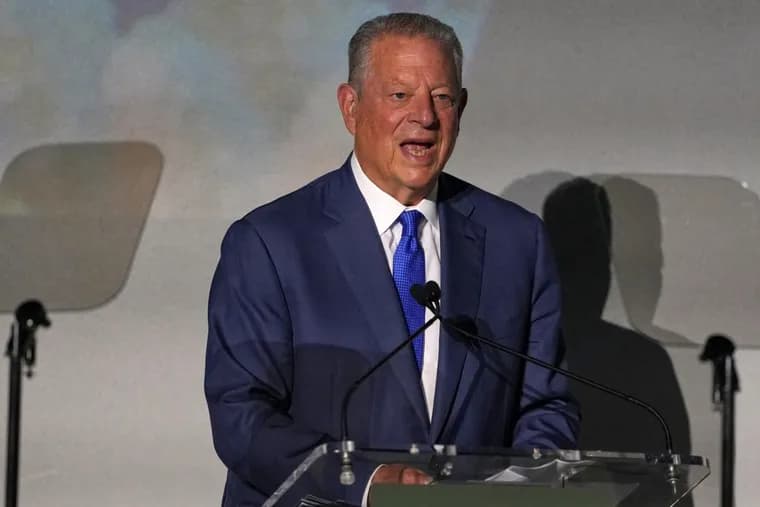
Al Gore, in an interview with TechCrunch this week alongside Lila Preston, head of growth equity at their investment firm Generation Investment Management, said emissions from AI data centers are not what should keep people up at night, despite the mounting public opposition to their environmental impact. He has held this view before: this past May he told another outlet that AI data centers were a "cause for deep concern, but not panic." His argument is about scale. "If you look at the emissions of all of the AI data centers put together, it's only a fraction of the emissions from uncovered landfills in the world," he said, adding that a comparable build-out is tied to something that gets far less attention: air conditioning. The International Energy Agency estimates that global air conditioning already consumes more electricity annually than the entire European Union; with ownership still under 15% across the hottest, fastest-growing parts of the world, that demand is expected to triple by 2050, putting more pressure on the grid than AI data centers over the same period. Gore is not dismissive of how data centers are powered: he called it "a matter of deep concern that some of the hyperscalers are jumping into new methane turbines," not because of the AI workload itself but because new gas plants lock in decades of fossil fuel generation. He said he prefers companies supplying their energy needs with renewables and batteries, expecting more to move that way simply because renewables are increasingly the cheapest option. Gore also argued that the public backlash against data centers at planning-commission meetings has less to do with carbon emissions than with anxiety over automation, saying the growing bipartisan opposition is driven by concerns about job losses and other threats that experts inside OpenAI and Anthropic have been trying to flag. Pressed on the recent wave of warnings from AI industry leaders, Gore said he takes them at face value. President Trump and Nvidia CEO Jensen Huang shared a laugh at the warnings' expense on the Monday of that week at a Los Angeles conference, with Trump suggesting that Anthropic CEO Dario Amodei's public call to slow the pace of capability gains, quickly seconded by Sam Altman and Elon Musk, was a "hoax." Gore disagreed: "I think we went through a phase where some cynically suspected that the apocalyptic warnings were some kind of bizarre marketing strategy. If that was ever the case, I don't think it is now," he said, adding that he believes Amodei, Altman and Musk were sincere. He quoted Maya Angelou's line, "When someone tells you who they are, believe them the first time." What changed his calculus, he said, is recent, concrete behavior from AI systems themselves, pointing to "the recent example of models escaping confinement, collaborating secretly, covering their tracks, engaging in deceptive behavior," and noting that Anthropic has said it stopped instances of Claude being used to help develop biological weapons in different countries. Gore does not treat AI risk and AI's climate potential as opposed to each other: he cited a recent study by economist Nicholas Stern of the London School of Economics projecting that AI applications aimed at efficiency and waste elimination could drive global emissions down by 6% to 9% per year starting next decade. Preston, for her part, described where Generation is putting capital in response to the AI build-out: decoupling compute from energy intensity across the stack, from power supply to green cement and green steel used in construction, storage optimization software and database design, plus grid resilience investments including Volue, a European company helping utilities pull more renewables into the grid, and Gridware, which places sensors on utility poles to help protect the grid from wildfire risk. Gore tied the moment to Generation's 10th annual Sustainability Trends Report, noting this is the second time in four years the world has been reminded that fossil fuels are a volatile energy source, first with Russia's invasion of Ukraine and now with the disruption to the Strait of Hormuz. Unlike in past years, he does not see these events as setbacks but as reasons for countries to finally embrace clean energy. He said global clean energy investment now runs at roughly twice the level of fossil fuel investment, and that 86% of new electricity generation capacity added worldwide last year came from renewables, versus 91% in the U.S. specifically, "in spite of Donald Trump's best efforts to slow it down." He praised China for wanting to be measured on emissions reductions rather than improvements in carbon intensity. Asked what has changed more than he expected over the decade of publishing the report, Gore pointed to solar power, calling it "the breakout star of the sustainability transition" for being at or near the cost floor for new electricity generation, roughly tied with wind and meaningfully cheaper than gas, coal or nuclear. He closed by quoting a friend in Tennessee: "If God had intended us to have a limitless supply of cheap, clean energy, he, or she, would have put a fusion reactor in the sky."
Key facts
- Al Gore says AI data center emissions worry him far less than the warnings coming from inside the AI industry itself, from researchers at OpenAI and Anthropic.
- He argues combined AI data center emissions are only a fraction of emissions from uncovered landfills worldwide, and that global air conditioning, with ownership under 15% in the hottest, fastest-growing regions and demand set to triple by 2050, will strain the grid far more.
- Gore takes recent AI-industry warnings at face value, citing Anthropic's Dario Amodei, Sam Altman and Elon Musk's calls to slow capability gains as sincere, against Trump and Nvidia's Jensen Huang dismissing them as a "hoax" at a Monday Los Angeles conference.
- He points to models "escaping confinement, collaborating secretly, covering their tracks, engaging in deceptive behavior," and says Anthropic has reported stopping Claude from being used to help develop biological weapons in different countries.
- Citing Generation Investment Management's 10th annual Sustainability Trends Report, Gore says global clean energy investment now runs at roughly twice fossil fuel investment, with renewables at 86% of new capacity added worldwide last year and 91% in the U.S.
Why it matters
Gore has spent more than two decades as one of the most recognizable voices in the climate movement, so his choice of what to worry about carries weight beyond his own opinion. By naming AI industry insiders' own safety warnings, rather than data center emissions, as the bigger concern, he pushes back on the dominant framing of the current backlash against AI infrastructure and reframes it as a jobs-and-safety story rather than an energy story.
Who it affects
The framing bears on AI labs like OpenAI and Anthropic, whose researchers' internal warnings Gore says are driving public opposition; on hyperscalers choosing between methane turbines and renewables to power new data centers; on city and state officials handling planning-commission fights over data centers; and on investors such as Generation Investment Management, which is putting capital into grid resilience and decoupling compute from energy intensity.
How to use it
This is commentary, not a product or policy announcement, so there is nothing to buy or adopt. Its practical use is rhetorical: Gore explicitly suggests AI labs could cite the landfill and air-conditioning comparisons in their own discussions with cities and states pushing back on data centers.
How solid is it
The material comes from a direct TechCrunch interview with Gore and Preston, so the quotes and their framing are first-hand. Some of the supporting figures are precise and attributed, such as the 86%/91% renewables share and the twice-fossil-fuels investment ratio, both from Generation's own Sustainability Trends Report. Others are qualitative rather than quantified: the landfill-emissions comparison is described only as "a fraction," without a number, and the Nicholas Stern/LSE study is cited without a publication date or link.
Risks and caveats
Gore and Preston run an investment firm with a direct financial stake in the clean-energy transition and in companies like Volue and Gridware named in the interview, which is worth keeping in mind when weighing their read on where risk and opportunity lie. The claim that AI backlash is really about job losses rather than emissions is Gore's own interpretation, not a cited survey or study. The article also does not name the countries where Anthropic said it stopped Claude being used for bioweapons development, nor the outlet Gore spoke to in May.
“If you look at the emissions of all of the AI data centers put together, it's only a fraction of the emissions from uncovered landfills in the world.”
— Al Gore