Amazon explains Verus, its automated verifier for Rust
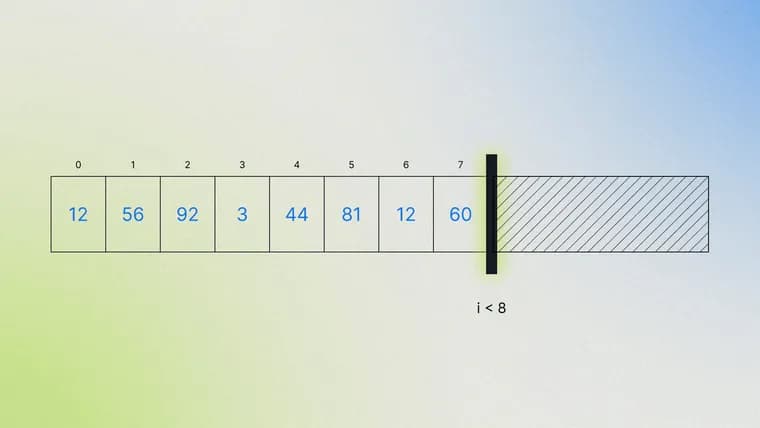
Amazon's science blog published a detailed explainer on Verus, an open-source automated program verifier for Rust. The post's starting point is that Rust's type system, while it prevents many classes of bugs, still falls short of proving a program correct: an out-of-bounds array access in Rust halts the program instead of corrupting memory as it would in C, which is safer, but a correct program should never attempt that access in the first place. Rust also cannot guarantee that a program computes the results a developer expects or that it does not leak secrets it has access to. Verus is built to close that gap: a program verifier takes a formal mathematical specification of how code should behave and mechanically checks that the code matches it for all possible inputs, not just a handful of test cases.
The post walks through a binary-search example to show how this works in practice. A Verus specification, written as a Rust annotation directly in the source file, states a precondition with the keyword "requires" (here, that the input array is sorted) and a postcondition with "ensures" (that if the function returns Some(index), the value at that index matches the target, and if it returns None, the target is not in the array at all). Ordinary Rust compilers and Cargo ignore these annotations, so Verus-annotated code still builds normally in unverified projects.
Amazon frames its interest in Verus as a continuation of work it says goes back more than a decade in automated reasoning, combined with heavy internal use of Rust: the company says it was a founding member of the Rust Foundation and uses Rust in projects including Firecracker (which powers AWS Lambda and AWS Fargate), an internal serverless distributed SQL database, and the Nitro Isolation Engine, which enforces virtual-machine isolation for the Nitro hypervisor underlying AWS. Amazon states it has used Verus to prove the correctness of key primitives in the Nitro Isolation Engine as well as a number of other critical pieces of internal infrastructure, and says it plans future posts detailing those use cases.
A design choice the post highlights is that Verus keeps specifications and proofs inside ordinary Rust source files, in Rust-like syntax, with Rust-style error messages when a proof fails, rather than requiring a separate specification language. Verus also emphasizes speed: the post says developers typically get feedback on their code and proofs in under a second, fast enough for an interactive workflow with inline error indicators in editors such as VS Code, and that Verus can verify complex projects spanning thousands of lines of code and proof in roughly the time earlier automated verifiers needed to check individual functions. The post adds that this same speed and automation also helps AI agents write Verus proofs, since there is less proof work left for the agent to do and it can iterate faster, though it does not name a specific AI tool or method used for this.
Beyond basic memory safety, the post describes two further capabilities: proving that Rust code explicitly marked "unsafe" (where the compiler stops mechanically checking Rust's safety rules) still upholds those rules, and proving that concurrent code guarded by locks is not merely safe but actually correct, for example by attaching an invariant to a lock's contents that must hold whenever the lock is acquired or released. The post notes this second capability matters for the Nitro Isolation Engine specifically, which relies on complex custom locking schemes for performance.
The post is explicit that Verus's guarantees are not unconditional: they depend on the correctness of Verus itself, the accuracy of the top-level specification of a program's intended behavior, assumptions made about the underlying runtime such as the Rust standard library, and the compiler toolchain that turns source code into an executable. It says future posts will go into more detail on how Amazon builds confidence in those layers, without giving specifics here.
The post closes with a survey of Verus's use outside Amazon: Vest generates Rust parsers and serializers for binary data formats along with Verus proofs of their correctness and security; Verdict is a verified certificate-validation library for the x.509 public-key standard; CapybaraKV verifies the correctness and crash safety of persistent-memory logs; the Atmosphere microkernel is a minimal operating system verified with Verus; Anvil proves correctness and liveness properties of Kubernetes controllers; and CortenMM is a memory management system with a verified, scalable concurrent locking interface. Verus itself is described as a free, open-source project built by a distributed collaboration of academic and industrial researchers.
Key facts
- Verus lets Rust developers write formal preconditions ("requires") and postconditions ("ensures") as annotations directly in existing Rust source files, and mechanically checks the code against them for all possible inputs rather than a set of test cases.
- Amazon says it has used Verus to prove the correctness of key primitives in the Nitro Isolation Engine, which enforces VM isolation for the Nitro hypervisor behind AWS, plus other critical internal infrastructure.
- Verus can verify complex projects spanning thousands of lines of code and proof in roughly the time older automated verifiers took to check individual functions, with developer feedback typically arriving in under a second.
- Beyond basic memory safety, Verus can prove that explicitly "unsafe" Rust code still upholds Rust's safety rules, and that concurrent, lock-guarded code is not just safe but correct.
- Outside Amazon, Verus has been used to verify Vest (binary format parsing), Verdict (x.509 certificate validation), CapybaraKV (persistent-memory logs), the Atmosphere microkernel, Anvil (Kubernetes controllers) and CortenMM (memory management).
Why it matters
Rust's type system already prevents many bugs, but the post argues that is not the same as proving a program correct: an out-of-bounds access in Rust halts execution instead of corrupting memory, which is safer than C but still means the program did something it should never have attempted, and Rust cannot guarantee a program computes the expected result or avoids leaking secrets. Verus targets that remaining gap with mechanical, mathematical proof rather than improved runtime safety, and Amazon frames it as directly relevant to security-critical infrastructure it already runs in Rust, including Firecracker (AWS Lambda and Fargate), an internal distributed SQL database, and the Nitro Isolation Engine that enforces VM isolation across AWS.
Who it affects
Rust developers working on correctness- and security-critical code are the direct audience, starting with Amazon's own infrastructure teams behind the Nitro Isolation Engine and other internal systems the post says have already been verified with Verus. It also affects the maintainers of the open-source projects already built or verified with Verus: Vest, Verdict, CapybaraKV, the Atmosphere microkernel, Anvil and CortenMM.
How to use it
Verus is free and open source. Developers add specifications and proofs as Rust-like annotations, using "requires" for preconditions and "ensures" for postconditions, directly inside their existing Rust source files. Ordinary Rust compilers and Cargo ignore these annotations, so Verus-annotated code continues to build in unverified projects. The post says developers typically get proof feedback in under a second, fast enough to support inline error checking in editors such as VS Code.
How solid is it
The post backs its claims with a worked example, a binary-search function's precondition and postcondition, and names concrete production uses: key primitives inside the Nitro Isolation Engine and other unspecified Amazon infrastructure, plus six independent open-source projects already verified with the tool. It states Verus can check projects of thousands of lines of code and proof in about the time older automated verifiers needed for a single function, but gives no comparative benchmark numbers, and it does not name the AI tool or method it says can automate the proofs' higher-level steps.
Risks and caveats
Amazon states directly that Verus's guarantees are not unconditional: they rest on the correctness of Verus itself, on the accuracy of the top-level specification of what a program is supposed to do, on assumptions about the underlying runtime such as the Rust standard library, and on the compiler toolchain that turns source into an executable. The post says future posts will detail how Amazon builds confidence in those layers, but offers no specifics in this one, and it does not disclose a release date, version number, or pricing for Verus beyond calling it free and open source.
“"more correct and secure" is not the same as "actually correct and secure"”
— Amazon Science blog post on Verus