Amazon aims to grow Prime Air drone delivery to nearly 500 US cities by end of 2026
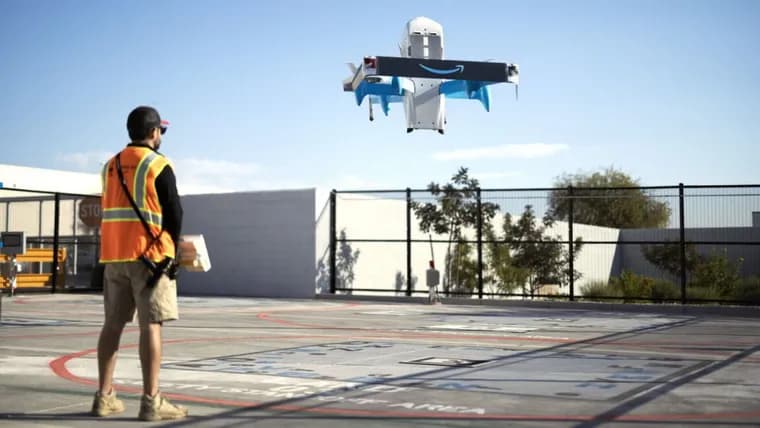
On August 19, 2026, Amazon announced that its Prime Air delivery drone service will soon launch in five new US metropolitan areas: Chicago; Cleveland; Atlanta; Syracuse, New York; and Boise, Idaho, with more launches planned later in the year. Amazon gave no specific dates for the five new launches, only that they are coming soon. The announcement is part of a broader plan to grow Prime Air sixfold, reaching nearly 500 cities and towns across the United States by the end of 2026. Each Prime Air site covers an area of about 175 square miles, with delivery times ranging from half an hour to an hour.
Prime Air already operates out of Amazon warehouses in 10 cities across seven states, mostly serving suburban neighborhoods: Phoenix; Tampa; Kansas City; Omaha, Nebraska; Baton Rouge, Louisiana; Detroit; Houston; and San Antonio, Dallas, and Waco, Texas.
The expansion comes as competitors race to scale their own drone delivery operations. Walmart, partnered with Wing and Zipline, recently passed 1 million cumulative drone deliveries while operating from 66 stores across four states, and is looking to expand that footprint to more than 270 stores by 2027. Separately, Zipline announced a partnership with Uber aimed at scaling up to 1 million drone deliveries per day by the end of 2029. Zipline, which first pioneered long range drone delivery of blood and other medical supplies in Africa, has been steadily growing its US operations and says it has already made more than 2.7 million deliveries worldwide, a figure the article presents as the company's own claim rather than something independently verified.
The article frames the combined push from Amazon and its rivals as one that could bring drone delivery within reach of tens of millions more people in the coming months, while also testing how much noise from daily drone flights nearby communities are willing to tolerate.
Key facts
- On August 19, Amazon said Prime Air will soon launch in Chicago, Cleveland, Atlanta, Syracuse (New York) and Boise (Idaho), with more launches planned later in the year but no specific dates given.
- The launches are part of a plan to grow Prime Air sixfold to nearly 500 US cities and towns by the end of 2026; each site covers about 175 square miles with delivery times of half an hour to an hour.
- Prime Air already runs from warehouses in 10 cities across seven states, including Phoenix, Tampa, Kansas City, Houston, and the Texas metros of San Antonio, Dallas and Waco.
- Walmart, working with Wing and Zipline, has passed 1 million cumulative drone deliveries from 66 stores in four states and aims for more than 270 stores by 2027.
- Zipline separately partnered with Uber to reach 1 million drone deliveries a day by the end of 2029, and says it has made more than 2.7 million deliveries worldwide to date, a company claim the article does not independently verify.
Why it matters
Drone delivery is moving from scattered pilot programs into a scale race among some of the largest US retailers and logistics companies. Amazon's stated target, a sixfold expansion of Prime Air to nearly 500 cities and towns by the end of 2026, lands alongside Walmart's newly passed 1 million cumulative drone deliveries and Zipline's partnership with Uber, aimed at 1 million drone deliveries a day by 2029. Taken together, the announcements show Amazon, Walmart and Zipline all treating drone delivery as a real, scaling last-mile channel rather than a limited pilot, each committing to a specific numeric target for how far it plans to take the service.
Who it affects
Residents of the five newly announced metro areas, Chicago, Cleveland, Atlanta, Syracuse and Boise, gain a path to Prime Air service once the sites open, joining the 10 cities across seven states where Amazon already flies deliveries: Phoenix, Tampa, Kansas City, Omaha, Baton Rouge, Detroit, Houston, San Antonio, Dallas and Waco. Walmart shoppers near its 66 current drone-delivery stores, and the further stores it plans to add on the way to more than 270 by 2027, are affected too. So are people near any of these sites who never order a drone delivery themselves: more flights overhead means more low-altitude drone noise for entire neighborhoods, not just customers. Competitively, the moves affect how Amazon, Walmart, Zipline, Wing and Uber are each positioned in the emerging last-mile drone delivery market.
How to use it
Where a Prime Air site is active, delivery covers an area of about 175 square miles around the warehouse, with orders arriving in half an hour to an hour. For the five newly announced metro areas, Amazon has given no specific launch date, saying only that service is coming soon.
How solid is it
The sixfold and nearly 500 city figures are Amazon's own stated targets for the end of 2026, not results already achieved, and the source does not say what baseline the sixfold multiple is measured against. The five new launches carry no confirmed dates beyond soon. The article names no Amazon executive, official or spokesperson and contains no direct quotations from anyone at Amazon, Walmart or Zipline. Walmart's 1 million cumulative deliveries and 66-store footprint are described as already reached, while Zipline's total of more than 2.7 million deliveries worldwide is explicitly presented as a company claim that the article does not independently verify.
Risks and caveats
The article raises, without citing any data, study or specific complaint, the concern that the combined expansion from Amazon and its rivals will test communities' tolerance for the noise of increased daily drone flights. How Amazon's own sixfold growth target relates to Prime Air's current footprint is also unstated: it is unclear whether the multiple is measured from the 10 cities named as the existing presence or from some other count. Specific launch dates for the five new metro areas have not been announced; Amazon says only that they are coming soon. And Zipline's figure of more than 2.7 million deliveries worldwide is presented in the source as the company's own claim, not one the article independently verifies.