Amazon unveils Ring Drone Cam and Rover Cam for AI home patrols
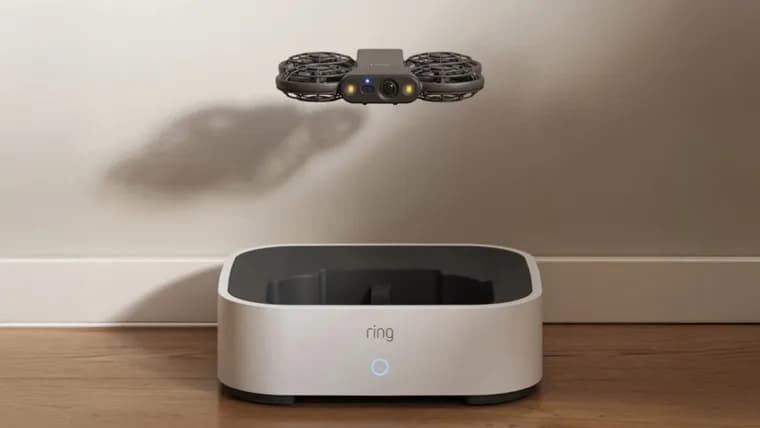
Amazon has announced two new Ring Robotic products: the Ring Rover Cam and the Ring Drone Cam. Both are meant to patrol a customer's home or office under the control of what Amazon calls an AI Pilot system. According to an Amazon announcement posted on November 10, the Rover Cam is expected to reach customers starting at the end of 2026 and the Drone Cam in early 2027.
Amazon describes the AI Pilot as a system that uses each device's cameras along with "specialized vision models, on-device sensors and cloud processing" to plan patrol routes while navigating around obstacles such as furniture on its own. Both devices also use it to build a digital map of the floor plan of the customer's home or business. Setup happens after the customer carries the drone through their indoor spaces, or lets the Rover do some autonomous exploration. From that tour data the AI Pilot can supposedly identify specific rooms and suggest patrol points near side doors, windows, or sensitive spots such as a cash register in a business.
The Ring Drone appears to be a direct successor to the Ring Always Home Cam, which was available only briefly, by invitation, as a "Day 1 Edition" product in September 2021. It even has the same starting price of $250. But the drone still needs authorization from the Federal Communications Commission before it can go on sale. Assuming that comes through, Amazon aims to make it available on January 27, 2027, and customers can register for email updates through the product page.
The drone can supposedly follow a set route and schedule for customers who subscribe to the Amazon Ring Protect plan. It can also fly those set routes automatically when it responds to a notification from a Ring camera, sensor, or alarm.
Ars Technica frames the launch around privacy. It says the products are certain to intensify privacy concerns raised by Amazon's earlier attempt to popularize a flying security camera, and that flying and roving cameras with AI features could add new privacy risks for homes and businesses, on top of existing worries about fixed Ring cameras in room corners and doorbells.
Key facts
- Amazon announced the Ring Rover Cam and Ring Drone Cam on November 10; the Rover is expected from the end of 2026 and the drone in early 2027.
- Both use an AI Pilot system that maps the floor plan of a home or business and plans patrol routes around obstacles such as furniture.
- The Ring Drone starts at $250, the same as its apparent predecessor, the Ring Always Home Cam from 2021, and needs FCC authorization before sale.
- Amazon aims to release the drone on January 27, 2027, assuming FCC authorization comes through.
- The drone can supposedly follow a set route and schedule for Ring Protect subscribers, and fly routes automatically when a Ring camera, sensor, or alarm sends a notification.
Why it matters
Ring is moving from fixed cameras on doorbells and room corners to cameras that move through a space by themselves. The Ring Drone is also a second try at an idea Amazon first offered in September 2021 as the invitation-only Ring Always Home Cam, at the same $250 starting price. Ars Technica says the new products are certain to intensify the privacy concerns raised by that earlier attempt.
Who it affects
The target buyers are Ring customers who want patrols of a home or an office; the AI Pilot's suggested patrol points include a cash register in the case of a business. It also touches the people who live or work in the mapped spaces. Ars Technica says flying and roving AI-enabled cameras could introduce new privacy risks for homes and businesses.
How to use it
Setup starts with a tour: the customer carries the drone through the indoor spaces, or lets the Rover explore on its own, so the AI Pilot can map the floor plan and suggest patrol points. Scheduled, set-route patrols by the drone are supposedly tied to the Amazon Ring Protect plan. The drone can also fly its routes when a Ring camera, sensor, or alarm sends a notification. The drone starts at $250 and customers can register for email updates on the product page. The Rover Cam price and the Ring Protect subscription price are not given.
How solid is it
The product details come from an Amazon announcement posted on November 10, as relayed by Ars Technica, so they are the company's own description. Ars flags some capabilities as what the system can "supposedly" do, including room identification, patrol-point suggestions and scheduled routes. The release dates are targets: the Rover is expected at the end of 2026, and the drone's January 27, 2027 date assumes FCC authorization. No date is given for that approval.
Risks and caveats
The drone cannot go on sale until the FCC authorizes it, and Amazon's date depends on that. The main concern raised is privacy: roving and flying cameras with AI features add to existing worries about fixed Ring cameras. The source gives no reaction from privacy groups, regulators or Amazon to those concerns, and no technical specifications such as flight time, battery life or camera resolution.
“specialized vision models, on-device sensors and cloud processing”
— Amazon, describing the AI Pilot system in its announcement, as quoted by Ars Technica