Apple announces first touchscreen MacBook Pro, from $2,899
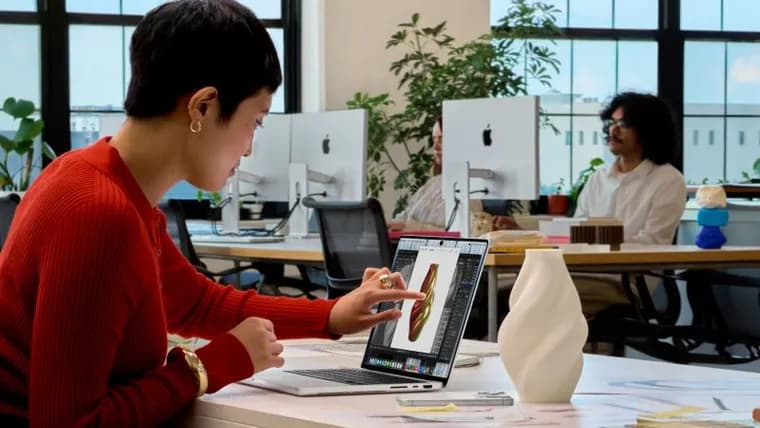
Apple has dropped its long resistance to touchscreen laptops. On Wednesday it announced the MacBook Pro with PROLED XDR Display, the first Apple laptop with a touch-sensitive display. It launches on November 6 in 14-inch and 16-inch versions, runs on Apple's M5 Pro or M5 Max chips, and starts at $2,899 for the smaller model and $3,399 for the bigger one.
Apple is pitching the touchscreen at the MacBook Pro's core audience of creative professionals and app developers. It says touch is useful for dragging and dropping slides between presentations and lets developers test directly on their computers how their apps work. Graphic designers and musicians, Apple says, will be able to draw sketches and play virtual instruments with a touch of the screen. The company also claims many existing apps will work with the touchscreen right away, because the software registers touches as clicks.
On the hardware side, Apple says the touch sensor is built into the display itself rather than layered on top of it, which it claims will reduce latency when swiping and scrolling. The laptop also gets the Dynamic Island, the pill-shaped cutout that holds the front camera and information on iPhone screens. For creatives there is higher peak brightness than on non-touch versions, plus Adobe's RGB color space.
CNN frames the move against a long history. Touchscreen laptops have existed for more than a decade. Microsoft pushed the industry that way with Windows 8 in 2012, but the tile-based design was widely panned as confusing, and early touch hardware was clunky, expensive and awkward to use as a tablet. In 2013 Tim Cook, then Apple's CEO and now executive chair of its board, said of rivals: "Our competition is different, they're confused," adding that they were trying to "make PCs into tablets and tablets into PCs. Who knows what they will do next?" Since then touch laptops have improved through lower component costs, lighter designs and Windows updates, and Dell and Lenovo sell them widely. Apple itself has been drifting toward touch: it overhauled the iPad's software in 2019 with more productivity features and has made Mac software look more like the iPhone's, with a control panel and the Liquid Glass translucent icon design. Its one earlier try at touch on the MacBook Pro, the 2016 Touch Bar, largely flopped with consumers because its utility didn't justify the extra cost.
The market is still small. Touchscreen devices made up only 16.3% of global laptop shipments in 2025, according to IDC. Ryan Reith, group vice president for IDC, attributes that largely to commercial buyers, who avoid touchscreens because most workers plug their laptop into a monitor at their desks.
The launch is the latest in a run of new Apple products during John Ternus's first two months as CEO, alongside the iPhone Duo and the HomeView home hub. CNN says these will test whether Apple can still develop hit products that anticipate users' needs. HomeView was introduced earlier this month, and Apple's first foldable iPhone went on sale last week. Wall Street will look for signs of how the new products are being received on Apple's earnings call next week, especially after reports of broken iPhone Duo screens. Francisco Jeronimo, an analyst covering mobile devices and computers, said in an email that Apple's entry will not dramatically change the PC market but will change the status of touch-enabled laptops.
Key facts
- Apple announced the MacBook Pro with PROLED XDR Display, its first laptop with a touch-sensitive display, launching November 6.
- It comes in 14-inch and 16-inch versions with M5 Pro or M5 Max chips; the smaller model starts at $2,899, the bigger at $3,399.
- Apple says the touch sensor is built into the display rather than layered on top, which it claims reduces latency, and that many existing apps will work right away because touches register as clicks.
- Touchscreens were only 16.3% of global laptop shipments in 2025 (IDC), and Apple's 2016 Touch Bar largely flopped with consumers.
- The launch is part of a run of new products under CEO John Ternus, who is in his first two months in the role.
Why it matters
Apple once criticised hybrid computers, and in 2013 Tim Cook mocked rivals for making PCs into tablets. Now its own flagship pro laptop has a touchscreen. CNN describes Apple as late to the game, in line with its habit of arriving after others (MP3 players, tablets, smartwatches) and winning by making devices simpler. The launch is also one of several Apple firsts under new CEO John Ternus, including the iPhone Duo and the HomeView home hub, and CNN says they will test whether Apple can still make hit products that anticipate users' needs.
Who it affects
Apple is aiming at the MacBook Pro's core audience of creative professionals and app developers: presenters moving slides, developers testing apps by touch, designers sketching and musicians playing virtual instruments. Windows laptop makers are also in the frame: some analysts think the new laptop will raise the bar for Windows rivals. Investors will watch the earnings call next week for signs of how Apple's new products are being received.
How to use it
The MacBook Pro with PROLED XDR Display goes on sale November 6 in 14-inch and 16-inch versions with M5 Pro or M5 Max chips. Prices start at $2,899 for the smaller model and $3,399 for the bigger one. Apple says many existing apps will work with touch immediately because the software registers touches as clicks. It also includes the Dynamic Island, higher peak brightness than non-touch versions and Adobe's RGB color space.
How solid is it
This is an official Apple announcement reported by CNN, so the model names, chips, launch date and starting prices are firm. The performance claims are Apple's own and untested: lower touch latency from the built-in sensor, and existing apps working right away. CNN gives no peak brightness figure and no prices for non-touch MacBook Pro models, so the cost of adding touch cannot be worked out from the article.
Risks and caveats
Demand is the open question. Touchscreens were only 16.3% of global laptop shipments in 2025, per IDC, and IDC's Ryan Reith says commercial buyers shy away because most workers plug into a monitor at their desks. Apple's 2016 Touch Bar was an earlier touch experiment on the MacBook Pro that largely flopped because its utility didn't justify the cost. Analyst Francisco Jeronimo expects Apple's entry to change the status of touch laptops rather than dramatically change the PC market. Reports of broken iPhone Duo screens add scrutiny to Apple's new product run.
“Apple’s entry will not dramatically change the PC market, but it will change the status of touch-enabled laptops”
— Francisco Jeronimo, an analyst covering mobile devices and computers, in an email after the announcement