Apple Intelligence for Home underwhelms next to Ring and Nest, review finds
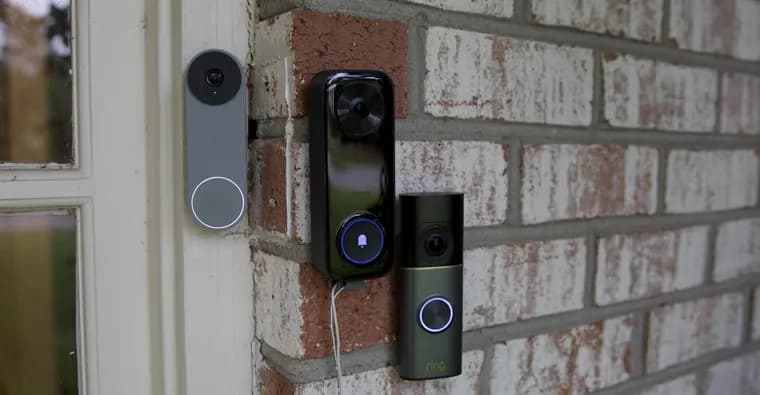
Apple brought AI-generated text descriptions to HomeKit Secure Video this month with iOS 27, launching Apple Intelligence for Home on September 14th. The feature already exists at rival camera makers Ring, Google Nest, Blink, Wyze and Arlo, which generate a short text description of what a camera saw, such as "a dog sat on the floor," alongside a video clip. The Verge's Jennifer Pattison Tuohy tested Apple's version against Ring's and Google's, having run all three since Apple's summer beta and focusing on doorbell cameras once iOS 27 launched: a Ring Wired Doorbell Pro ($249.99), a Google Nest Doorbell 2K ($199.99), and a HomeKit Secure Video compatible Aqara Doorbell Camera G400 ($99), the last standing in for Apple's own hardware since Apple sells no cameras of its own.
On pricing, Apple bundles Apple Intelligence for Home into iCloud Plus. The 2TB plan ($9.99 a month, or via Apple One at $39.95 a month) supports the feature on one camera; the 6TB plan ($29.99 a month) covers two cameras; the 12TB plan ($59.99 a month) covers up to five cameras, and no tier supports more than five. Basic HomeKit Secure Video recording without the AI features is cheaper, starting at $0.99 a month for one camera (50GB), $2.99 for five cameras (200GB), or $9.99 for unlimited cameras (2TB), with 10 days of video storage. By contrast, Google Home charges $20 a month for Gemini-powered descriptions, video search, facial recognition and a daily "Home Brief" digest across unlimited cameras, including 24/7 recording on wired models, and Amazon's Ring charges the same $20 a month for its own text descriptions, video search, facial recognition, unusual-event alerts and clip recording on unlimited cameras, with 24/7 recording an extra $3 per camera on wired models. Tuohy notes that Apple is "charging up to three times as much as its competition for the feature."
On quality, Apple's descriptions were the briefest and vaguest of the three, often saying just "someone" where Ring and Google specified a delivery person, a person in uniform, or someone carrying a bag. When Tuohy's cat sat on the porch, Apple described it as "A cat sat on the porch," Ring said "A cat is standing on the pathway outside the porch," and Google identified "A black and white cat walks across the porch." All three correctly flagged UPS and FedEx delivery trucks, but only Apple identified a USPS van, and even then inconsistently. Google gave the most descriptive detail on vehicles. Apple's merged "reduce notifications" alerts also read clunkily, producing phrases like "Someone seen. Someone carried a box," while Ring and Google merged the same events more fluidly.
On facial recognition and reliability, Ring recognized Tuohy every time she approached the door, while Apple was inconsistent, sometimes naming her correctly and other times flagging "Someone who may be Jennifer Pattison Tuohy" or just "Someone." Google got it right about half the time. Notification reliability was also spotty specifically on the Aqara doorbell camera under Apple's system: alerts stopped arriving at some point despite troubleshooting, even though the Aqara app, doorbell-ring alerts, and other Aqara cameras kept working normally. Google's Nest doorbell was fastest and most consistent at notifying her of events, with Ring close behind, though Ring occasionally showed "This video is unavailable" on playback.
Apple did tell Tuohy it had "completely rearchitected" the HomeKit Secure Video recording system in iOS 27, fixing a long-standing problem with missing clips, and she found cameras loaded faster and stayed more stable afterward, aside from the Aqara doorbell's missed notifications (recording and video search still worked). Apple also offers two features the rivals lack: cross-camera "clip stitching," which links related sightings of a person or object across multiple cameras into one video, and surfacing events Apple judges most important. Even so, video search itself was rated most useful on Google, then Ring, then Apple, tracking each platform's level of descriptive detail. Tuohy concludes that since Apple Intelligence for Home only officially launched this month she expects it to improve, but for now, Ring's and Google's versions are both more useful and cheaper.
Key facts
- Apple added AI-generated text descriptions to HomeKit Secure Video via iOS 27's Apple Intelligence for Home, launched September 14th, catching up to a feature Ring, Nest, Blink, Wyze and Arlo already offered.
- Apple bundles the feature into iCloud Plus at $9.99 a month for one camera up to $59.99 a month for five, versus $20 a month for unlimited cameras from both Ring and Google Home, up to three times pricier per the reviewer.
- Testing with a Ring Wired Doorbell Pro ($249.99), a Google Nest Doorbell 2K ($199.99), and a HomeKit-compatible Aqara Doorbell Camera G400 ($99) found Apple's descriptions the vaguest and briefest, and its facial recognition the least consistent.
- Apple said it rearchitected HomeKit Secure Video's recording pipeline in iOS 27 to fix missing clips, though the Aqara doorbell camera in the test still missed some notifications.
- Apple offers two features rivals lack, cross-camera clip stitching and surfacing important events, but Google's video search and Ring's overall reliability were rated ahead of Apple's.
Why it matters
AI-generated text descriptions have become a baseline expectation for smart security cameras, letting people react to something like "a delivery person is walking on the lawn" instead of a bare "motion detected" alert. Apple only added the capability this month with iOS 27's Apple Intelligence for Home, arriving well after Ring, Google Nest, Blink, Wyze and Arlo already offered similar text summaries, so the review tests whether Apple's late entry holds up on quality and price.
Who it affects
Owners of HomeKit Secure Video compatible cameras, since Apple itself sells no cameras of its own, who already pay for iCloud Plus, plus anyone comparing Ring, Google Nest and HomeKit/Aqara camera ecosystems before deciding which smart-home platform to buy into.
How to use it
Apple Intelligence for Home requires an iCloud Plus subscription, a HomeKit Secure Video compatible camera, an Apple Home Hub running HomePod/tvOS 27, and an AI-capable iPhone on iOS 27. It only unlocks on the 2TB tier ($9.99 a month, or via Apple One at $39.95 a month, one camera), the 6TB tier ($29.99 a month, two cameras) or the 12TB tier ($59.99 a month, up to five cameras); no tier covers more than five cameras. In the Home app, Reduce Notifications is on by default while Summarize Video must be switched on manually under Settings, Apple Intelligence. Basic HomeKit Secure Video recording without the AI features is cheaper, from $0.99 a month for one camera up to $9.99 a month for unlimited cameras.
How solid is it
This is a first-hand comparative test by The Verge's Jennifer Pattison Tuohy, who ran Apple's, Ring's and Google's AI camera features side by side over several months, including through Apple's summer beta, using real doorbell footage from her own home rather than lab benchmarks. The account here reflects the reviewer's hands-on impressions and does not extend to the article's closing verdict, which continues beyond the excerpt available.
Risks and caveats
Apple's text descriptions were frequently vague, saying just "someone" instead of naming a delivery person or uniform, and its combined "reduce notifications" alerts read awkwardly. Facial recognition on Apple's system was inconsistent, sometimes hedging with "someone who may be" a named person, and notification reliability was specifically spotty on the Aqara doorbell camera, where alerts stopped despite troubleshooting even as recording and video search kept working. The reviewer notes Apple Intelligence for Home only launched this month and expects it to improve, but says that for now, Ring's and Google's versions are both more useful and less expensive.
“Apple is charging up to three times as much as its competition for the feature.”
— Jennifer Pattison Tuohy, The Verge