Arizona welcomed TSMC's thirsty chip fabs but is fighting new data centers
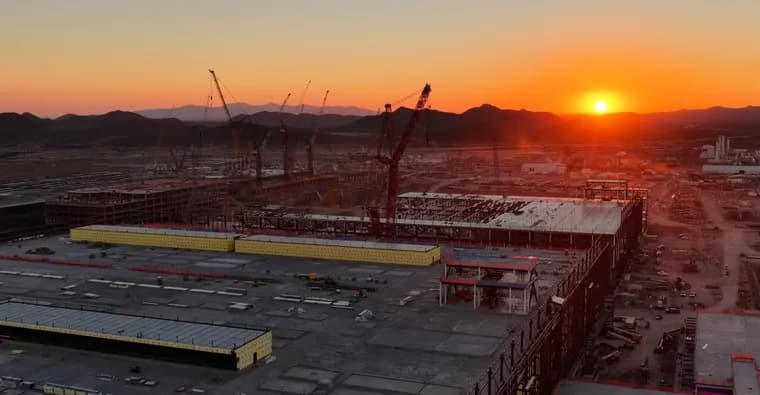
The Verge's Gaby Del Valle reports from Arizona on a puzzle: the state welcomed TSMC's chip factories in Phoenix, which draw nearly 5 million gallons of water a day from the city's municipal supply, yet new hyperscale data center proposals from Phoenix to Tucson are meeting mass backlash. The article says a grassroots and, surprisingly, bipartisan coalition of residents has united against them. Both industries face the problem that has plagued Arizona since its founding: there isn't enough water. And the state will soon lose access to nearly 30 percent of the water it receives from the Colorado River.
The TSMC story starts in 2016, when the company began shopping for a US location and put out a request for proposals under a codename. No one won. Christine Mackay, an Arizona native who, as head of Phoenix's economic development office, spearheaded the effort, says her office asked TSMC executives what Arizona was missing and spent three years addressing it. In 2019 Phoenix sent a delegation to Taiwan with a plan for a science and technology park built around a factory. TSMC was shown two sites: Laveen, a suburb southwest of Phoenix, and Biscuit Flats, an undeveloped area north of the city roughly the size of Manhattan. In 2020 TSMC announced a Phoenix fab. It first predicted it would pour $12 billion into Arizona's economy by 2029; its projected expenditure has since ballooned to $265 billion, which the company touts as the largest foreign direct investment in US history. A second fab is finished, a third is under construction, and plans for several more are underway. TSMC has brought more than 3,500 jobs to the state. Globally, it accounts for nearly one-tenth of Taiwan's GDP, controls an estimated 70 percent of the global chip market, and gets more than one-third of its annual revenue from contracts with Apple and Nvidia alone. Mackay says Arizona now has a sixth C alongside cattle, copper, cotton, citrus and climate: chips.
Local leaders may have hoped to repeat that success with data centers. Arizona already has 172 of them, and neither they nor TSMC drew much pushback. Mackay, who has worked as an economic developer for over 30 years, says: "The first 10 data centers I did look like pretty little office buildings." The new proposals are neither pretty nor little: massive, often on rural farm or desert land, and demanding more water, power and land than Arizonans are willing to give. Developers promise jobs, tax revenue and infrastructure, and swear they will use less water than you'd expect. The article cites Google's facility in The Dalles, Oregon, which uses about 1.5 million gallons a day, about one-third of what TSMC's Arizona complex consumes. Locals are not reassured. They fear the data centers will change the landscape as TSMC did without bringing the prosperity, consuming resources while contributing little. Some also say the desert, dark-sky corridors and wildlife could be sacrificed for an industry that also poses an existential threat to humanity.
The reporting included city council meetings where people lined up by the dozens to speak against projects, and conversations with activists, economic developers, elected officials and residents who, over two years, taught themselves zoning, land use and water consumption.
The article's central scene is a protest on August 1st, at the peak of monsoon season, by the No Desert Data Center Coalition on the outskirts of Tucson, in front of the 290-acre site where Beale Infrastructure is building a 600-megawatt data center. About a dozen people came. Organizer Vivek Bharathan reminded them to stay hydrated and told the crowd that data centers "create heat islands that can affect the surrounding area by over 10 degrees Fahrenheit." Attendee Mayra Duron, a local macrame artist who incorporates cactus spines into her weaving, worried about saguaros: in Phoenix, she said, they have seen saguaros die left and right. A banner read: BEALE'S DATA CENTER WILL SUCK US DRY. Cars honked in support.
The article says Tucson appears united in opposition to the complex dubbed Project Blue, but the buildings are going up anyway. Information about Project Blue began trickling out in the spring of 2025: a county-owned plot, 3,000 temporary construction jobs and 200 well-paying positions down the road, $152 million in tax revenue over the next decade, and new water lines to serve a big, thirsty facility. Little else came out because Pima County, which owned the land, signed a nondisclosure agreement with the would-be developer. In June 2025 Pima County administrator Jan Lesher submitted a 44-page memo to the Board of Supervisors.
Key facts
- TSMC's Arizona operation uses nearly 5 million gallons of Phoenix municipal water a day (the author's figure); it was welcomed and faces no significant opposition, while Arizona's 172 data centers drew little pushback until the newer, larger proposals.
- TSMC's projected Arizona spending has grown from a predicted $12 billion by 2029 to $265 billion; it has brought more than 3,500 jobs.
- Arizona will soon lose access to nearly 30 percent of the water it receives from the Colorado River, which sharpens the fight over data center water use.
- A bipartisan grassroots coalition opposes hyperscale proposals from Phoenix to Tucson; about a dozen people rallied on August 1st outside a 290-acre, 600-megawatt Beale Infrastructure site near Tucson.
- Project Blue was pitched with 3,000 temporary construction jobs, 200 permanent jobs and $152 million in tax revenue over a decade, but Pima County signed a nondisclosure agreement with the developer, and the buildings are going up despite opposition.
Why it matters
The piece explains why two water-hungry industries get opposite receptions in the same desert state. The author's answer: TSMC arrived as a pre-pandemic bet to revive a sluggish economy, delivered jobs and prosperity, and came before anger at AI. New hyperscale data centers are bigger, more visible and demand more water, power and land, just as Arizona is set to lose nearly 30 percent of its Colorado River water. It is a concrete case of local resistance to AI infrastructure.
Who it affects
Residents of the Phoenix and Tucson areas, who face the water and land demands and say they fear the heat effects. Local officials and economic developers like Christine Mackay, who court projects with promises of jobs and tax revenue. Data center developers such as Beale Infrastructure. TSMC and its customers, including Apple and Nvidia, whose chips TSMC largely manufactures.
How to use it
Read it as a template for how data center fights unfold locally: the promises developers make (jobs, tax revenue, infrastructure, lower water use than expected), and the counterweights residents raise (water, heat, land, secrecy). The article also gives a comparison point: TSMC's nearly 5 million gallons a day against about 1.5 million for Google's facility in The Dalles, Oregon. No water figure for Project Blue or Beale's data center is given.
How solid is it
This is a reported feature by Gaby Del Valle, built on interviews, council meetings and time with residents. The 5 million gallon figure for TSMC is stated in the author's voice with no source given, and the Google figure is not attributed to Google. The heat island claim of over 10 degrees Fahrenheit is Vivek Bharathan's statement at the rally, not an established finding in the piece. Project Blue's job and tax numbers are what was said to be coming, not results.
Risks and caveats
The rally drew about a dozen people, so the visible protest was small even as the author describes broad opposition. Mackay's account comes from the person who helped bring TSMC to Phoenix. TSMC's $265 billion is projected spending, not money spent. The article is one author's account of public mood; no vote, ruling or final decision on any data center project is reported in the text. Do not read the Beale site and Project Blue as the same project: the article ties them only by context.
“It is a hot day, and if they succeed in building a data center here, it’ll be even hotter.”
— Vivek Bharathan, one of the organizers of the No Desert Data Center Coalition rally near Tucson