Boston Children's prompt engineer is now a clinical AI engineer
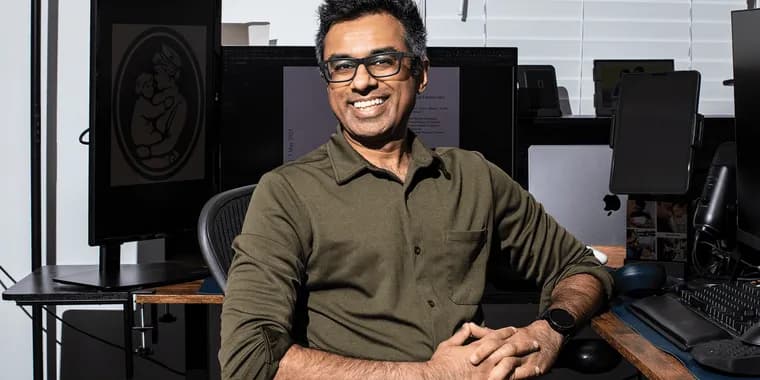
IEEE Spectrum profiles Dinesh Rai, who applied in 2023 when Boston Children's Hospital posted a job listing for a prompt engineer. He did not expect to get it. At the time, prompt engineering was being touted as one of the hot new jobs created by generative AI. Rai had an unusual background for the role: he trained as an emergency physician, had started teaching himself to code in 2014, the year he entered medical school, and had completed a clinical informatics fellowship. The hospital brought him on in August 2023.
Three years later he is still there, but prompting is a much smaller part of the job. John Brownstein, the hospital's chief innovation officer, says the early expectation was that "knowing how to prompt AI properly was going to be the job function of the future". The article says better models have made elaborate prompting less important, so the harder work is building AI into real health care systems and judging whether its answers can be trusted. Brownstein says the questions have shifted to how to embed these tools in daily operations and how to build agents that manage them. "I'm more like a clinical AI engineer now," Rai says.
Rai studied business as an undergraduate and kept writing software while training as a doctor. In medical school he built Academius, a platform where students track residency interviews and assemble rank lists. Coding appealed to him because of its scale: software could be used by thousands of clinicians for many more patients than one emergency doctor sees. His 2021-22 fellowship made full-time technology work feel realistic. In 2022 he joined Pieces, a health care AI company, and led work to bring LLM-based medical summarization into clinical use. That meant pausing medical practice. He has since reactivated his license and hopes to return to clinical work in some capacity within the next year.
Roughly half of his day is now engineering: working with developers, writing code and moving projects forward technically. The other half is spent with clinicians, working out what they need. One project, called clinical doppelgangers, is still being developed to help doctors with complicated patients find similar earlier cases in the hospital's historical data, follow their trajectories and see how different interventions turned out. It is meant as an extra source of evidence when published literature offers little guidance, not as a replacement for randomized clinical trials.
On another project, a clinical team and a development team were deciding how much of a patient's record to give an AI model that had to identify findings relevant to a particular clinical outcome. Both initially favored giving it more. Developers assumed any data point could be useful; clinicians assumed the model would recognize irrelevant findings and ignore them. Rai saw problems with both: an abnormal lab result or vital sign is not necessarily relevant, and an LLM asked whether it matters may construct a plausible explanation even when the record does not support the link.
For a platform his team built to draft clinical notes, the clinicians who would go on to use it reviewed a batch of generated notes before anything was finalized. They were told up front that the generative AI tool was there to support their judgment, not to replace their own chart review.
Key facts
- Boston Children's Hospital hired Dinesh Rai in August 2023 after he applied for its prompt engineer listing; he now describes himself as more like a clinical AI engineer.
- Roughly half of Rai's day goes to engineering with developers and writing code, and the other half to working with clinicians on what they need.
- A system in development, "clinical doppelgangers", aims to help doctors find similar past cases in the hospital's historical data; it is not meant to replace randomized trials.
- Rai warns that an LLM asked whether an abnormal finding matters may build a plausible explanation even when the patient record does not support it.
- For a clinical note-drafting platform, its future users reviewed a batch of generated notes before anything was finalized.
Why it matters
Prompt engineer was one of the most talked-about job titles of the early generative AI period, and this is one account of what happened to such a role inside a hospital. According to the article, better models have made elaborate prompting less important. The questions that now matter are whether output matches the underlying data, how results should be evaluated and whether the clinician using a tool can spot a mistake. Medical guidelines add another angle: they are generally based on large populations, while a child treated for a rare or complex disease may not fit neatly into published studies. The clinical doppelgangers project is aimed at that gap.
Who it affects
Clinicians come first, since they are the intended users of both the note-drafting platform and the case-matching system. Doctors facing complicated cases with little published guidance are the target of the latter. Developers who build medical AI are affected too: Rai's example shows that a design choice that looks reasonable to engineers or to doctors can rest on a wrong assumption. The story also speaks to people, including clinicians, who want careers that combine medicine and AI.
How to use it
Rai's approach offers practical habits. Do not assume that more patient data is better, and do not count on a model to ignore what is irrelevant. Have the people who will use a tool review its output before it is finalized; Rai says someone who cared for a complicated cardiac intensive care patient for weeks would catch an error far more easily than someone skimming the chart afterward. Say plainly that the tool supports judgment and does not replace chart review.
On careers, Rai is wary of telling people to master any particular tool. For hands-on engineering jobs, fundamental programming still matters, and some machine learning knowledge and experience building and testing systems are useful. Not every clinician needs to become a database architect or study algorithms deeply. What he considers indispensable is domain knowledge: how health care workflows operate, how electronic health record data is created, what it represents and where care breaks down.
How solid is it
This is a profile of one person in IEEE Spectrum, built around comments from Rai and from Brownstein, the hospital's chief innovation officer. The views on how the job changed and how clinicians come to trust AI are theirs and the magazine's. No results, accuracy figures, evaluation data or deployment status are given for the clinical doppelgangers project or the note-drafting platform. The headline of the original calls Rai the hospital's first clinical AI engineer, but the body text does not state that he is the first.
Risks and caveats
The central technical risk Rai describes is a model that produces a convincing reason for linking a finding to an outcome when the record does not support it. The article does not say what the two teams finally decided about how much of the record to provide. The doppelgangers system is still in development and is not a substitute for randomized clinical trials. Some health care professionals still have concerns about AI even as adoption in medicine surges. Rai calls some skepticism healthy and says the team does not try to talk people out of it. One person's path, which required both medical training and self-taught coding, may also say little about other roles.
“People trust it more when they've seen its mistakes than when we just tell them it's good.”
— Dinesh Rai, Clinical AI Engineer, Boston Children's Hospital