Bupa uses AI to migrate legacy app, cuts delivery time 60%
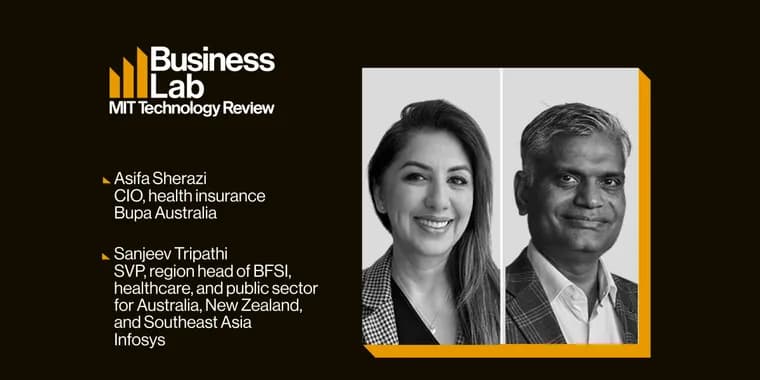
Bupa, the health insurer serving around seven million customers across health insurance and health services in Asia-Pacific, has rebuilt its My Bupa mobile app after Microsoft ended support for Xamarin, the cross-platform framework the app was originally built on, sometime in 2024. Asifa Sherazi, CIO of health insurance at Bupa, said the company chose to modernize proactively rather than wait for the shrinking Xamarin engineering talent pool, tightening security update flows and a widening gap with customer expectations to force the issue. She described the risk of staying on end-of-life technology this way: "The end-of-life technology is a risk that compounds quietly, and then arrives all at once."
Bupa partnered with Infosys to migrate the entire application estate from Xamarin to fully native Swift (iOS) and Kotlin (Android). Sanjeev Tripathi, senior vice president and region head of BFSI, healthcare, and public sector for Australia, New Zealand, and Southeast Asia at Infosys, said the project combined AI-assisted reverse engineering (extracting and understanding the rules, processes, and logic in the legacy environment) with forward engineering to rebuild it natively. Infosys says this combination delivered the transformation in approximately 60% less time than would have been possible before AI-assisted tooling existed.
Sherazi shared several outcome figures from the migration: the app's store rating rose from 3.7 to 4.7; the user-perceived crash rate fell by nearly 24 percentage points on Android and by eight points on iOS; Android login success per visit doubled to 77%; the team hit 100% feature parity in a single release; and 90% of Bupa's active customer base moved to the new version, generating nearly 1.8 million unique downloads. Sherazi called the login figure a particular point of pride for the team, since "a login failure isn't a technical event. It's a person who wanted to check their cover and they couldn't."
Tripathi placed the project inside Infosys's broader AI-first value framework, which the company says identifies six strategic value pools, with legacy modernization as one of them. Both executives framed the payoff less as replacing old technology and more as building a foundation for future AI-driven features; Tripathi said modern platforms will become the base on which AI is "not just an add-on, but is built into everything from design to operations." Sherazi added that modernization has changed the questions her organization asks, from whether the platform can support a feature to whether the feature is the right thing to do for customers.
The material is a Business Lab podcast transcript from MIT Technology Review produced in partnership with Infosys, hosted by Megan Tatum; it is sponsored content rather than independent reporting, and the figures given are Bupa's and Infosys's own account of the project rather than externally verified results.
Key facts
- Bupa migrated its My Bupa mobile app from Xamarin (Microsoft ended support in 2024) to native Swift and Kotlin, with Infosys using AI-assisted reverse engineering followed by forward engineering.
- The migration was completed in approximately 60% less time than Infosys says would have been possible before AI-assisted tooling.
- The app's store rating rose from 3.7 to 4.7, and the user-perceived crash rate fell by nearly 24 percentage points on Android and eight points on iOS.
- Android login success per visit doubled to 77%; the team achieved 100% feature parity in a single release, and 90% of Bupa's active customers (nearly 1.8 million unique downloads) moved to the new version.
- Infosys frames legacy modernization as one of six strategic value pools in its publicly available AI-first value framework.
Why it matters
Legacy modernization projects have historically been slow, costly and risky enough that many organizations delay them until forced to act, as Bupa says it nearly was when Microsoft ended Xamarin support. Infosys argues that AI-assisted reverse and forward engineering is changing that calculus by cutting the effort, risk and time such rewrites take, turning modernization from a defensive necessity into something companies can choose to do proactively. Infosys places this case inside a broader AI-first value framework in which it names legacy modernization as one of six strategic value pools.
Who it affects
The story centers on Bupa's health insurance business in Asia-Pacific, which serves around seven million customers through its My Bupa self-service app for managing cover, claims and entitlements. It also speaks to any enterprise, particularly in regulated, customer-facing sectors like insurance and healthcare, still running business-critical software on frameworks losing vendor support, where a shrinking pool of specialist engineers and tightening security update cycles create compounding risk.
How to use it
The approach described has two phases: reverse engineering, where AI-assisted tooling extracts and documents the rules, processes and logic embedded in the legacy Xamarin codebase, followed by forward engineering, where that logic is rebuilt natively in Swift for iOS and Kotlin for Android. Bupa and Infosys frame this as a business transformation exercise rather than a like-for-like technical rewrite, deliberately preserving institutional knowledge and giving teams room to surface problems early rather than treating the migration purely as an engineering task.
How solid is it
This is sponsored content: a Business Lab podcast transcript published by MIT Technology Review in partnership with Infosys, one of the two companies whose work is being showcased. The specific figures (rating, crash rates, login success, feature parity, download and adoption numbers) are presented as Bupa's own results and are not independently verified in the source. No cost figures for the project are given, and neither the AI tools nor models Infosys used for the reverse and forward engineering work are named.
Risks and caveats
As a jointly produced piece promoting both companies' work, the account should be read as a case study rather than independent reporting. The source states that Android login success 'doubled back up to 77%' without giving the prior baseline figure, and gives no start or completion date for the migration itself, only that Microsoft's Xamarin support lapsed sometime in 2024. The 60% time-saving figure is Infosys's own estimate against an unspecified pre-AI baseline, not an audited comparison.
“The end-of-life technology is a risk that compounds quietly, and then arrives all at once.”
— Asifa Sherazi, CIO of health insurance at Bupa