Deanne Taylor's advocacy helps win $38.5M NIH grant to map children's genes
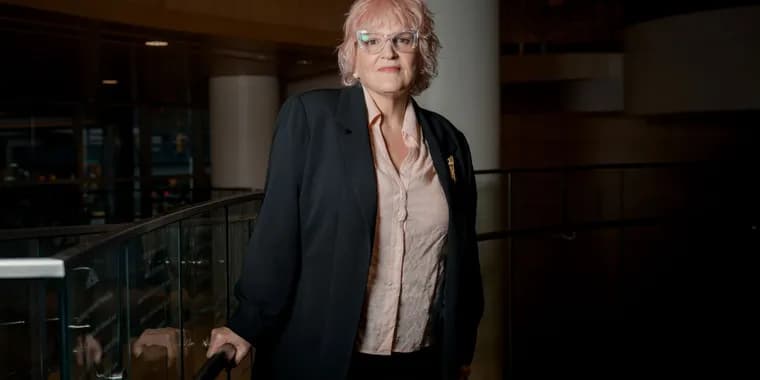
In 2017, Deanne Taylor, director of bioinformatics at the Children's Hospital of Philadelphia (CHOP), attended a presentation at the University of Pennsylvania where a researcher unveiled the Human Cell Atlas, a project aiming to map every cell in the human body. Taylor was excited, then troubled: the project's plans covered adults only. "That's when my little alarm went off," she says. "Not again." She had joined CHOP as director of bioinformatics three years earlier and had already grown frustrated by how little medical research investment went toward children, who the field tended to treat as simply small adults. That assumption is wrong: children's cells switch genes on and off, and turn their expression up and down, differently than adult cells do, and that difference can produce drastically different, sometimes deadly, reactions to drugs that adults tolerate well.
Taylor turned her alarm into a campaign. She joined the Human Cell Atlas's volunteer team and helped write the section on children in a white paper laying out the project's goals, then rallied a coalition of pediatric researchers across multiple hospitals. In 2019 she spearheaded a paper making the case for studying children specifically, meant to draw funding and attention to the field. "It put a flag in the ground," she says. "Why don't we have healthy models of children's development?"
The push paid off. In 2021 the NIH awarded a $38.5 million grant to the Developmental Genotype-Tissue Expression Project, known as dGTEx, an initiative building the first comprehensive database of healthy pediatric tissue. The project banks samples from otherwise healthy children who have died, donated by their parents, and maps how genes across the major organ systems are expressed. Taylor's team curates and standardizes the information tied to each donation, including family history and sample details; a separate group analyzes the tissue itself; the two streams combine into a database that establishes a baseline for what gene expression looks like in children. That data will eventually feed into the Human Cell Atlas, which, thanks partly to Taylor and the coauthors of her 2019 paper, now includes a pediatric section. Sarah Teichmann, a cofounder of the Human Cell Atlas, credits Taylor with pushing the field toward a full view of pediatric development rather than organ-by-organ pediatric studies: "Deanne took a big-picture view and said, We don't just need to understand the pediatric kidney or the pediatric brain or the pediatric immune system. We need a holistic view of pediatric development," Teichmann says. "She embodies that interdisciplinary spirit."
The stakes trace back to the Human Genome Project, which wrapped up in 2003. It linked specific genes to specific diseases but left open how and where the body actually uses each gene: a genome map is a bit like a kit with all the parts and no assembly manual. Gene expression, the process of turning genes into the proteins that build tissue or send signals, changes as the body develops, unlike the DNA sequence itself, which stays largely constant through life. Those changes carry concrete medical risk. Because of how cardiac genes are expressed in children, chemotherapy can damage a child's developing heart along with the tumor it targets, potentially causing lifelong harm. Other treatments can trigger a reversible but potentially fatal immune reaction called cytokine release syndrome.
Taylor calls her own career a "random walk," which she attributes to undiagnosed autism and ADHD. She began reading her mother's medical textbooks at five and was checking physics books out of the library by 12. She earned a PhD in biophysics in 2001, then took a postdoc at Pfizer writing code for rare-disease research after the then-active Human Genome Project pulled her toward genetics. She later moved into reproductive medicine, helping build some of the first computer programs to screen embryos for chromosomal abnormalities, many of which are still in use today. Across that path she says her focus has stayed constant: understanding why the same disease-associated gene variant leaves one person sick and another healthy.
The database Taylor helped create aims to map how the body's roughly 20,000 genes are expressed in healthy children's tissue, and it is only one of the collaborations she manages. She is also a principal investigator for the Kids First Data Resource Center, which sequences diseased tissue collected from children enrolled in studies nationwide, and she works with researchers on HubMAP to help secure funding for 3D maps of children's cells, comparable to the adult maps HubMAP has already produced. Teichmann argues the stakes are high because so much development happens in childhood: key brain cells called astrocytes form in the first five years of life, and the immune system matures during puberty. "Those changes are really important to understand from a disease point of view," she says, adding that a granular, cell level view "will change pediatric medicine, for sure."
Coordinating the project means managing researchers across organizations that each handle a different piece: a nonprofit group secures tissue samples from deceased children soon after death, CHOP pathologists assess each sample's quality and type, and tissue is frozen and stored for future use with the group's permission before being sent to outside labs, including the nonprofit Broad Institute, for gene expression analysis. Rebecca Linn, a pediatric pathologist at CHOP, compares the coordination to "herding cats," given "so many individuals with different goals." Part of Taylor's job is mediating between participants, including explaining to researchers eager to use dGTEx tissue why a one-month-old's tiny testes, for instance, cannot be divided twenty ways.
Colleagues describe Taylor as an unusually well connected collaborator. She has tattoos of Schrodinger's and Boltzmann's equations, paints and takes photographs, and keeps a rock from a Burning Man trip, where she volunteered in the kitchen, on her desk. Linn says Taylor "can make friends and be memorable through her interests and knowledge and questions about all these different subjects." Taylor herself believes the work's own potential is what motivates people to help: comparing a sick patient's cells to a healthy, age-matched baseline from the Human Cell Atlas could surface biomarkers usable as drug targets or diagnostic tools, and a pediatric chapter of that atlas could do the same for children specifically. It might even help trace adult diseases back to signals present in childhood, she says, raising the possibility of screening for and treating chronic conditions years or decades before they surface. "We're just older kids," Taylor says. "By ignoring the pediatric side of things, I think people are missing a window of intervention in human disease." She hopes the project shifts how research approaches pediatrics broadly, a goal she says will take a great deal of data, and people willing to pull the pieces together.
Key facts
- In 2021 the NIH awarded a $38.5 million grant to the Developmental Genotype-Tissue Expression Project (dGTEx), building the first comprehensive database of gene expression in healthy pediatric tissue.
- Deanne Taylor, CHOP's director of bioinformatics, began campaigning to include children in the Human Cell Atlas after its 2017 unveiling turned out to cover adults only.
- The database banks tissue from deceased but otherwise healthy children, donated by parents, and maps how the body's roughly 20,000 genes are expressed across major organ systems.
- Because children express cardiac genes differently than adults, chemotherapy can damage a child's developing heart along with the tumor it targets; other treatments can trigger a reaction called cytokine release syndrome.
- Taylor also leads the Kids First Data Resource Center and works on HubMAP's pediatric 3D cell-mapping effort, while coordinating dGTEx's mix of a tissue-procurement nonprofit, CHOP pathologists and the Broad Institute.
Why it matters
Genomic and cell biology research has mapped adult biology in detail, but pediatric medicine has largely proceeded on the assumption that children are simply small adults. They are not: children's cells switch genes on and off, and turn expression up and down, differently than adult cells do, and that difference can determine whether a therapy helps or harms. The Human Genome Project, completed in 2003, told researchers which genes exist and where; it never showed how or when each of the body's roughly 20,000 genes gets used in a developing body. The $38.5 million NIH grant that funded dGTEx in 2021 is built to close that specific gap for children: a database of gene expression drawn from healthy pediatric tissue, meant to serve as the baseline against which sick children's cells can eventually be compared. It exists in large part because Deanne Taylor, a CHOP bioinformatics director, noticed in 2017 that the flagship Human Cell Atlas project had no plans to study children at all, and spent years building a coalition and a paper trail to change that.
Who it affects
Researchers studying pediatric disease, drug metabolism and normal development are the direct beneficiaries: the new database and the Human Cell Atlas's pediatric section give them, for the first time, a healthy baseline to compare against diseased tissue. Oncologists and other clinicians treating children stand to benefit too, since the underlying problem, differences in how children's cells express genes, already has concrete stakes: chemotherapy can damage a child's developing heart along with the tumor it targets, and some treatments trigger a reversible but potentially fatal immune reaction called cytokine release syndrome. Families of children who died and donated tissue make the database possible in the first place. A wider circle of collaborating institutions, including CHOP pathologists, the nonprofit Broad Institute, and the Kids First Data Resource Center and HubMAP efforts Taylor also leads or supports, all feed into or draw on the same push to build pediatric-specific cell data.
How to use it
The database itself is not a consumer product; it is infrastructure for other researchers. Tissue is banked and, with group permission, made available for future study: Taylor's team curates and standardizes the data tied to each donation, including family history and sample details, while a separate group analyzes the tissue itself, and the two streams combine into the database. That data is designed to feed into the Human Cell Atlas, letting researchers there compare a sick patient's cells against a healthy, age-matched pediatric baseline to look for biomarkers that could serve as drug targets or diagnostic tools. Because samples are finite, sometimes from a single very small donor, Taylor also mediates access herself: she has had to explain to eager researchers that a one-month-old's tiny testes cannot be split twenty ways.
How solid is it
The account is a feature profile built on interviews with Taylor and two named colleagues, Human Cell Atlas cofounder Sarah Teichmann and CHOP pathologist Rebecca Linn, rather than a dGTEx research paper or an NIH press release. The core fact, a $38.5 million NIH grant awarded in 2021, is stated plainly and matches how NIH funding is typically reported. What the piece does not supply is any measure of progress since then: it does not say how many tissue samples have been banked, when the database will be complete or public, or what share of current Human Cell Atlas data is pediatric versus adult. The framing that Taylor's advocacy paid off in the grant is the article's own causal read: her campaign ran from 2017 to 2019, and the NIH award followed in 2021, but the piece does not show a direct funding application from Taylor herself.
Risks and caveats
This is a profile of one scientist's advocacy and coordinating role, not an independent audit of the database's output or an announcement of new results. Several practical details are absent from the source: no sample counts, no name for the nonprofit that procures tissue, and no funding figure or timeline for the related HubMAP pediatric 3D mapping effort. The grant itself is roughly five years old by the time this profile appears, so readers should not treat it as breaking funding news. The eventual payoff the article describes, earlier screening and treatment of chronic disease by tracing it back to childhood gene expression signals, is explicitly framed as something the atlas may enable, not a demonstrated result.
“We're just older kids. By ignoring the pediatric side of things, I think people are missing a window of intervention in human disease.”
— Deanne Taylor, director of bioinformatics at the Children's Hospital of Philadelphia (CHOP)