Deepfake sites target almost 150 European politicians
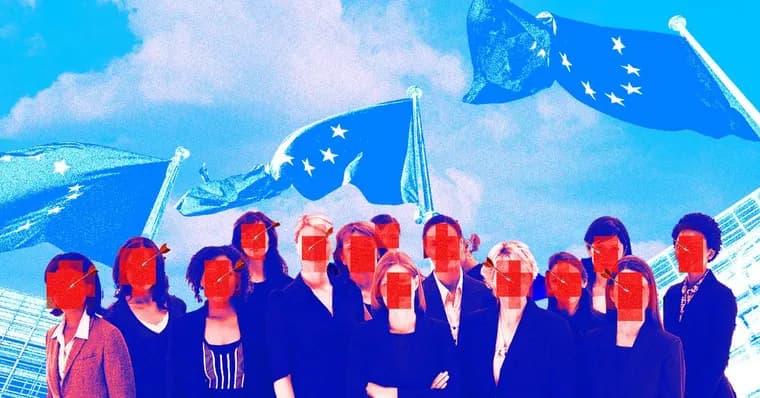
New research seen by Wired has found that almost 150 politicians across Europe have been included on deepfake pornography and abuse websites over the past few years. The analysis comes from researcher Benjamin Shultz, a fellow at the German think tank Agora Digitale Transformation and lead researcher at the American Sunlight Project. Shultz examined around 160 domains that host deepfake abuse and other nonconsensual sexual content, after compiling the details of more than 5,800 members of national parliaments from all 27 European Union countries (not including the European Parliament itself) in July, then running custom searches to see which of them turned up on the sites.
The count: at least 138 women MPs from 22 EU countries appeared or were mentioned on the sites, against only nine men. By Shultz's calculation, that makes women MPs 33 times more likely than their male counterparts to be targeted by deepfake ecosystems. Some of the politicians, who are overwhelmingly women, had their likeness used in explicit videos; others turned up in database-like entries listing their name, official photo, and sometimes social media or personal details, occasionally with sections "rating" their bodies. Many of those entries linked straight to "nudifier" apps or the sites' own tools that claim to digitally undress people. "It has all the images, all the information, and a direct link to the tool, and in three clicks you can generate," Shultz said. "That's just as bad as actually hosting the content." Politicians from Germany, the Netherlands, Italy, and France were the most targeted, and the more senior a politician was, the more likely they appeared.
Two of the affected Dutch MPs spoke to Wired about the findings. Suzanne Kröger, of the Progressive Netherlands group, called them "really deeply disturbing" and said deepfake porn is "part of a much bigger trend of online hate and intimidation against women and female politicians." Kröger added: "We are politicians, we have a platform and speak out. But meanwhile, there are millions of women victims of these criminal acts." Sarah Dobbe, of the Dutch Socialist Party, said the videos "are used to intimidate politicians but also to belittle women," and pressed for fast removal and direct support for victims: "It is very important that if a woman or girl is victimized in this way, she can get direct support if needed, and that the content is removed quickly."
Shultz and other researchers and lawmakers warn the abuse can push women out of politics or stop them from running in the first place. Shultz points to "so much evidence to support that this does real psychological damage," plus lasting "reputational damage" for anyone hoping to move on from politics later. Henry Ajder, an AI adviser who has tracked the deepfake ecosystem since 2018, said the targeting of politicians is not surprising, but that the findings help show the scale of the problem. "These platforms are designed to run like businesses," he said. "The whole infrastructure is set up to do this at scale with ease." Since AI-made deepfakes first appeared at the end of 2017, the tools behind them have grown cheaper and more realistic. Millions of nonconsensual images and videos, mostly made by men and boys, now circulate and are used to harass, intimidate, or blackmail women and girls, with cases reported at almost 100 schools worldwide.
Lawmakers have generally been slow to legislate against deepfake harms, though that is starting to shift: both the UK and the EU are planning bans on nudify services. In the US, at least two major deepfake sites that published thousands of celebrity images and videos have been taken offline under the Take It Down Act, and investigative reporting that unmasked site operators has forced other shutdowns too. Ahead of this story's publication, Wired found that at least half a dozen of the domains in Shultz's research had already been removed from the web, reducing the number of live depictions of European MPs. Shultz alerted every MP he found on the sites individually and gave them guidance on how the content might be removed. He is separately researching how many UK and US politicians appear on similar sites: after sites identified in his earlier 2024 analysis of US senators and members of Congress were taken down, he says depictions of those politicians saw a "significant decrease." Kröger said: "It's a priority to ensure that these images are taken down, but that also there's strong regulation on this type of technology."
Key facts
- New research analyzing around 160 domains that host deepfake abuse content found that almost 150 European politicians have appeared or been listed on them, including at least 138 women MPs from 22 EU countries against only nine men.
- Researcher Benjamin Shultz, of the think tank Agora Digitale Transformation and the American Sunlight Project, calculates that women MPs are 33 times more likely than men to be targeted by these deepfake ecosystems.
- Some politicians had their likeness used in explicit deepfake videos; others appear in listings with their name, photo, and personal details that link directly to "nudifier" tools capable of generating images in three clicks.
- Politicians from Germany, the Netherlands, Italy, and France were the most targeted, and more senior politicians were more likely to appear on the sites.
- The UK and EU are both planning bans on nudify services, and Wired found at least half a dozen of the domains in the research had already been taken offline before this story published.
Why it matters
This is not an anecdote about one deepfake video: it is a systematic count of how many national politicians across the EU turn up on deepfake abuse sites, and it shows a stark gender skew. Women MPs are, by Shultz's own calculation, 33 times more likely than male MPs to be targeted. Researchers and lawmakers quoted here argue the effect goes beyond any single target: repeated, industrial-scale sexual harassment of women in office can discourage other women from running for office at all, which makes this a threat to who ends up in parliament, not only an online-safety story. It also documents how casually the tooling works: Shultz describes generating a nudified image in three clicks from a page that already lists a politician's name, photo, and biography.
Who it affects
Directly: at least 138 women members of national parliaments in 22 of the EU's 27 countries, and nine men, found across roughly 160 sites. Politicians from Germany, the Netherlands, Italy, and France appear most often, and more senior figures are more likely to be listed. Two of the affected MPs, Dutch politicians Suzanne Kröger and Sarah Dobbe, spoke to Wired directly about being targeted. The same site ecosystem also carries depictions of celebrities, journalists, and other public figures beyond politics, and the piece notes that nonconsensual AI deepfake harassment separately affects women and girls at almost 100 schools worldwide, so the underlying pattern extends well past elected office. Shultz is now separately studying how many UK and US politicians appear on comparable sites.
How to use it
There is no product here, but the piece does point to concrete recourse. Shultz alerted every MP he identified individually and gave them guidance on how the content might be removed, without detailing what that guidance was. In the US, the Take It Down Act has already been used to help take at least two major deepfake sites offline; separately, journalists unmasking the people behind such sites have forced other shutdowns. The UK and EU are each preparing bans on nudify services specifically, which would target the tools rather than only the hosting sites. None of this is complete: at least half a dozen of the roughly 160 domains in this research had already gone dark by the time the story published, which lowers the live count but says nothing about the sites that remain, and the piece names no single reporting channel a reader could use directly.
How solid is it
This is Wired's own reporting on research it says it saw directly, credited to a named researcher, Benjamin Shultz, at a named think tank, Agora Digitale Transformation, with a stated method: a list of more than 5,800 MPs compiled in July, checked against roughly 160 sites using custom search tools. The topline numbers (138 women, nine men, 22 countries) are specific and attributed to that analysis rather than estimated by the reporter. The piece adds corroboration beyond the study itself: two affected MPs and an outside expert, Henry Ajder, are quoted on the record confirming the broader pattern. What is not published here is the underlying method for the 33-times figure, or a country-by-country breakdown beyond the four most-affected countries, so the headline ratio cannot be independently checked from this piece alone. The undercount risk cuts both ways: Shultz's search tools may miss sites they do not index, and some domains in the dataset had already gone offline by publication, which lowers the current live count below what the research originally measured.
Risks and caveats
The piece does not name any of the sites, apps, or "nudifier" tools it describes, by design, so a reader cannot verify a specific listing. The story's own headline cites "100-Plus" politicians while the body's figure is almost 150 (138 women plus nine men); the higher, more specific body figure is the one used here. No year is attached to the July compilation date, to when the underlying research was finished, or to this story's own publication. The piece does not break out how many of the roughly 150 politicians had actual videos made of them, as against those who appear only in name-and-photo listings; the two categories are folded into one topline count. The claim that at least two major US deepfake sites were removed under the Take It Down Act is general background and is not stated to be part of Shultz's roughly 160-domain dataset. No timeline is given for the UK and EU "planning" their nudify-service bans.
“Deepfake porn is part of a much bigger trend of online hate and intimidation against women and female politicians”
— Suzanne Kröger, Dutch MP with the Progressive Netherlands group