Flock tightens license plate database rules after stalking backlash
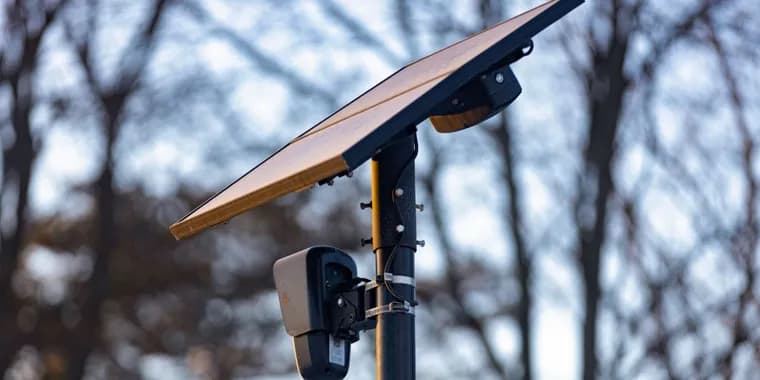
Police-tech company Flock is changing how officers access its nationwide network of license plate readers, MIT Technology Review's James O'Donnell reports. The move follows a backlash over mass surveillance and reports of officers using the technology to stalk and harass current or former romantic partners. Under the new rule, officers must enter a criminal case number before searching the database, and Flock will expand automated auditing of suspicious searches. But Flock will not verify the case numbers officers enter, so officers could still find ways around the safeguard.
The same edition covers a cloning advance. Jessica Hamzelou spoke with scientists who developed a CRISPR-based approach to cut out the Y chromosome in male mouse embryos, creating female clones of male mice. The researchers hope the technique could help conservation efforts in cases where only a few individuals of a species remain. The piece notes cloning already has other uses, from genetically modifying livestock and recreating pets to, potentially, creating "brainless" human replicas as organ sources.
A third story, by Colleen de Bellefonds, follows researcher Deanne Taylor's push to add children to the Human Cell Atlas, a project mapping every cell in the human body. In 2017 Taylor attended a presentation on the Atlas and realized its plans covered only adults. Children's cells express genes differently from adults' cells, which can cause drastically different, sometimes deadly, responses to drugs that adults tolerate well. Taylor has since pushed to include children and is building a database of healthy pediatric tissue, meant to give researchers a baseline for how children develop and to reveal how diseases that emerge in adulthood may begin much earlier.
The newsletter's must-read links round out the day's technology news: Ukrainian drones reportedly wiped out a US tank brigade in a military exercise, exposing US vulnerabilities to drone attacks, as the Trump administration set 100% tariffs on many drones; OpenAI and Anthropic are cutting prices to compete with Chinese rivals such as Z.ai and DeepSeek as companies push back on rising AI bills; Apple has trained its own AI model for China with support from Alibaba, reportedly making it the first foreign firm with a Beijing-approved AI model; US humanoid-robot developers depend on Chinese suppliers to build affordable devices; lawmakers are responding to people "marrying" AI companion chatbots; and researchers have cast doubt on Anthropic's AI text watermarks, finding the marks can disappear once text is rewritten.
The newsletter's quote of the day comes from a former OpenAI employee, who told Wired that a rogue-agent hack was a watershed moment for AI safety and cybersecurity, calling the response "incredibly sloppy." A separate feature by David Rotman looks at startups such as Lila Sciences and Periodic Labs building AI-assisted labs where AI agents design experiments, control robots and analyze results, aiming to shrink materials discovery from decades to a few years. The bottleneck, the piece argues, remains physically synthesizing new materials in the real world rather than predicting them, so the field is still waiting for its own "ChatGPT moment."
Key facts
- Flock will require officers to enter a criminal case number before searching its license plate database and expand automated auditing of suspicious searches, but will not verify the case numbers, leaving a loophole.
- Scientists used a CRISPR-based method to cut out the Y chromosome from male mouse embryos, creating female clones of male mice, aimed partly at species conservation.
- Deanne Taylor is building a database of healthy pediatric tissue for the Human Cell Atlas after finding in 2017 that the project's plans covered only adults, since children's cells can respond very differently, sometimes fatally, to drugs adults tolerate.
- OpenAI and Anthropic are cutting prices to compete with Chinese rivals Z.ai and DeepSeek as companies push back against rising AI bills.
- Researchers found Anthropic's AI text watermarks can disappear once the text is rewritten, casting doubt on their reliability.
Why it matters
The day's stories show three forces moving at once. Flock's new rule looks like a substantive fix to a surveillance tool that has been used to stalk people, but it leaves a hole the company itself created by choosing not to verify the case numbers it now requires. In biotech, a CRISPR method for cloning female mice from male embryos and a new push to map children's cells both extend research into territory with real conservation and clinical upside, alongside ethically loaded extensions the piece names directly. And the price war between OpenAI, Anthropic and Chinese labs like Z.ai and DeepSeek signals that AI model pricing is becoming a competitive battleground rather than a fixed cost.
Who it affects
Police departments and officers who use Flock's network, and anyone who could be tracked or harassed through it. Conservationists and geneticists working with endangered species, and eventually anyone relying on cloned livestock or pets. Pediatric researchers, clinicians and children, whose drug responses differ from adults' in ways the current Human Cell Atlas does not yet capture. AI companies and their customers, who face shifting API prices as OpenAI, Anthropic and Chinese providers compete. US humanoid-robot makers dependent on Chinese parts suppliers, and people using AI companion chatbots as lawmakers move to regulate them.
How to use it
The digest points to MIT Technology Review's fuller pieces for detail: what exactly Flock is changing and where the loopholes remain, how the CRISPR cloning method works, and how Taylor's pediatric tissue database is being assembled. Anyone budgeting for AI tools should watch the pricing contest between US and Chinese providers, since it is already pushing rates down.
How solid is it
Each item carries a named MIT Technology Review byline: James O'Donnell on Flock, Jessica Hamzelou on cloning, Colleen de Bellefonds on children's cells, and David Rotman on AI-assisted materials discovery. The newsletter format leaves some specifics for the linked full stories: no lab or institution is named for the mouse cloning research, no figures are given for the size of the planned pediatric database, and the identity of the company behind the quoted 'rogue agent hack' is not spelled out beyond the source's own framing.
Risks and caveats
Flock's case number requirement is unverified by the company itself, so it can be typed in without being checked, undercutting the safeguard it is meant to provide. The cloning piece flags that the same techniques used for conservation could extend to creating 'brainless' human replicas as organ sources, an application the source raises but does not elaborate on. And AI price cuts driven by competition with Chinese labs may reflect margin pressure as much as a durable benefit to customers.
“They were incredibly sloppy. If you're serious about this, your AI shouldn't be able to break out onto the internet and then do it again right afterward.”
— A former OpenAI employee, quoted in Wired