Osservatorio Nessuno explains how phone unlocking tools work
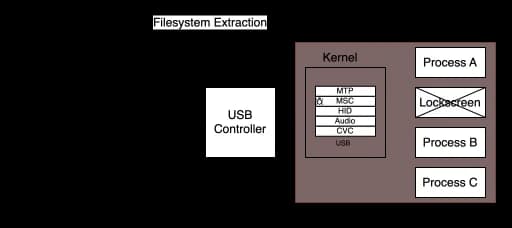
Osservatorio Nessuno has published a written version of a presentation called "Phone unlocking tools and where to find them". The authors, who write as "we", say they delivered it privately to several events and organizations, including Primavera Hacker 25, the Freedom of the Press Foundation and the Public Interest Technology Group. It is part of a series; later posts are to cover sample analysis and defenses.
The central claim is that commercial phone unlocking tools are "not magic". They exploit the same classes of vulnerabilities that researchers publish at conferences and in academic papers. What sets them apart, the authors say, is not novel technique but the systematic commercialization of exploitation: acquiring or developing exploits for each hardware and software combination, getting them to a certain stability, and packaging them into automated workflows that need little operator expertise. For a forensic examiner with physical access, the available attack vectors are bounded by four things: the boot chain, the trusted execution environment (TEE), the secure element (when present) and the kernel's peripheral driver stack. The post mostly covers Android, and says iOS concepts are technically similar. It draws heavily on Quarkslab's research on TEEs and Android data encryption, plus reporting from Amnesty International's Security Lab and other NGOs and analysis by the GrapheneOS project.
The hardware part starts with ARM TrustZone, which splits a processor into a Normal World (Android, apps, the Linux kernel) and a Secure World (a minimal Trusted OS and small Trusted Applications). The worlds share the same cores but are hardware-isolated. A monitor running at the highest privilege level (EL3 on ARMv8) handles switches triggered by Secure Monitor Call instructions. Two Trusted Applications matter for unlocking. Gatekeeper verifies the PIN, password or pattern, rate-limits guesses and issues a signed authentication token. Keymaster stores and uses cryptographic keys, some of which are authentication-bound and usable only after Gatekeeper issues a valid token. TrustZone implementations differ by vendor: Google and AOSP use TrustyOS, Qualcomm uses QSEE, Samsung uses TEEGRIS (on both Exynos and MediaTek SoCs in Samsung devices), Huawei uses TrustedCore, and Trustonic's Kinibi is often found on MediaTek and Exynos SoCs. Security properties vary between them.
A Secure Element (SE) is a physically separate, tamper-resistant chip with its own boot chain, firmware and key storage. On Android it is exposed through the StrongBox API (introduced in Android 9). Pixel phones from the Pixel 3 carry the Titan M chip, upgraded to Titan M2 from the Pixel 6 onward; Apple's equivalent is the Secure Enclave Processor. The SE holds key-encryption keys and enforces rate limiting in hardware that the main SoC cannot tamper with even if fully compromised. So on a device without an SE, compromising the TEE is enough to extract or bypass credential-derived keys, while with an SE the attacker must also compromise a separate hardened chip. Only flagship devices typically include one; most mid-range and budget devices rely solely on the TEE. The authors call this gap the single most important factor in whether a powered-off device can resist forensic unlocking.
The boot chain runs from immutable hardware to the OS, each stage verifying the next: Boot ROM (burned into silicon, in principle immutable and unpatchable, with a few modern exceptions), the preloader or secondary bootloader (BL2), the Trusted OS, the Normal World bootloader (BL3, such as Little Kernel on MediaTek or ABL on Qualcomm, which enforces Android Verified Boot and anti-rollback checks), and finally Android with dm-verity. An SE runs its own parallel chain (Boot ROM, Bootrom EXT, Bootloader, OS). If any stage is compromised, everything after it is untrustworthy. Boot ROM bugs are especially bad because they are often unpatchable, undermine everything built on top, and affect every device using the vulnerable silicon for its whole hardware lifetime.
On encryption, Full Disk Encryption was the default until Android 6 and has been deprecated since Android 13. File-Based Encryption has been the default since Android 7 and required since Android 10. It splits storage into Device Encrypted (DE) storage, available right after boot with a key derived without user credentials, and Credential Encrypted (CE) storage, available only after the first unlock, which holds messages, photos and app data. Following Quarkslab's analysis, the CE key chain works like this: credentials are stretched with scrypt (parameters and salt kept in DE-protected files); the result forms a password blob sent to Gatekeeper, which checks it and issues a signed token; Keymaster uses the token to unlock an authentication-bound key that does a first decryption of the Synthetic Password; a second AES-GCM decryption with a credential-derived key follows, and a wrong credential makes the GCM tag fail; finally the CE file keys used by the kernel's fscrypt are derived. The authors conclude credentials are cryptographically embedded in the chain, so an attacker who compromises the TEE can bypass the token check but must still brute-force the credentials through scrypt.
With an SE, Weaver runs on the chip, holds a secret released only on correct credential verification and applies its own rate limiting. Even a fully compromised TEE, or compromised Trusted Applications as shown by Synacktiv's Kinibi TEE blogpost, cannot extract that secret or bypass throttling, "if implemented properly". Brute-forcing must then go online at the rate the SE allows, which on a Pixel with Titan M means exponential backoff.
The post ends, in the text available here, as it introduces attack vectors. The authors split them into two device states: powered off or powered on but never unlocked (BFU), and powered on and previously unlocked (AFU). The first section, on BFU attacks against devices without a Secure Element, is where the available text stops.
Key facts
- Osservatorio Nessuno argues commercial unlocking tools use the same vulnerability classes researchers publish; their distinction is systematic commercialization of exploitation, not new technique.
- Forensic attack vectors with physical access are bounded by the boot chain, the TEE, the secure element (when present) and the kernel's peripheral driver stack.
- Only flagship phones typically have a Secure Element (Pixels have had Titan M since the Pixel 3, Titan M2 from the Pixel 6); its absence is called the most important factor in resisting forensic unlocking when powered off.
- Credentials are embedded in the Android key derivation chain: a TEE compromise can bypass the authentication token check, but scrypt brute-forcing of the credentials is still needed.
- With Weaver on a Secure Element, guessing must be online and rate-limited (exponential backoff on a Pixel with Titan M), if implemented properly.
Why it matters
Forensic unlocking tools are often discussed as black boxes. This post takes the opposite line: they are ordinary exploitation, packaged and sold at scale, and the weak points can be named. It lays out the layers an examiner must get through (boot chain, TEE, Secure Element, kernel drivers) and shows where the hardware makes the difference. The practical finding is architectural: on a device without a Secure Element, a TEE compromise is enough to extract or bypass credential-derived keys, while with one the attacker needs a second, separate compromise.
Who it affects
Android owners above all, since the post mostly details Android internals. Owners of mid-range and budget phones are the most exposed to the gap the authors describe, because most such devices rely solely on the TEE. Flagships, including Pixels with Titan M or Titan M2, typically have a Secure Element. The authors say iOS concepts are technically similar and name Apple's Secure Enclave Processor as the equivalent. The post was presented to groups including the Freedom of the Press Foundation and the Public Interest Technology Group, and it cites NGO reporting such as Amnesty International's Security Lab.
How to use it
This is a reading and reference piece, not a tool. It works as a primer on TrustZone, Gatekeeper, Keymaster, the boot chain and the CE key derivation chain, with pointers to Quarkslab's Android Data Encryption in depth and its TEE publications, and to Synacktiv's Kinibi TEE blogpost. The authors say defenses are the subject of a later post in the series, so the available text offers no hardening advice beyond its architectural point about Secure Elements.
How solid is it
The authors say the claims rest on Quarkslab's research, reporting from Amnesty International's Security Lab and other NGOs, and analysis by the GrapheneOS project. The architecture and key derivation sections are detailed and cite those sources. No individual authors are named; the text speaks as "we" under the Osservatorio Nessuno name. The available text is cut off just as the attack vector sections begin, so the central promise of the post, a map of the specific attacks, cannot be checked here.
Risks and caveats
The visible text names no commercial forensic vendor or product and gives no success rates, prices, device counts or time-to-unlock figures. It does not say which phone models these tools can or cannot unlock. The Weaver protection is conditional: the authors say it holds "if implemented properly". TrustZone implementations differ by vendor and their security properties vary. The iOS side is touched only in passing. No BFU or AFU attack is described in the available text, so conclusions about real-world unlock success should wait for the rest of the post and the follow-ups on sample analysis and defenses.
“Commercial phone unlocking tools are not magic. They exploit the same classes of vulnerabilities that security researchers publish about at conferences and in academic papers.”
— Osservatorio Nessuno