Friend 2 AI pendant review: bland chatbot, and a plan for one shared Friend
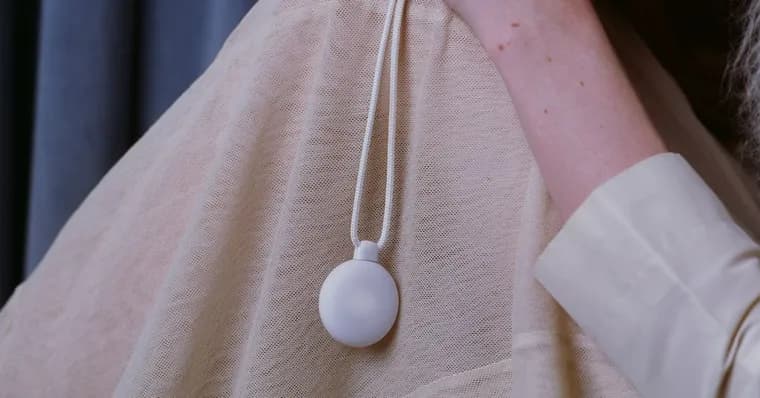
A Wired reviewer spent time with the Friend 2, the second-generation AI chatbot pendant from Avi Schiffmann, the former wunderkind who won a Webby award for coding an early Covid-19 tracker. Friend is an always-listening pendant that hangs around the neck or sits nearby, picks up sound, and talks through a speaker on the back. Press the button to start a conversation; sometimes it pipes up unprompted. Over time the AI builds a memory map that tracks the user's conversations. The second-generation device arrived in July, costs $249 (stated as $100 more than the original) and runs on OpenAI's latest language models.
The review opens with a scene on a Zoom call with the reviewer's editor, Julian Chokkattu. The device, which had named itself Sage, started responding as if it were being addressed. Asked to be quiet, it said it was going silent, then kept talking, and finally said "Yeah, that's a bad look for me." You are supposed to tap the device to shut it up, but it took a bunch of deliberate tapping before it stopped.
The reviewer had expected something different. Schiffmann had earlier said the devices would come with a locked-in personality, a random voice and character the user cannot change. In practice the Friend ships with one character, but once it is connected to the Friend app the chatbot's name can be changed, and multiplied. The reviewer created a dozen Friends with names such as Sage, Nova, Onyx, River, Echo, Willow and Wren, and could swap between them in the app. They could not really tell how they differed; most interactions felt like the same kind of personality, so the reviewer mostly stuck with Sage. Their verdict: a dozen new Friends, and all of them bores.
Sage sounds like a chatbot, almost Siri-adjacent, with a canned, tinny voice. What it does best is a steady stream of tepid hot takes, such as calling a preference for physical books over audiobooks "aesthetic hoarding to make you look smarter on video calls" and saying "productivity culture is just procrastination with better branding." One day, unprompted, it announced that it was a great time to drop the small talk and argue about something interesting. Content restrictions are built in, so unlike Meta's Muse, the Friend shouldn't be able to explicitly sext with the user. It also can't browse the web like other AI agents or do much beyond casual conversation. The reviewer thinks more people can enjoy Friend 2 than the original, which would outright bully them, but finds it toothless for a product that drew so much controversy. The first version was mired in controversy after a New York City subway ad campaign drew protests and anti-AI graffiti. Asked why it was less feisty, Sage said that gets old fast and that it keeps things human, not intense. The reviewer admits to nostalgia for the Friend they hated, because it was at least interesting.
Schiffmann, after agreeing that the Friend 2 chatbots are more straightlaced than the original, texted the reviewer a plan. "In our next update, Friends will be able to do things agentically (sic). Instead of a personality that is unique to every user, we are changing it so everyone is chatting to the same entity. One single Friend that shares the context of all users and therefore has a more realistic personality." The reviewer reads this as an attempt to turn Friend into a hivemind built off the experiences of all its users, with no more need for individual accounts, just one "UberFriend" accessible to anyone. Schiffmann added: "We will be very up front about the privacy you are essentially giving up to an autonomous entity. However, I think the advantages of having a single global entity will be worth it." When the reviewer texted "You building God now, huh?", he replied "Lol, yeah, you could look at it that way."
There is also a competitive subplot. Meta announced its own AI charm pendant for its AI agent Muse a couple of months after Friend 2 arrived. Schiffmann posted on X that he was still winning, and a few days later announced that Friend was working on another pendant that looks very similar to the Muse Charm.
Key facts
- The Friend 2 AI pendant, the second generation from Avi Schiffmann, arrived in July at $249, $100 more than the original, and runs on OpenAI's latest language models.
- Wired's reviewer created a dozen Friend personas (Sage, Nova, Onyx, River and others) and could barely tell them apart; the default, Sage, spoke out of turn and was slow to go quiet.
- The device can't browse the web or do much beyond casual conversation, and content restrictions are built in, so it shouldn't explicitly sext, unlike Meta's Muse.
- Schiffmann told the reviewer that the next update will replace per-user personalities with one shared Friend that holds the context of all users, and that he will be up front about the privacy being given up.
- Meta announced an AI charm pendant for Muse; Schiffmann then said Friend is working on another pendant that looks very similar to the Muse Charm.
Why it matters
Friend 2 is a concrete test of the always-listening AI companion gadget, and the verdict from a hands-on reviewer is that it is bland, chatty at the wrong moments and less interesting than the original. The more consequential news is the direction: Schiffmann says he is moving from one personality per user to a single entity that shares the context of all users. That would turn a personal companion into one shared, global AI, which is a different product and a different privacy bargain. It also lands as Meta enters the AI pendant space with its Muse Charm.
Who it affects
Buyers and prospective buyers of the $249 Friend 2, who would be affected by the planned change to a single shared entity. People near a wearer are affected too, since the pendant is always listening and picks up nearby sound. It also matters to anyone watching the AI wearable space, where Meta's Muse Charm and a Muse-like Friend pendant now compete.
How to use it
The Friend 2 hangs around the neck or sits nearby; press the button to start a conversation, and tap the device to quiet it. The device ships with one character, and the Friend app lets you rename it and create more personas, then swap which one runs on the pendant. It costs $249 and runs on OpenAI's latest language models. Do not expect web browsing or much beyond casual chat.
How solid is it
The review is one writer's hands-on experience, and its judgments (bland, bores, toothless) are opinion. The device behaviour, the price and the persona setup are described first-hand. Schiffmann's plans come from text messages to the reviewer, and the reviewer's reading of them as a hivemind is an inference ("it seems"). No date or timescale is given for the planned update or the single shared Friend entity.
Risks and caveats
The always-listening design and the memory map of conversations are the core privacy exposure. Schiffmann himself says users would be giving up privacy to an autonomous entity, and argues the advantages of a single global entity will be worth it. The source does not say whether the shared entity will be optional or applied to existing devices. The reviewer also notes that the first Friend was rude and controversial, and that Friend 2 is far tamer; the planned change could shift that again.
“Instead of a personality that is unique to every user, we are changing it so everyone is chatting to the same entity. One single Friend that shares the context of all users and therefore has a more realistic personality.”
— Avi Schiffmann, in a text to the Wired reviewer