Frontier Radar #5 maps 45 AI neolabs founded by big-lab exits
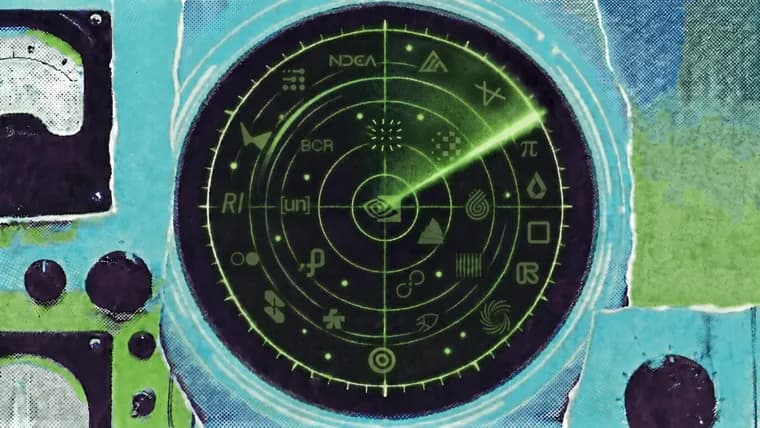
The Decoder's editorial team has published issue #5 of Frontier Radar, its series of deep dives on a foundational AI topic, released six times a year as a newsletter and on the site for subscribers. This issue is about "neolabs": independently founded, research-driven AI companies built around a long-term technical bet. The team sorted 45 of them by research bet. Issue #5 profiles 27 in detail, grouped into six bets, plus nearly 20 more in brief, with an overview of origins, valuations and what is publicly available.
The opening sets up a contrast. After the launch of GPT-6 Astra, Nvidia CEO Jensen Huang declared on X: "AGI has arrived." OpenAI president Greg Brockman called the model a turning point and welcomed humanity to the "AGI era". The Decoder notes that what the two men mean isn't clear, since there is no agreed-upon definition of AGI. Yet many people who built today's systems seem to see it differently, and dozens have left the big labs to start their own. Ilya Sutskever, who co-founded OpenAI and was its chief scientist, is building Safe Superintelligence (SSI). Jerry Tworek, who led development of OpenAI's reasoning models, runs Core Automation. David Silver, the mind behind AlphaGo, left Google DeepMind for Ineffable Intelligence. Yann LeCun left Meta after twelve years and founded AMI. Jeff Dean spent 27 years at Google, most recently as chief scientist, and started Discovery Loop.
The money has followed. Nvidia invested in SSI in July, reportedly five billion dollars according to Bloomberg, although the lab has not released a single model or paper. Prometheus, Jeff Bezos' industrial AI lab, raised twelve billion dollars at a 41 billion valuation in June. Flapping Airplanes has no public model and raised one billion dollars in an October Series A. Motives, the editors write, are mixed and not all technical: founders become paper billionaires fast at these valuations, LeCun left after a strategy dispute with Meta, Sutskever wants to do research without product pressure, and others want a niche that would be a sideshow at a big lab. Some departures are not a clean break; Google is a founding investor in Discovery Loop. What many founders share is a doubt, not about whether much more powerful AI is coming (some think AGI is close) but about whether today's recipe alone gets there: ever-larger language models, trained on internet data, refined with reinforcement learning.
The Decoder says there is no official definition of a neolab. The current wave became visible in 2024, when Microsoft backed OpenAI and Amazon backed Anthropic, and Sutskever founded SSI in June and raised a billion dollars within months for a research team with no product. Investors fund this, the editors argue, because OpenAI and Anthropic have grown into corporations that are pursuing IPOs at record valuations, with research teams competing against product teams for money and attention. Established companies struggle with ideas that threaten their business, the innovator's dilemma, and investors are betting a small team finds what the giants miss. The precedents cited: the Transformer was invented at Google in 2017, but the mass-market assistant came from OpenAI, and OpenAI spinoff Anthropic, founded by Dario and Daniela Amodei in 2021, had annualized revenue that Bloomberg pegged at over 65 billion dollars by the end of July 2026.
The bet is on research gaps the big players don't fill, either because nobody knows the path or nobody allocates resources. Big labs have more compute, data pipelines and feedback from hundreds of millions of users, so a small lab's lead can be short: TypeSafe AI launched the decision model Jev in mid-September, and two weeks later OpenAI announced its Decisions API. Even a brief lead can pay off as an exit. Microsoft hired the core team from Inflection, Google took the founders of Character.ai and the leadership of Windsurf, AMD wants to acquire World Labs for about 8.2 billion dollars, and Nvidia is in talks with Reflection, according to the Financial Times. For neolabs it comes down to one question: can they deliver something the big players don't have, which customers or the big players themselves will pay for?
Bet 1 is that a good problem solver isn't necessarily a good learner. Today's models need massive data to pick up a skill and typically don't update their weights once deployed; continual learning remains a central research gap. Six labs attack it from three angles: learning during deployment (Adaption, Core Automation), from few examples (Flapping Airplanes, Ndea, SSI) and from experience (Ineffable).
Adaption was founded by Sara Hooker, who led research at Cohere and previously worked at Google Brain, and Sudip Roy. Hooker argued in "The Hardware Lottery" in 2020 that approaches often win because they fit available hardware, and in January in "On the Slow Death of Scaling" that more compute improves models less and less reliably. Open models with 8 or 27 billion parameters now beat the much larger Falcon 180B on benchmarks. The founders say they are betting against scaling and plan efficient AI that adapts to users cheaply. Their first products are data tools, including automated training via AutoScientist; a model that learns during deployment is still missing.
Core Automation is run by Tworek, who spent almost seven years at OpenAI, most recently as vice president of research, leading o1 and o3. Co-founder Rohan Anil led Gemini's pre-training at Google. Tworek does not think the note-taking and retrieval of earlier conversations used by ChatGPT and Claude is enough; for him continual learning is a problem for machine learning, not for Markdown files. Core wants learning algorithms beyond pre-training and reinforcement learning, and its first model is supposed to update its weights during deployment and get by with one hundredth of today's training data. So far, the editors say, there is nothing more than rumors. Tworek said after leaving that this research was barely possible at OpenAI, because in a race for the best model you take fewer risks.
Flapping Airplanes was founded by brothers Ben and Asher Spector with Aidan Smith, previously at Neuralink; Ben is lead author of the GPU kernel library ThunderKittens. It wants models that learn from few examples, for fields such as robotics and biology where data is scarce. Nothing visible has come out yet; most of the first year went into software that makes GPU training more efficient. After 180 million dollars in January, an October Series A brought one billion at a six billion valuation.
Ineffable Intelligence, led by Silver, goes after different data rather than less. In "Welcome to the Era of Experience" (spring 2025), Silver and Richard Sutton argue that systems that only imitate humans can barely get past human-level performance on many important tasks and that the next ones must learn from their own experience, with rewards from the environment. The goal is a "Superlearner". The hard part is where feedback comes from outside games like Go. In April the company announced a 1.1 billion dollar seed round at a 5.1 billion post-money valuation, the largest in Europe, but there is no usable system.
Ndea is built by François Chollet, who developed Keras and designed the ARC benchmark, with Zapier co-founder Mike Knoop; the team has about 15 people. It uses program synthesis: the system searches for a program that explains observed examples, with a neural model steering the search, so that a few examples yield rules that hold for new cases. The account here ends partway through the Ndea section; the other five bets are not covered.
Key facts
- The Decoder's Frontier Radar #5 sorts 45 neolabs by research bet and profiles 27 in detail in six groups, plus nearly 20 more in brief.
- Founders include Ilya Sutskever (SSI), Jerry Tworek (Core Automation), David Silver (Ineffable Intelligence), Yann LeCun (AMI) and Jeff Dean (Discovery Loop); many raised billions with no public product.
- Reported funding: Nvidia in SSI, reportedly five billion dollars per Bloomberg; Prometheus twelve billion at a 41 billion valuation; Flapping Airplanes one billion in an October Series A; Ineffable a 1.1 billion dollar seed.
- The shared doubt is not that powerful AI is coming but that bigger language models trained on internet data and refined with reinforcement learning are enough on their own.
- Bet 1 is continual learning, attacked from three angles by six labs; in the visible text, Adaption's model that learns during deployment is still missing and Core Automation's first model is only rumors.
Why it matters
The issue frames a gap between the public AGI message from Jensen Huang and Greg Brockman and the behaviour of researchers who built today's models and left to try other routes. Investors are funding them on the innovator's dilemma argument: a small team may find what the giants miss. The editors' test is whether neolabs can deliver something the big players lack, which customers or the big players themselves will pay for.
Who it affects
Readers tracking where frontier AI research may go next: investors, big-lab staff weighing a move, and companies that depend on OpenAI, Google, Meta or Anthropic. The big labs are affected too, because the source notes that a small lab's idea can show up at the market leader shortly after its first product ships, as with TypeSafe AI's Jev and OpenAI's Decisions API two weeks later.
How to use it
Use the issue as a map of the field. It groups the labs by the problem they chase (Bet 1 is continual learning, with labs listed by approach) and gives an overview of origins, valuations and what is publicly available. Frontier Radar is published as a newsletter and exclusively on the site for subscribers of The Decoder. The editors' own yardstick, whether a lab can deliver something others will pay for, is a practical filter for judging any one of them.
How solid is it
This is editorial analysis, not a verified release, and the original is paywalled. Several figures are second-hand: Nvidia's five billion dollars in SSI is reported via Bloomberg, Nvidia's talks with Reflection are via the Financial Times, and AMD is said to want World Labs, not to have bought it. Core Automation's first model is described only as rumors. The Decoder itself says there is no agreed definition of AGI or of a neolab. This retelling covers the introduction and the first bet up to the Ndea section.
Risks and caveats
Most profiled labs have little to show: SSI has released no model or paper, Flapping Airplanes has nothing visible, Ineffable has no usable system, and Adaption's learning-during-deployment goal is still missing. Founders' motives are mixed, including valuations and corporate disputes, and Google is itself a founding investor in Discovery Loop. A lead can also be short-lived against labs with more compute, data and users. The source does not give timescales for any lab's results.
“AGI has arrived.”
— Jensen Huang, Nvidia CEO, on X, as quoted by The Decoder