Gemini Omni 1.2 Flash launches with 15-second video and a 30% price cut
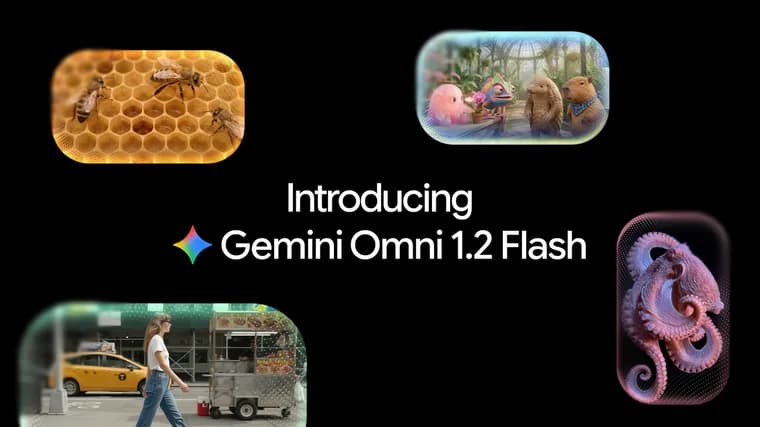
Google DeepMind announced Gemini Omni 1.2 Flash, a video generation model, and made it generally available across the Gemini API and Gemini for business. The post lists three headline changes: native 15-second video creation, multi-turn conversational editing, and better reference following. Google says it cut the price 30% from Gemini Omni 1.1; 720p video now costs $0.07 per second. It also says that, for the first time, Gemini Omni as a whole is generally available, backed by Google Cloud's enterprise infrastructure and security, with Provisioned Throughput on offer.
Clip length goes from 10 seconds in Omni 1.1 to 15 seconds, generated and edited natively. Duration can be set in one-second steps from 3 to 15 seconds, which Google pitches as enough room for product explainers or full social ad spots in a single generation. On cost, the post argues the workflow itself keeps bills down: draft at 360p or 720p, fix a detail with a follow-up edit instead of regenerating the whole clip, then upscale the best result to 1080p or 4K.
Reference following is the second big theme. Users can guide generation with character, product or style images, short motion clips of up to three seconds, and audio cues. Google says faces, garments, packaging typography and brand colors stay consistent across camera angles, so existing product photography or character sheets can become virtual try-on clips, catalog spins and branded video ads. One example combines a single model photo with front-and-back shots of three outfits to produce a 15-second try-on sequence with 360-degree turns and match cuts. The post also claims stronger consistency from first frame to last, with less visual drift or morphing, including when interpolating between first and last keyframes or extending a clip.
Editing now works in conversation. A user can refine one clip turn by turn, for example swapping a product or background, changing lighting or weather, or switching the aspect ratio, and this works across full 15-second clips. Google's demo swaps the background of one clip from a striped pavilion tent to an oak forest, a stable with a white horse, a market fair and a stone castle, while keeping both characters' performances, armor reflections and camera framing. The stated use is making ad variants for different audiences and placements without re-briefing or regenerating.
On sound and camera work, Google says users can expect more fluid, natural-sounding dialogue, clearer lip-sync and distinct multi-speaker conditioning. An example routes four sampled voices to the right characters in a 15-second animated scene. Camera moves such as FPV flythroughs, zoom-outs and orbits are said to come with significantly fewer unwanted jump cuts and steadier scale; the showcase is one continuous drone flight through the Pantheon's dome to the oculus.
Availability is broad. Developers can prototype in Google AI Studio and use the Gemini API; businesses can try it in the Google Cloud console. In Google's own products, Flow offers scene direction and multi-turn edits, Google Vids offers 15-second clips at no additional cost with a Google account or Google Workspace subscription, the Gemini app is rolling out 15-second videos to Google AI Ultra subscribers, and Google Ads can be used to scale video campaigns. Outputs carry an imperceptible SynthID watermark. Google concedes that development is ongoing on fast sports action, rapid script changes and complex physics.
Key facts
- Gemini Omni 1.2 Flash is generally available across the Gemini API and Gemini for business; Google says this is the first time Gemini Omni as a whole is generally available.
- Native clips now run up to 15 seconds (up from 10 in Omni 1.1), with duration selectable from 3 to 15 seconds in one-second steps.
- Price is $0.07 per second for 720p video, which Google says is 30% lower than Gemini Omni 1.1.
- New multi-turn conversational editing works across full 15-second clips, and references can combine images, motion clips of up to three seconds and audio cues.
- Outputs carry an imperceptible SynthID watermark; Google names fast sports action, rapid script changes and complex physics as areas still being improved.
Why it matters
This is a point release with two practical changes: longer native clips (15 seconds, up from 10) and a lower price. Google also frames it as the moment Gemini Omni becomes generally available, backed by Google Cloud infrastructure and security. The product pitch is video made at scale for ads, explainers and catalog content, where editing a clip in conversation can replace regenerating it from scratch.
Who it affects
Google targets developers using the Gemini API, businesses on Google Cloud and Gemini for business, and creators using Flow, Google Vids, the Gemini app and Google Ads. The examples point at marketers and e-commerce teams: virtual try-on, catalog spins, branded video ads and ad variants for different audiences and placements.
How to use it
Developers can prototype in Google AI Studio and use the Gemini API; businesses can try it in the Google Cloud console. Google suggests drafting at 360p or 720p, fixing details with follow-up edits, then upscaling the best clip to 1080p or 4K. References can mix character, product or style images, motion clips of up to three seconds and audio cues. In Google's apps, Flow handles scene direction and multi-turn edits, Google Vids gives 15-second clips at no additional cost with a Google account or Workspace subscription, and the Gemini app is rolling out 15-second videos to Google AI Ultra subscribers.
How solid is it
This is Google DeepMind's own announcement. The comparison with Omni 1.1 is qualitative and rests on Google's chosen demos; the post gives no benchmarks, numeric quality metrics or third-party evaluations. The price and the 30% cut are stated plainly, though only for 720p; the Omni 1.1 price is not given. The post says businesses, startups and creatives are already using the model but names none.
Risks and caveats
Google itself says development is ongoing on fast sports action, rapid script changes and complex physics. Consistency and dialogue gains are described as what users can expect, not measured. Prices for 360p, 1080p and 4K are not stated, and neither are rate limits, Provisioned Throughput pricing or regional availability. The Gemini app rollout of 15-second video is limited for now to Google AI Ultra subscribers. Outputs carry an imperceptible SynthID watermark.