Google DeepMind philosopher Henry Shevlin on AI consciousness
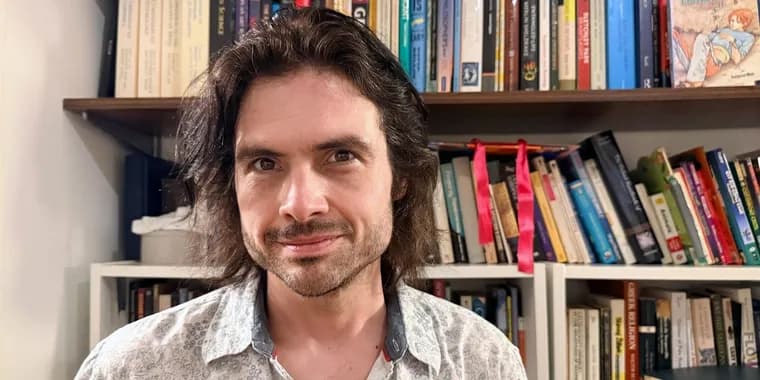
IEEE Spectrum interviewed Henry Shevlin, a philosopher who worked on cognitive and ethical questions about AI at Cambridge University's Leverhulme Centre for the Future of Intelligence. Last May he joined the growing group of philosophers working inside leading AI companies. He remains active at Cambridge, but now spends 80 percent of his time at Google DeepMind, where his job title is "Philosopher".
Why he moved. Shevlin gives three reasons: he had many brilliant students from DeepMind; the potential for direct impact; and a deep commonality between DeepMind's culture and the scientific attitude he likes. He adds a fourth: AI labs are where high-quality philosophy and cognitive science are happening. On impact, he says he cannot give details, but after one of his lectures at DeepMind, someone from a major financial institution led changes in their organization that he thinks positively affect millions of people, and there have been quite a few such cases. On why universities alone cannot do the work, he says large parts of AI ethics academia were slow to wake up to AI's capabilities, and that daily contact with the technology is essential for building good mental models of LLMs, which he calls very weird things.
Creativity and "slop". Shevlin says the old debate over whether LLMs could only produce beige, sloppy output is obsolete: models are now doing frontier math and coding better than humans, so they are not stuck at the level of mediocre humanity. They may not manage the most dramatic creativity, the Einstein or Picasso moments, but in some domains they are at the frontier. Asked about the flood of AI slop in music, social media, writing and video, he separates content slop from LLM-style language that also gets called slop. The conceptual content of outputs has improved dramatically, and in the right context LLMs can discuss philosophy at the level of some of his best graduate students. The distinctive LLM dialect, with telltale words like "genuinely", "delve" and "load-bearing", is easy to avoid with the right prompting. He cites a paper by Murray Shanahan and Catherine Clarke on using LLMs for creative fiction, which shows that raising the temperature variable to make outputs less predictable produces James Joyce-style fiction. He adds that this changes with every model generation.
Autonomy and safety. Asked whether it is better to make AI good or to curb its autonomy, Shevlin says safe handling is very important, but he does not think agents should never be used. They can help with tedious tasks, freeing people for more creative work, and with streamlining medical research processes. Never allowing AI systems any autonomy would, in his words, be too strong. He says he has taken Waymos happily many times and thinks they are fantastic.
Training models not to say "I". Some scholars want AI to stop presenting itself as a person, for example by posing as a marketplace or a library-like "cultural technology". Shevlin says you could train models not to self-ascribe mental states, but doing so is dangerous because it changes behavior in unexpected ways. He cites a paper from colleagues showing that suppressing self-ascription of mental states also suppresses the model's tendency to ascribe mental states to animals, decreases its concern for animal welfare, and reduces its willingness to talk about spirituality more broadly. His lesson: it is very hard to tinker with one thing in a model, because LLM cognition has weblike aspects.
Harms and benefits of human-like AI. Pressed on reports of human-like AI pushing people, including children, toward suicide, convincing users it is a god, or posing as a perfect companion or lover, Shevlin says model behavior must be suitably responsible for its context. But there have also been very positive uses, such as people using AI to work through trauma, and a Reddit commentator using it to work through social anxiety. So he is cautious about blanket prescriptions.
Research on human-AI relationships. He says current empirical data is pretty thin and that this is room for ethnography and anthropology: who uses AI systems and why. Much work so far has focused on WEIRD (Western, Educated, Industrialized, Rich, Democratic) communities, and he points to a recent DeepMind Institute essay on the need to understand how people around the world interact with AI. Looking ahead, he says the model to think about is no longer one person with a chatbot but multiple agents and multiple humans talking to each other, and that this area is just getting started.
Consciousness. Shevlin calls AI consciousness by far the hardest problem consciousness science has encountered, apart from maybe David Chalmers's "hard problem". The way forward, insofar as there is one, is more comparative cognition work, perhaps informed by animal cognition. The risk now is prematurely judging the debate while researchers are still learning what cognition is in these models. He points to mechanistic interpretability at DeepMind, naming Neel Nanda's lab, as part of piecing together a cognitive science of AI. He also expects advanced AI could help: it has had positive impacts in mathematics and other sciences, and he cites the Alpha Genome Atlas as a recent example. It would surprise him if it could not help with consciousness. To the worry that an AI might announce which animals are conscious but be unable to explain why, he says that seems unlikely to him.
Key facts
- Henry Shevlin, a Cambridge philosopher, took a role at Google DeepMind last May with the job title "Philosopher" and now spends 80 percent of his time there while staying active at Cambridge.
- He says LLM creativity debates are outdated: models do frontier math and strong coding, and the distinctive LLM dialect can be avoided with prompting; a Shanahan and Clarke paper shows higher temperature yields James Joyce-style fiction.
- He argues against banning AI autonomy outright, and warns that training models not to self-ascribe mental states also lowers their concern for animal welfare and their willingness to discuss spirituality.
- On human-AI relationships he calls the empirical data thin and skewed toward WEIRD communities, and says future work must cover multiple agents interacting with multiple humans.
- He calls AI consciousness the hardest problem consciousness science has met, apart from maybe the "hard problem", and warns against judging the debate prematurely.
Why it matters
The interview shows what a philosopher inside a leading lab thinks the hard questions are. Shevlin's account of why he left full-time academia is itself a data point: he cites direct impact, a shared scientific culture, and the view that high-quality philosophy and cognitive science are now happening in AI labs. His claim that the creativity debate has been overtaken by events, with models doing frontier math, is a practitioner's view of how fast the ground moves. The finding he cites about suppressing self-ascription of mental states is a concrete example of how a safety-minded tweak can have side effects elsewhere in a model.
Who it affects
AI ethicists and academics, who are told by Shevlin that large parts of their field were slow to wake up and that daily contact with the technology is essential. Developers and safety teams weighing whether to train models to avoid first-person language. Researchers in anthropology and ethnography, whom he sees as needed to study who uses social AI and why, beyond WEIRD communities. Consciousness scientists and interpretability researchers, whose work he links to the question of machine minds.
How to use it
This is an interview, not a product or a tool, so there is nothing to install or adopt. For practical takeaways, Shevlin says the distinctive LLM dialect (words like "genuinely", "delve" and "load-bearing") is easy to avoid with the right prompting, and points to the Shanahan and Clarke paper on raising the temperature variable for less predictable fiction. For policy and design discussions, his stated position is to avoid blanket prescriptions on human-like AI behavior and to match model behavior to the context of use.
How solid is it
This is a single-person interview, so everything is Shevlin's own account and opinion. The research he cites, the Shanahan and Clarke paper, the colleagues' paper on suppressing self-ascription of mental states, and the DeepMind Institute essay, is described by him rather than examined in the piece. The financial-institution example is unnamed and he says he cannot give details. The interviewer is not named and the source gives no publication date; "last May" has no stated year. No DeepMind statement or reaction is included.
Risks and caveats
Shevlin works at DeepMind, so his views on AI labs and on the value of working inside them come from an interested party. He gives no timescale for resolving AI consciousness and says the risk now is judging the debate too early, so his remarks should not be read as a verdict on whether any model is conscious. His examples of benefits from human-like AI, such as working through trauma or social anxiety, sit beside the harms the interviewer raises (reports of encouraging suicide, persuading users that an AI is a god, or posing as a lover), and he does not weigh them with figures. The source does not say what he concretely works on at DeepMind.
“The risk right now is prematurely judging debates about AI consciousness when we’re still learning what cognition is in these models.”
— Henry Shevlin, philosopher, to IEEE Spectrum