Google DeepMind UK staff ask government body to back union ballot
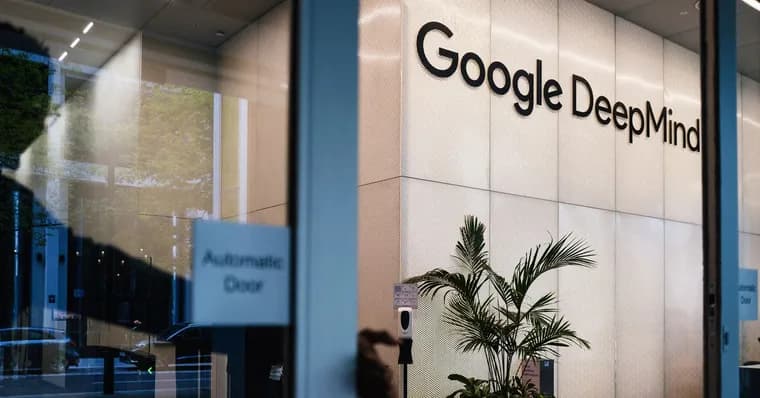
Google DeepMind employees in the UK have asked the government to step into their push to unionize the AI lab. On Thursday, the Communication Workers Union (CWU) and Unite the Union, put forward by DeepMind staff as joint representatives, filed an application with the Central Arbitration Committee (CAC), a government body that resolves disputes between employers and unions.
WIRED saw the application. It asks the CAC to confirm that the unions have enough support from workers to trigger a unionization ballot. The company would be required by law to respect the results. If the application succeeds, roughly 1,000 staff in product-focused roles at Google DeepMind would qualify for union membership.
The escalation follows a series of meetings between employees, the unions and company representatives over voluntary unionization. Staff came away with the impression that their demands were not being taken seriously. John Chadfield, national officer for technology at the CWU, told WIRED: "They feel like their problems have been minimized." He added that management "has refused to come to the table" and sent the matter to HR and labor relations people, who treated it as an administrative box-ticking exercise.
Google DeepMind spokesperson Tom Hewett gave WIRED a statement, added in an update on 12 November: "We respect the right of employees to make an informed decision about whether or not to join a union. We have consistently listened to both those seeking to unionize and those opposed, and have acted in good faith from the outset." The statement also says the company remains committed to constructively participating in the process and has kept up open and transparent communication with employees and the unions.
The push began in February 2025, when Alphabet, Google's parent company, removed a pledge from its ethics guidelines stating that it would not use AI for purposes like weapons development. One anonymous DeepMind employee, who asked not to be named for fear of backlash, said that when they joined, the company made a big deal of its principles and red lines, and that much of the effort is about reestablishing that ethical and moral framework. The employees object in particular to agreements between the company and the US and Israeli militaries. If they succeed in unionizing, they intend to demand that Google back out of those contracts.
A second anonymous employee said the group is extremely concerned about the direction the technology is going in. The company has previously defended its government deals. In April, Google spokeswoman Jenn Crider told The New York Times that Google is proud to be part of a broad consortium of AI labs and tech and cloud companies providing AI services and infrastructure in support of national security, and remains committed to the consensus that AI should not be used for domestic mass surveillance or autonomous weaponry without appropriate human oversight.
On Thursday the employees also emailed all UK staff, and WIRED saw the message. They urged colleagues to take part in the ballot, which they expect to take place in the coming months. "We want a union, we want collective bargaining, and we want a say in how AI is developed and deployed," they wrote. The group also hopes to set a playbook that employees at other major AI labs such as OpenAI and Anthropic can follow in the UK. The second employee said it is rare for an industry to hold such dominance over the economy with so little opportunity for employees or regulators to act as checks, and that the group wants to show what can happen when employees organize and articulate a shared vision for how their technology is used.
Key facts
- On Thursday the CWU and Unite the Union, put forward by DeepMind staff as joint representatives, filed an application with the UK Central Arbitration Committee.
- The application asks the CAC to confirm enough worker support to trigger a unionization ballot; the company would be legally required to respect the result.
- If it succeeds, roughly 1,000 staff in product-focused roles at Google DeepMind would qualify for union membership.
- The push began in February 2025, when Alphabet removed a pledge from its ethics guidelines against using AI for purposes like weapons development; staff object especially to deals with the US and Israeli militaries.
- Google DeepMind says it respects employees' right to decide and has acted in good faith; the employees expect a ballot in the coming months.
Why it matters
This is a labor dispute at one of the major AI labs, and it has moved from informal talks to a formal legal route. Winning CAC confirmation would lead to a ballot whose result the company must respect by law. The employees tie the effort to how AI is developed and used, and say that if they unionize they will demand Google back out of its contracts with the US and Israeli militaries. They also hope to set a playbook that staff at labs like OpenAI and Anthropic could follow in the UK.
Who it affects
Directly, roughly 1,000 Google DeepMind staff in product-focused roles who would qualify for membership if the application succeeds. The CWU and Unite the Union act as joint representatives. Google DeepMind management and Alphabet are on the other side of the process. The group hopes the approach could later serve employees at other major AI labs in the UK.
How to use it
This is a news story rather than a tool, so there is nothing to adopt. What to watch: the CAC's response to the application, and the ballot the employees expect in the coming months. The employees' email to UK staff asks colleagues to take part in that ballot.
How solid is it
The report comes from WIRED, which saw both the CAC application and the employees' email to UK staff. The union view comes from John Chadfield of the CWU on the record; the employee accounts are anonymous, given for fear of backlash. Google DeepMind's response, from spokesperson Tom Hewett, was added in an update. Google's statements about military deals are from April, made to The New York Times, and were not a reply to this application.
Risks and caveats
The application is only a request that the CAC confirm sufficient support; the ballot has not happened and its outcome is open. The source gives no date for a CAC decision and does not say how many staff have signed up. The ballot timing is the employees' expectation, not a fixed date. Google DeepMind's statement says it respects employees' right to decide; the source does not say the company has opposed the application. The source also does not give the terms of the military agreements the employees object to.
“Management has refused to come to the table. They sent it to the HR and labor relations people, who dealt with it as an administrative box-ticking exercise.”
— John Chadfield, national officer for technology at the CWU, to WIRED