Old Redmi and Huawei phones as a cheap Raspberry Pi alternative
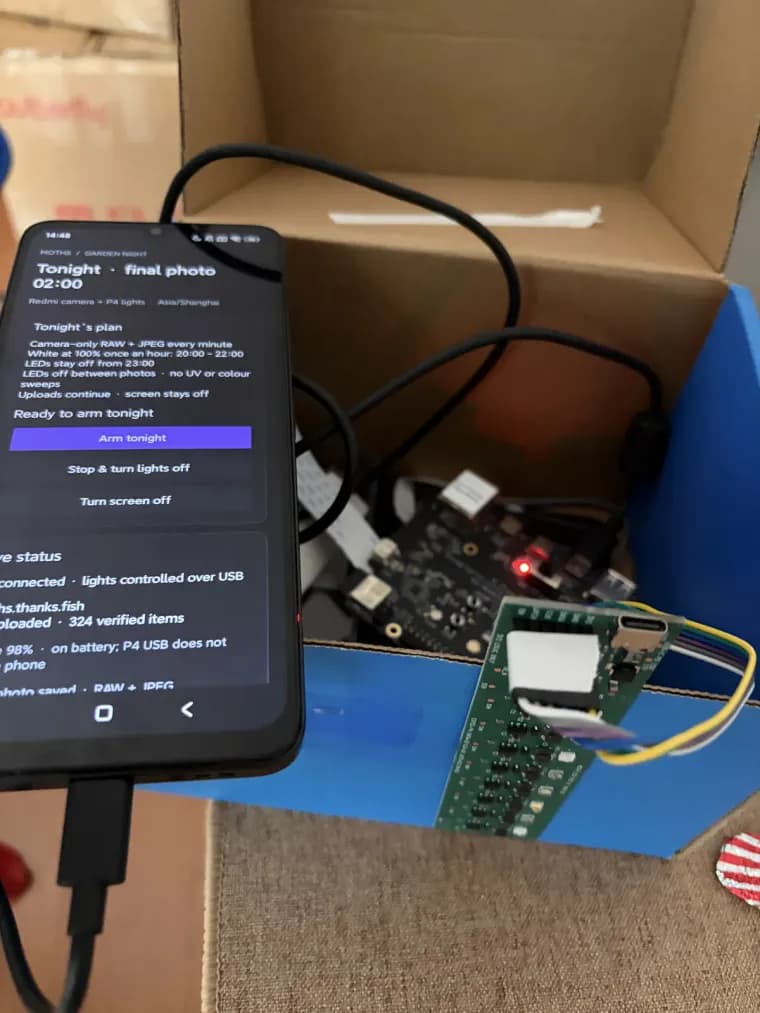
A blog post describes a project that needs a high-resolution camera, GPS, storage and a microcontroller to control some lights. The author does not say more about the project yet ("more on the project soon"). So far the design has been PCB adapters around a Raspberry Pi, an Arducam 64MP camera and a GPS module, and the bill grows with every part added. The author is also trying an ESP32-P4 board, which is promised its own post, but keeps coming back to a different option: an old smartphone.
The author owns two candidates, a Redmi 13C 5G and a Huawei Mate 30 5G. Phones like these turn up second hand on Taobao for roughly ¥300 to ¥500 (£33 to £56, €40 to €67, $45 to $75). The Redmi's camera saves 50MP JPEGs; the Mate 30 has a 40MP main camera and a telephoto lens. Both already contain GPS, storage, a clock, a battery, mobile data and a touchscreen. Their USB-C ports offer a route to the custom PCB that will handle the lights and other sensors.
The author made a rough parts comparison while deciding what to build next. It uses illustrative November 2026 listings. The more fully equipped Pi total takes GPS from the cellular HAT instead of buying a separate GPS HAT, and that modem is 4G while the phones are 5G models. Neither side includes the custom light controller PCB, a SIM or data plan, or an enclosure. Currency conversions use 10 November 2026 mid-market rates of approximately ¥1 = £0.111531 / €0.133643 / $0.14991, rounded to whole units in the table.
The phone route is already more than a price exercise, the author says. The Redmi is unlocked and rooted, its camera has been tested, and it sleeps and wakes for scheduled work. Plugged into a computer, it lets the author have Codex configure and test the pieces needed. The Huawei is harder to root, but it can still run a kiosk app. The author built a stand to photograph the same target with the Redmi and the Arducam side by side, to see what detail each camera actually captures, because a 50MP JPEG file does not by itself settle that question.
The open question is supply. Finding two good used phones is easy; finding a few hundred matching ones, with healthy batteries and predictable camera behaviour, would take more work. The author feels increasingly confident that it is possible.
The author also sees uses beyond this project. For digital artworks and installations, a Pi or a Mac mini has often been used. Instead, the author imagines posting a client a configured phone that runs once plugged into the display. With mobile data and remote access, a fault could be fixed without asking a gallery for Wi-Fi privileges or an open port. The post closes on the appeal of taking a device made in enormous numbers, giving it a second life, and finding that most of the hardware about to be assembled is already inside it.
Key facts
- The author's Raspberry Pi design (Arducam 64MP camera, GPS module, custom PCB adapters) keeps getting more expensive as parts are added, so an old phone is the alternative being weighed.
- A Redmi 13C 5G and a Huawei Mate 30 5G typically cost roughly ¥300 to ¥500 ($45 to $75) second hand on Taobao; the Redmi saves 50MP JPEGs and the Mate 30 has a 40MP main camera plus a telephoto lens.
- The Redmi is already unlocked and rooted, with its camera tested and scheduled sleep and wake working; the Huawei is harder to root but runs a kiosk app.
- A side-by-side photo test of the Redmi against the Arducam is under way, because a 50MP file alone does not show which captures more detail.
- The open problem is supply: a few hundred matching used phones with healthy batteries and predictable cameras.
Why it matters
The post makes a practical point for anyone who reaches for a Raspberry Pi by default: a used phone already bundles GPS, storage, a clock, a battery, mobile data, a touchscreen and a camera, which are the parts the author was otherwise adding one by one. The author's own price range for such phones on Taobao is roughly ¥300 to ¥500 ($45 to $75). It is a hobbyist's design note, not a product launch or a study.
Who it affects
Makers building camera, GPS or sensor projects, and anyone who has run digital artworks or installations on a Pi or a Mac mini. The author mentions that kind of installation work specifically, where a client could receive a configured phone that runs once plugged into a display.
How to use it
The approach described: root the phone, set it to sleep and wake for scheduled work, and connect it over USB-C to a custom PCB that drives lights and other sensors. The author connects the Redmi to a computer and has Codex configure and test the pieces needed. Where rooting is hard, as with the Huawei, a kiosk app can still run. For installations, mobile data and remote access would let the author fix a piece without a gallery's Wi-Fi or an open port.
How solid is it
This is a first-person account of work in progress. The author reports having rooted the Redmi, tested its camera and got scheduled sleep and wake working. The image-quality comparison against the Arducam has been set up but no result is given. The parts comparison uses illustrative November 2026 listings and approximate exchange rates from 10 November 2026.
Risks and caveats
Supply at scale is unresolved: finding two used phones is easy, but a few hundred matching ones with healthy batteries and predictable camera behaviour would take more work, and the author only says confidence is increasing. The cost comparison leaves out the custom light controller PCB, a SIM or data plan, and an enclosure. The more fully equipped Pi total uses a 4G cellular modem while the phones are 5G models. Rooting varies by phone, and a 50MP JPEG does not prove better detail than the Arducam.
“There’s something fun about taking a device made in enormous numbers, giving it a second life, and finding that most of the hardware I was about to assemble is already inside it.”
— The post's author, so.long.thanks.fish