Google Research traces TB X-ray screening from AI to MedGemma
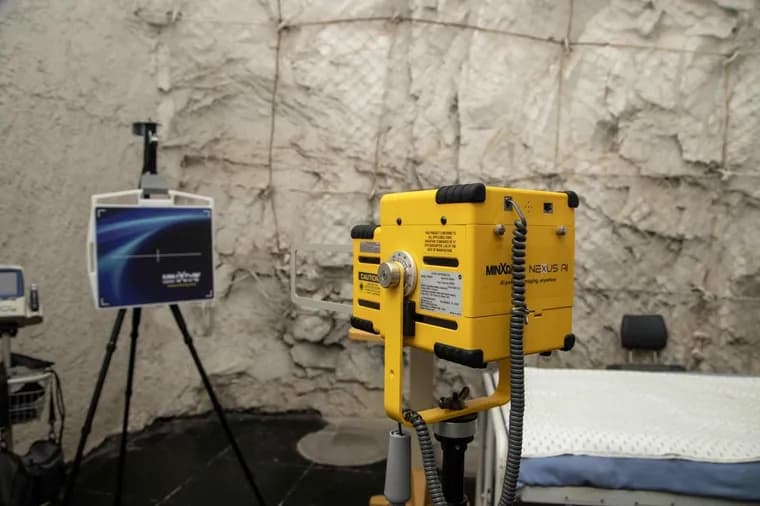
On October 23, 2026, Preeti Singh (Lead, Technical Program Manager) and Shravya Shetty (Distinguished Software Engineer) of Google Research published a blog post summarising five years of work on tuberculosis screening. It was timed to IDWeek 2026 in Washington, D.C. The post opens with the problem: TB claims an estimated 1.23 million lives each year, and a main bottleneck is radiology. In high-burden settings, from remote rural areas to deep mines, radiologists are scarce and imaging infrastructure can be days away, so many active cases go undetected and transmission continues.
The research arc starts in 2019, when Google published a benchmark in Radiology showing that deep learning algorithms could detect active pulmonary TB at performance levels matching experienced radiologists. In August 2021 the Stop TB Partnership evaluated computer-aided detection (CAD) software across diverse patient cohorts in The Lancet Digital Health and ranked Google's model among the top-performing TB screening algorithms globally; WHO recommended CAD for TB screening and triage the same year. In September 2024, NEJM AI carried a prospective, multi-site validation showing that AI-assisted screening maintains high sensitivity across diverse patient populations and also reliably detects other incidental pulmonary and cardiac abnormalities.
The authors then describe what they call the "translation gap": making software reliable across varied X-ray machines and offline settings, fitting it into clinical workflows, and meeting medical device regulations. To cross it, Google partnered with Nexus AI, a Pretoria-based medical technology company, which turned the chest X-ray algorithms into a certified clinical diagnostic tool. The post later calls it a CE-certified tool. According to the post, the tool operates in approximately 40 healthcare facilities across six countries: South Africa, Sierra Leone and Côte d'Ivoire, with expansions underway in the Democratic Republic of the Congo, Zambia and Cameroon. To date, over 90 clinicians have evaluated more than 25,000 chest radiographs with it, and turnaround times have fallen from weeks to under 45 seconds. The post says the tool speeds triage while clinicians make the final decisions. Nexus AI has also delivered more than 3,000 free screenings to under-resourced public clinics and is progressing toward a goal of 10,000 sponsored screenings a year.
The showcase deployment is Mponeng Gold Mine in South Africa, one of the deepest mines in the world, where deep-shaft miners face chronic silica dust exposure and elevated risk of pulmonary disease. With the Stop TB Partnership, Harmony Gold Mine and the South African Department of Health, Nexus AI deployed ultra-portable digital X-ray kits and offline AI four kilometers underground. Miners are screened on-site within seconds, and those flagged with presumptive TB can be referred at once for confirmatory molecular testing. Screening, triage and confirmatory testing can now happen in one visit, compressing a pathway that often takes weeks.
Because a custom solution with a single partner cannot address the global burden, Google shifted to open foundations. Through the Health AI Developer Foundations (HAI-DEF) it open-sourced its chest X-ray embeddings and MedSigLIP, a lightweight vision-language model trained to align medical images with the clinical language describing them. Developers can classify or search images with plain-language labels, or fine-tune the model on a small set of local examples, so local teams can build specialised models on modest regional datasets without massive compute. On top of that Google released MedGemma, a family of open-weight multimodal models in 4B and 27B parameter configurations. It synthesises radiographic findings with clinical history, answers clinician queries in natural language and runs locally on-device without internet access. The post says MedGemma has seen more than 10 million downloads worldwide since launch.
Indonesia is the featured example of using the open models. Its Ministry of Health faces the world's second-highest TB burden and aims to screen 50 million citizens annually. Reviewing that many X-rays by hand is infeasible, and proprietary cloud software raises data residency problems, so the Ministry is fine-tuning MedGemma and MedSigLIP on domestic chest radiographs. Because the models run on local infrastructure, patient data stays within national borders. The post adds that Indonesia is integrating TB screening into its national program.
For places where imaging equipment cannot reach, Google Research also developed Health Acoustic Representations (HeAR), trained on over 300 million audio segments. It enables non-invasive screening from cough sounds recorded on a standard smartphone microphone. It is used in collaborative research across sub-Saharan Africa with CIDRZ (Zambia), the Aurum Institute (Ghana, supported by a $250,000 Google.org grant) and HELINA's $1.5 million regional collaborative. Those partners are building the clinical evidence for cough-based triage. Google presents HeAR (acoustic triage), HAI-DEF (mobile X-ray screening) and MedGemma (multimodal clinical reasoning) as an integrated diagnostic cascade for underserved populations. The authors close by saying Google's role is to equip partners with open models, foundational research and ongoing support.
Key facts
- Google Research says its chest X-ray TB algorithm, first benchmarked in Radiology in 2019, became a certified tool run by Nexus AI in approximately 40 facilities across six countries.
- Per the post, over 90 clinicians have evaluated more than 25,000 chest radiographs with it, with turnaround cut from weeks to under 45 seconds; Nexus AI has delivered more than 3,000 free screenings toward a goal of 10,000 a year.
- Google open-sourced MedSigLIP and chest X-ray embeddings through HAI-DEF and released MedGemma (4B and 27B); MedGemma has more than 10 million downloads.
- Indonesia's Ministry of Health is fine-tuning MedGemma and MedSigLIP on domestic X-rays on local infrastructure, aiming to screen 50 million citizens a year.
- HeAR, trained on over 300 million audio segments, screens from smartphone cough recordings; partners are still building the clinical evidence.
Why it matters
The post is a case study in carrying a medical AI result past the paper stage. The authors say a published algorithm is only the start and name a "translation gap" of device variability, offline operation, clinical workflow and regulation. TB is the setting: an estimated 1.23 million deaths a year, with radiologists scarce where the burden is highest. The second strand is the move from one custom partnership to open models (MedSigLIP, MedGemma) that ministries and developers can adapt themselves, with data kept in-country.
Who it affects
People in high-burden, low-resource settings are the intended beneficiaries: rural clinic patients and deep-shaft miners such as those at Mponeng Gold Mine. Clinicians in the roughly 40 facilities using Nexus AI's tool get faster reads while keeping the final decision. Health ministries, with Indonesia as the example, and developers who can fine-tune the open models are also affected. So are research partners CIDRZ, the Aurum Institute and HELINA, who are building evidence for cough-based triage.
How to use it
Developers can access the chest X-ray embeddings and MedSigLIP through Google's Health AI Developer Foundations (HAI-DEF), and MedGemma as open-weight models in 4B and 27B sizes. MedSigLIP can classify or search images with plain-language labels or be fine-tuned with a small set of local examples. MedGemma can run locally on-device without internet access. The certified clinical tool itself is deployed by Nexus AI rather than by Google. HeAR is described as being used through collaborative research, not as a general product. The post states no pricing.
How solid is it
This is Google's own account, written by two Google Research authors, and it summarises earlier work rather than reporting a new result. The research milestones it cites are published in Radiology (2019), The Lancet Digital Health (2021, an evaluation by the Stop TB Partnership) and NEJM AI (2024). The deployment numbers are stated as cumulative figures, and the post does not say who measured the under-45-second turnaround or how the weeks-long baseline was measured. No sensitivity, specificity or AUC figures are given for any study or deployment; only qualitative statements such as "high sensitivity" appear.
Risks and caveats
Several items are goals or work in progress, not results: 10,000 sponsored screenings a year, Indonesia's 50 million screenings a year, and the HeAR cough triage, where no clinical results are given and evidence is still being built. No results from Indonesia's fine-tuning are given, nor a timeline for its target. The post says "six countries" but names three where the tool operates and three where expansions are underway. The source does not say Google earns revenue from the deployments. It also states that clinicians, not the software, make final clinical decisions.
“In medical AI, publishing a paper is only the beginning.”
— Preeti Singh and Shravya Shetty, Google Research