Huawei unveils Kirin 950 Pro chip, claims it's free of US technology
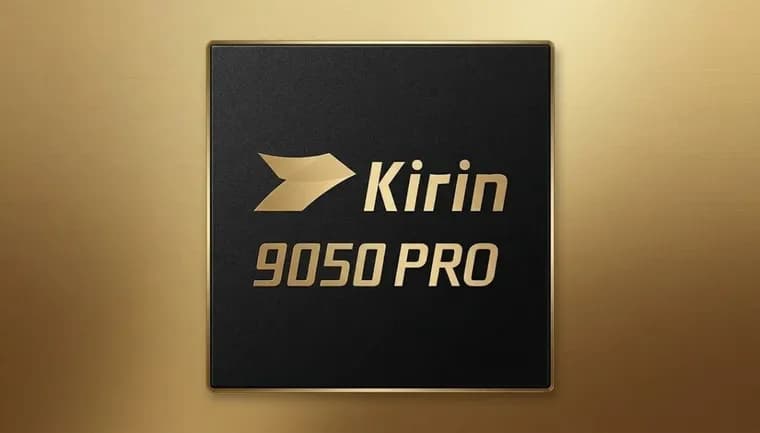
Huawei has launched a new processor, the Kirin 950 Pro, which the company says is free of US technology, and is using it to power its new three-screen folding phone, the Mate XT2, at a launch event reported on Tuesday, September 8, 2026. Huawei says the chip's LinxiCore processor cores, GPU, and neural processing unit are all its own designs. The SoC uses Huawei's "Tau Scaling" architecture, first announced last May, which arranges components closer together to cut die size and lift performance without relying on the advanced chipmaking processes used by TSMC and Intel. At the time Tau Scaling was announced, analysts said Huawei had done interesting things with its silicon but had not made any breakthroughs. Huawei now claims the Kirin 950 Pro delivers 42 percent higher performance than the chip it used in the three-screen phone it released the year before. The chip debuts in the $2,979 Mate XT2. Analyst firm Counterpoint expects Huawei to exit 2026 with 24 percent of the total folding-phone market, a category it says made up just 1.6 percent of all smartphone sales last year. Huawei's launch lands only days before Apple is expected to unveil its own folding iPhone, which Counterpoint predicts will take 25 percent of the folding-phone market by year's end. At the same event, Huawei executives said HarmonyOS is now running on 85 million devices, strong growth since the OS shipped in October 2024, though still a small slice of the overall smartphone and smart-device market. If Huawei can extend the technology behind the Kirin 950 Pro into other kinds of hardware, it would let Chinese buyers substitute for comparable chips from AMD, Intel, or Nvidia and reduce the country's reliance on imports. Huawei has not said whether it plans to do so; for now the chip powers only this phone. Beijing continues to steer domestic buyers away from Western chipmakers and toward local alternatives. More broadly, Chinese smartphone makers Xiaomi, Oppo, and Honor have won solid sales across Europe, Africa, and Latin America running Android with Google services, while Huawei's hardware and HarmonyOS ecosystem have not achieved comparable success outside China.
Key facts
- Huawei launched the Kirin 950 Pro chip, claiming it is free of US technology, with its own LinxiCore processor cores, GPU, and neural processing unit, built on the "Tau Scaling" architecture that reduces die size without needing TSMC- or Intel-class chipmaking.
- Huawei says the chip is 42 percent faster than the processor in last year's three-screen phone, and it now powers the new $2,979 Mate XT2 folding phone.
- Counterpoint forecasts Huawei will end 2026 with 24 percent of the folding-phone market, a niche that was 1.6 percent of total smartphone sales last year; the launch comes days before Apple's rumored folding iPhone, forecast to take 25 percent of that same market.
- Huawei executives said HarmonyOS now runs on 85 million devices, up strongly since its October 2024 release, though still a small share of the overall smartphone market.
- Analysts who reviewed Tau Scaling last May called it interesting engineering rather than a breakthrough, and Huawei has not said whether the chip's underlying tech will extend beyond phones, even as Beijing pushes domestic buyers toward local chipmakers.
Why it matters
The headline claim, a chip with no US technology in it, is the point of the launch: it is Huawei's answer to years of US export controls that cut it off from advanced chipmaking. The Tau Scaling architecture is Huawei's attempt to get more performance out of older, domestically available fabrication by packing components closer together, rather than by chasing the cutting-edge processes TSMC and Intel use. Whether that approach can close the gap with Western chipmakers, or only narrow it for a phone-class chip, is exactly the question the rest of the story leaves open.
Who it affects
Huawei and its supply chain sit at the center, but the story also touches AMD, Intel, Nvidia, and TSMC as the Western chipmakers Beijing is steering domestic buyers away from. Apple is affected indirectly: its expected folding iPhone launches into the same small market days after Huawei's announcement, and Counterpoint's forecasts pit the two directly against each other for folding-phone share. Chinese consumers and the broader push toward domestic tech self-reliance are the underlying audience for the "free of US technology" framing.
How to use it
There is nothing to use here beyond buying the product: the Kirin 950 Pro ships inside the $2,979 Mate XT2 folding phone, unveiled at Huawei's launch event. The article gives no separate release date or availability window for the phone beyond the event itself, and Huawei has not indicated any plan to sell the chip, or license its Tau Scaling architecture, for use outside its own phones.
How solid is it
The performance and "free of US technology" claims come from Huawei itself, at its own launch event, with no independent verification cited and no direct quotes from named executives, only paraphrased statements. The article gives no technical specifications for the chip, no process node, transistor count, or clock speed, and leans on Counterpoint's market forecasts for the surrounding context. Analysts' prior assessment of Tau Scaling, that it is interesting but not a breakthrough, is the only outside check offered on Huawei's claims.
Risks and caveats
Even if the performance and sourcing claims hold up, the underlying market is tiny: folding phones made up just 1.6 percent of smartphone sales last year, and Counterpoint expects Apple's folding iPhone to outsell Huawei's share of that niche by the end of the year. Huawei has said nothing about extending the chip technology beyond phones, so its stated goal of reducing China's reliance on AMD, Intel, or Nvidia chips remains unrealized for now. And despite Beijing's push toward domestic alternatives, Huawei's hardware and HarmonyOS ecosystem still have not found notable success outside China, unlike Android-based rivals such as Xiaomi, Oppo, and Honor.