IBM announces chip that runs Arm and Z instructions together
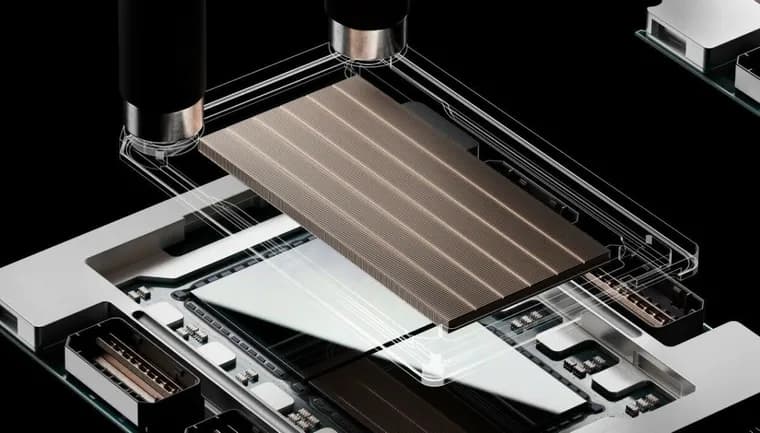
IBM has revealed, in a blog post by zSystems Ecosystem Vice President Meredith Stowell, that it is developing an as-yet-unnamed chip built on a two-nanometer process. The chip will pack 11 high-performance cores running at more than 5.7 GHz, AI inference accelerators aimed at in-transaction fraud detection, a dedicated on-chip data processing unit for I/O acceleration, and a large cache built for enterprise workloads. Its defining feature is dual-instruction-set support: each core can natively execute Arm instructions concurrently with either IBM Z or LinuxONE instructions, rather than requiring emulation or a reboot to switch architectures. Stowell framed the move around the size of the Arm developer base, more than 22 million people worldwide, and its foothold in cloud-native, AI, analytics, infrastructure and enterprise software.
The context is that IBM's mainframe business, while lucrative, sits on a shrinking base of interest from commercial software vendors. Rocket Software, which sells mainframe modernization tools, told The Register it is aware of only 42 IBM mainframe users in Australia, a number small enough that the company said it still needs to prioritize that market. Meanwhile hyperscalers have rolled out their own Arm chips, and much of today's open-source infrastructure, cloud-native and AI tooling targets Arm rather than IBM's Z instruction set, giving customers a reason to drift away from z/OS.
George Cozma, an analyst at TechInsights, told The Register the mainframe market is "small in unit terms" but remains "strategically important," since customers rarely replace these systems given the cost and risk of migrating core applications built up over decades. He also said Z currently "sits outside the mainstream software targets that define modern cloud and AI infrastructure," and described the new chip as an attempt at "ending the platform's historical isolation from the broader computing mainstream" while Z's reliability, security and virtualization strengths stay tethered to an architecture that has drifted from the modern software development lifecycle. Cozma also pointed to a precedent: in the mid-1990s IBM built the PowerPC 615, a chip that could run either PowerPC or x86 code with the active instruction set chosen at boot, reportedly meant for Apple during the clone-Mac era; it was never sold publicly.
IBM has suggested the new chip will ship in 2028. Its most recent mainframe generation, the z17, arrived in 2025, and IBM typically refreshes its mainframe line every three years, so The Register's own reporting flags the chip as a likely candidate to power a future z18, though IBM has not confirmed that link. No name, pricing or availability details have been given.
Key facts
- IBM is developing an unnamed chip on a two-nanometer node with 11 high-performance cores running above 5.7 GHz, plus AI inference accelerators for fraud detection and an on-chip DPU for I/O.
- Each core can natively execute Arm instructions concurrently with IBM Z or LinuxONE instructions, without emulation.
- Rocket Software says it knows of only 42 IBM mainframe users in Australia, illustrating how small the mainframe customer base is even as IBM calls it strategically important.
- Analyst George Cozma calls the chip an attempt to end IBM Z's historical isolation from mainstream cloud and AI software targets, and notes IBM tried dual-ISA silicon before with the PowerPC 615 in the mid-1990s, which never shipped commercially.
- IBM has suggested the chip arrives in 2028, three years after the 2025 z17 mainframe, making it a plausible fit for a future z18, though IBM has not confirmed that.
Why it matters
IBM Z has long been a closed loop: commercial software vendors have little incentive to build for it because the market is small, and customers stay on it because migrating core applications is expensive and risky. This chip is IBM's attempt to break that loop from the hardware side, by letting Arm-native software run on the same silicon as Z workloads instead of asking developers to target Z specifically. It is also a tacit admission that the center of gravity for cloud-native, AI and open-source tooling has shifted to Arm, and that IBM would rather bring that ecosystem to the mainframe than compete for developer attention on Z's own terms.
Who it affects
The independent software vendors that currently build for z/OS and the mainframe customers who depend on them are the direct audience, along with IT teams weighing whether to stay on Z or migrate off it. Rocket Software's count of 42 known mainframe users in Australia gives a sense of scale in at least one market IBM and its partners are watching closely. TechInsights analyst George Cozma and outlets covering enterprise hardware are the ones assessing whether the move actually changes IBM's competitive position against Arm-based hyperscaler infrastructure.
How to use it
There is nothing to deploy yet. IBM has not named the chip, set a price, or confirmed a specific product it will ship in; the only date offered is a suggested 2028 arrival. Based on IBM's mainframe cadence, releasing a new generation roughly every three years since the 2025 z17, The Register's own analysis treats the chip as a likely fit for a future z18, but that link is the outlet's inference, not an IBM statement.
How solid is it
The reporting comes from a named Register editor drawing on an IBM blog post from a named IBM vice president, plus on-record comment from a named TechInsights analyst and a named vendor, Rocket Software. The specifications, node, core count, clock speed, accelerator functions, come directly from IBM's own announcement and have not been independently verified by outside benchmarking, since no chip exists yet to test. The z18 connection and the broader strategic reading are the analyst's and the outlet's interpretation, not confirmed IBM roadmap detail.
Risks and caveats
The 2028 timeline is IBM's own suggestion, not a committed release date, and hardware roadmaps of this kind can slip or change. IBM has tried combining instruction sets on one chip before: the PowerPC 615 in the mid-1990s could run PowerPC or x86 code with the active architecture chosen at boot, reportedly aimed at Apple during the Mac-clone era, and it was never sold publicly. Cozma's own framing is that the mainframe market stays small in unit terms even if it is strategically important, so this chip changes the software ecosystem available to Z customers without necessarily growing the customer base itself.
“Each processor core can natively execute Arm and IBM Z, or Arm and LinuxONE, instructions concurrently”
— IBM