Katalyst's Link satellite spins out of control on NASA Swift rescue run
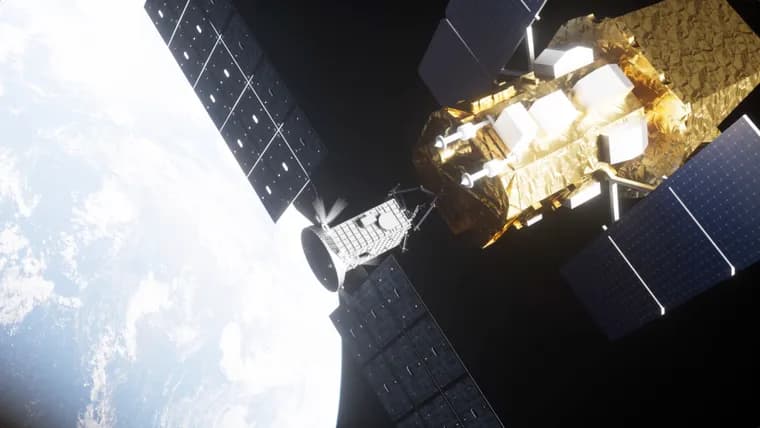
A week before this report, the Link satellite built and flown by Katalyst Space Technologies suddenly began tumbling on multiple axes more than 200 miles above Earth. Link had launched on July 3 on a mission to chase down, grab, and boost the orbit of NASA's Swift gamma-ray observatory, a $500 million spacecraft that would otherwise decay and burn up in the atmosphere. The mission had gone mostly according to plan until last Saturday, when the tumble began during a pass with no ground communication. Two of Link's three reaction wheels, which are used for pointing, stopped working, and engineers piecing together sporadic radio contact found a problem with some of the spacecraft's cold gas thrusters used for finer attitude control. The uncontrolled spin left Link unable to hold a reliable communications link with the ground, which in turn complicated efforts to fix it. Katalyst CEO Ghonhee Lee told Ars Technica in an interview on Friday afternoon that the spacecraft had been in a very stable configuration immediately before the incident. The company's ground team, working out of a control center near Denver, has been trying to stabilize Link since the tumble began. Not everything on board failed: Link's power supply, its three xenon-fueled electric thrusters, and the rendezvous and robotics hardware meant to capture Swift all remained healthy. Engineers' first fix is to use the satellite's plasma engines, normally built for raising its orbit, to gradually slow the spin; because the engines can vector their thrust through a two-axis gimbal, they can also serve for attitude control. Time is limited: Katalyst has only a few months before Swift drops too low in orbit for the rescue to still be possible. NASA awarded Katalyst a $30 million contract for the mission and gave the company less than a year to build it, marking the first time NASA has contracted a commercial company to service one of its satellites in orbit.
Key facts
- Katalyst's Link satellite, launched July 3 to rescue NASA's $500 million Swift observatory, began tumbling on multiple axes last Saturday.
- Two of Link's three reaction wheels failed, and engineers also found a problem with some of its cold gas thrusters.
- Link's power supply, three xenon electric thrusters, and rendezvous and robotics hardware remained healthy.
- Engineers are using Link's plasma engines, which can gimbal on two axes, to slow the spin as a first fix.
- NASA gave Katalyst a $30 million contract and less than a year to build the mission, the agency's first commercial satellite-servicing contract.
Why it matters
This is the first time NASA has contracted a commercial company to service one of its own satellites in orbit, using Katalyst's Link spacecraft to rendezvous with, grab, and boost the aging Swift gamma-ray observatory rather than let it burn up. The in-flight malfunction, a multi-axis tumble that knocked out two of three reaction wheels and part of the cold gas thruster system, is a live test of whether a young commercial servicing industry can recover from a real anomaly on a mission NASA is watching closely.
Who it affects
NASA loses a $500 million science asset, Swift, if the rescue fails before the observatory's orbit decays too far. Katalyst Space Technologies, the startup that built, owns, and operates Link, has its commercial reputation and its $30 million NASA contract riding on recovering the spacecraft in time. The company's ground team, working from a control center near Denver, is the one running the recovery in real time.
How to use it
There is no product or service here for a general reader to use; this is a live NASA-contracted engineering operation. The relevant detail for anyone tracking commercial space servicing is timing: Katalyst has only a few months left before Swift's orbit decays too far for the rescue to be completed, so the plasma-engine spin recovery has to succeed within that window.
How solid is it
The account comes from Ars Technica's own interview with Katalyst CEO Ghonhee Lee, conducted on Friday afternoon while the company's ground team was actively working the problem, plus the outlet's own reporting on the contract and mission timeline. It is a direct, on-the-record source close to the anomaly, though it reflects the company's own characterization of a recovery that was still in progress at the time of the interview.
Risks and caveats
The source does not say why the reaction wheels or cold gas thrusters failed, nor does it give a timeline for when the plasma-engine spin recovery is expected to succeed. It also does not describe any NASA statement on the recovery effort itself, only the contract terms, and gives no detail on what the rendezvous and robotics hardware will do once, or if, Link reaches Swift.
“We were, immediately prior, in a very stable configuration.”
— Ghonhee Lee, CEO of Katalyst Space Technologies