Meta ports Android's Cuttlefish virtual devices to Apple silicon Macs
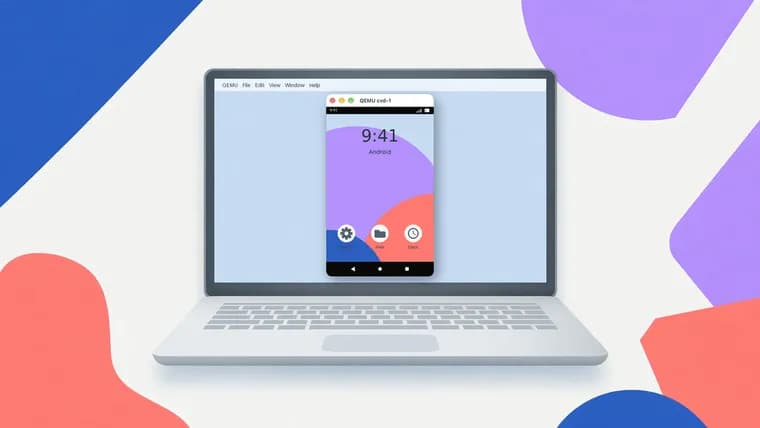
Meta's Reality Labs, which builds products such as AI glasses, has ported Cuttlefish to run natively on macOS on Apple silicon. Cuttlefish is the Android Open Source Project's (AOSP's) virtual-device framework for testing Android software against virtual hardware. It boots the same system images as real hardware and runs a realistic software stack, so it tracks a physical device's behavior more closely than a lightweight emulator like Goldfish. Meta says lower fidelity can hide bugs until late in development and erodes trust in emulation, which pushes teams back onto scarce physical hardware.
The problem was that Cuttlefish is only supported on Linux, while Meta's application and library developers work on Macs with Apple silicon. Meta therefore had to support Goldfish and Cuttlefish side by side. It says this drained computing resources, confused developers, slowed the emulator team and split infrastructure and engineering capacity. Developers had to pick a target based on how they worked: Goldfish ran everywhere but had less fidelity, while Cuttlefish needed Linux. AOSP mirrors the same split: Goldfish for application developers, Cuttlefish for platform developers. Meta wanted to consolidate on a single Cuttlefish-based platform.
Cuttlefish is the orchestration layer; a virtual machine monitor (VMM) actually runs the guest OS. On Linux, Cuttlefish normally uses crosvm, and it once supported QEMU as an alternative VMM, but that integration had become inactive. Meta revived QEMU support to get native Apple silicon support. Many Cuttlefish virtual devices use vhost-user backends, which are separate processes that provide virtio devices to QEMU over a socket. Meta says large parts of that design assumed Linux, and three of those assumptions broke on macOS: the vhost-user machinery was gated to Linux, Apple's hypervisor imposed resource limits QEMU did not expect, and native display, build and signing paths did not exist.
On vhost-user, the frontends, libvhost-user and contrib backends such as vhost-user-blk were all gated to Linux. Meta relaxed those build restrictions so they build on macOS as well as Linux. That lets Cuttlefish's device backends hand off to QEMU on a Mac the same way they do on Linux. Without it, Meta says, the higher-fidelity device model is not available outside Linux.
On Apple silicon, QEMU accelerates through HVF (Hypervisor.framework) instead of KVM. Its HVF backend did not track enough memory regions for larger Cuttlefish configurations, so Meta increased the tracking-slot count so those configurations run correctly.
For local development, engineers need an interactive display. To bypass the WebRTC interface, Meta moved to QEMU's native Cocoa display. The changes include BGRA pixel format support (to remove visual artifacts on Apple silicon), mouse-click-as-touch (pointer actions become touch input for touchscreen devices), and custom geometry options (a -g flag added to graphic_console_init). Meta also enabled the unstable Rutabaga structs needed to match the Rust-side graphics ABI in gfxstream/rutabaga configurations.
The build and packaging work covered initial Darwin build support, building QEMU for arm64 on macOS and toolchain fixes. The macOS builds also needed the JIT entitlement, plus support for code signing and notarization. On the Cuttlefish side, Meta added macOS host support so the orchestration builds and runs on a Mac instead of assuming a Linux host.
Meta lists the benefits of the unified platform: it cut maintenance requirements, reduced infrastructure needs, eliminated redundant tooling, enhanced fidelity, and ensured developers run the same Cuttlefish virtual devices used across CI. A single platform also made it easier to support Bluetooth pairing and connectivity, Wi-Fi, cellular, 3D graphics, over-the-air update testing, Fastboot, and snapshotting to save and restore device state in CI and development. The same virtual device is shared with external developers building for Meta's ecosystem, so third-party teams test against the same Cuttlefish-based platform Meta uses to develop and validate the OS. Meta adds that as AI agents play a growing role in Android development, virtual devices let engineers and automated agents work concurrently in isolated environments, with instant state resets and repeated test runs.
The work is released in two parts: qemu-wearables, a Meta-maintained fork of QEMU carrying its commits, and cuttlefish-wearables, a set of patch files with instructions for patching Android/AOSP. The repositories include build and patch-application instructions. Meta says it is exploring ways to contribute the changes upstream to QEMU and AOSP; for now developers can use the fork and patch set. The post thanks Stefano Garzarella for the vsock-user implementation that directly enabled the macOS integration, Olya Arkhangelskaia and Tom Care at Meta for foundational work bringing Cuttlefish to macOS, and Jeffrey Effendy for improvements to the native Mac developer experience and productization work.
Key facts
- Cuttlefish, AOSP's virtual-device framework, was Linux-only; Meta's Reality Labs now runs it natively on macOS on Apple silicon.
- The port revives Cuttlefish's dormant QEMU support, relaxes Linux-only vhost-user build gates, raises QEMU's HVF memory-tracking slot count and adds a native Cocoa display.
- macOS builds also needed the JIT entitlement, code signing and notarization support.
- Meta says one platform cut maintenance and infrastructure needs and removed the Goldfish/Cuttlefish split, but gives no measurements.
- The code ships as qemu-wearables (a QEMU fork) and cuttlefish-wearables (AOSP patch files); upstreaming to QEMU and AOSP is only being explored.
Why it matters
Android virtual devices have been split between Goldfish, which runs anywhere but is less faithful, and Cuttlefish, which boots the same system images as real hardware but needed Linux. Meta's port lets Mac-based developers use the higher-fidelity device without a Linux host. Meta argues that better fidelity surfaces bugs earlier and reduces dependence on scarce physical hardware. It also notes that AOSP itself draws the same line, with Goldfish for app developers and Cuttlefish for platform developers.
Who it affects
Android app, library and platform developers who work on Apple silicon Macs, especially teams testing non-phone Android devices such as AI glasses. Meta's own Reality Labs engineers use it, and the post says external developers building for Meta's ecosystem get the same virtual device. Anyone who works on QEMU or AOSP may also care about the patches.
How to use it
Meta distributes the work in two parts. qemu-wearables is a Meta-maintained QEMU fork carrying its commits. cuttlefish-wearables is a set of patch files with instructions for patching Android/AOSP. The repositories include build and patch-application instructions. Meta says developers can use the fork and patch set while it explores upstreaming. The post's text gives no repository URLs or licence terms.
How solid is it
This is a first-party engineering post by the team that did the work, so the technical details of the changes are specific and come straight from the source. The claimed benefits (reduced maintenance, lower infrastructure needs, eliminated redundant tooling, enhanced fidelity) are stated without any benchmark or quantified saving. The post gives no performance comparison of Cuttlefish on macOS against Linux or against Goldfish.
Risks and caveats
The changes live in a Meta-maintained fork and a patch set, not in upstream QEMU or AOSP. Meta says it is only exploring upstreaming and gives no timescale. The post does not name specific Mac models, macOS versions or Android versions. It does not say whether Goldfish is being retired at Meta. Its remarks on AI agents are general: it names no agent product or concrete workflow.