Meta's Muse AI assistant is being used to mass-unfollow Instagram accounts
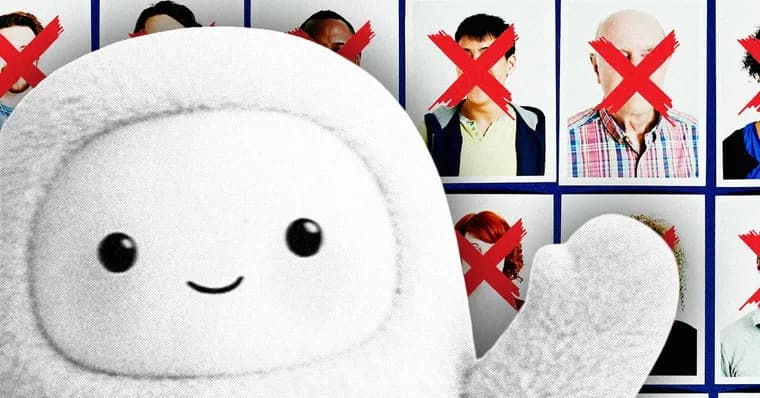
WIRED reports on a small social media trend: people are using Muse, Meta's AI assistant, to find the Instagram accounts that don't follow them back and then drop those accounts.
The central example is Khalil Roberts, a 31-year-old New Yorker who had over 7,600 followers. He had heard horror stories of people getting kicked off Instagram for using third-party apps to purge follower counts, so when he saw an X post claiming Muse could mass-unfollow non-followers, he didn't believe it. He changed his mind after realising that by using Muse, his account wouldn't get flagged as spam. "I was like, I actually will be a little petty," he told WIRED.
After downloading Muse, Roberts entered this prompt: "Can you show me a list of people (non celebrity) that [don't] follow me back on instagram and can you unfollow them for me." Within minutes Muse identified 151 accounts. It attached an Excel sheet cataloguing each one by username, real name, classification and profile link, and asked whether he wanted to proceed. Some of the names were people he thought of as friends. "It was a little surprising, but also a reminder that we don't have a relationship anymore," he said.
After his November 7 cleanse, Roberts posted about it on X with instructions for his followers. Over the past several weeks, similar scenarios have played out across X, Instagram and Facebook, with users sharing tips on automating unfollows with Muse. X user @justdrmj posted about the trend the same week, and nearly every reply, WIRED says, shared a taste for trivial grudge-holding. His rule was simple: "Why be a fan?" One replier wrote "i agree. reciprocity is key"; another, "The way I just cleaned house." One X user posted: "Just unfollowed 1000+ people on IG." Tech worker Kimberly Munoz, who has 33,200 Instagram followers, said in an Instagram video that she wasn't about to be "anybody's fan" and used the feature to find "people that I know in real life that have unfollowed me."
WIRED notes there is no longer a unified consensus on follow etiquette. For some, following signals friendship or is a way to keep tabs on a crush. Others see it as a social obligation that runs both ways: you follow someone if they follow you, and vice versa.
Natalie Pennington, an associate professor who researches social connection at Colorado State University, wonders about the consequences of people gradually outsourcing small social decisions to technology. She says: "It is probably at least partially a question of not wanting to deal with emotionally uncomfortable things." She adds that this is "another example of information we don't really need that social media can give us": data that exists at the platform level or would take a lot of effort to find on your own, now available at the click of a button, though that doesn't mean you need to know it.
Meta's role is murky. In October, despite the seeming popularity of the feature, Meta removed an advertising campaign promoting Muse with the promise that users could "see who unfollowed you each week", as Business Insider reported. When WIRED asked why, Meta did not respond to a request for comment.
Not everyone is settling scores. Elizabeth Brooks, a self-proclaimed "sweeper" (a hobbyist who routinely enters sweepstakes and promotional contests), had followed various giveaway accounts over 10 years. She now prompts the assistant to bring her five profile links every few hours, no more than six times a day, so she can unfollow them manually one by one. "Your following list can finally work for you instead of the other way around," she wrote on Facebook.
Roberts, who joined Instagram in high school 15 years ago and calls it "my app of choice," says people are becoming more intentional about who they let into their online lives. But he doesn't plan to let Muse make any more decisions about his social life: "Unfollowing is where I draw the line."
Key facts
- Users on X, Instagram and Facebook have spent the past several weeks sharing tips on using Meta's Muse AI assistant to find and unfollow Instagram accounts that don't follow them back.
- Khalil Roberts, 31, who had over 7,600 followers, prompted Muse on November 7; within minutes it identified 151 accounts and delivered an Excel sheet with usernames, real names, classifications and profile links.
- Meta removed an October ad campaign promising users could "see who unfollowed you each week", per Business Insider, and did not respond to WIRED's request for comment.
- Not all use is petty: sweepstakes hobbyist Elizabeth Brooks has Muse bring her five profile links every few hours, no more than six times a day, to unfollow manually.
- Colorado State University's Natalie Pennington questions the effect of people outsourcing small social decisions to technology.
Why it matters
An AI assistant built into a major social platform is being used for a task that third-party apps were once associated with, and users are sharing it as a how-to. Roberts said he had heard of people getting kicked off Instagram for using outside apps to purge follower counts, and chose Muse because he came to believe his account wouldn't be flagged as spam. The trend also shows an assistant surfacing relationship data that would take a lot of effort to find by hand, which is the point Pennington makes about information we may not need.
Who it affects
Instagram users with large follower lists, such as Roberts (over 7,600 followers) and Munoz (33,200), who use Muse to see who doesn't follow back. It also reaches the people being unfollowed: some of Roberts's 151 accounts were people he thought of as friends. A second group uses it for housekeeping, like Brooks, who is clearing a decade of giveaway accounts from her feed.
How to use it
This is how the people in the story did it, not a recommendation from Meta. Roberts downloaded Muse and prompted it for a list of non-celebrity accounts that don't follow him back, asking it to unfollow them; Muse returned an Excel sheet and asked whether to proceed. Brooks takes a slower route: she asks Muse for five profile links every few hours, no more than six times a day, and unfollows each one herself. WIRED does not report any pricing for Muse.
How solid is it
The article rests on anecdotes: named users, X, Instagram and Facebook posts, and one academic comment. It gives no overall figures on how many people use Muse for unfollowing. The ad removal comes from Business Insider as cited by WIRED, and its details are not given. Roberts's 151 is the number of accounts Muse identified; the article does not state how many he actually unfollowed.
Risks and caveats
The reason Meta removed the ad is not stated, because Meta did not respond. The article does not say Meta announced or endorsed mass-unfollowing as a Muse feature, nor when Muse launched. No evidence is given that any account was flagged, restricted or banned for using Muse; the spam-flag point is Roberts's belief as relayed by WIRED. The article also does not say whether Muse performs the unfollows itself in every case: Roberts's prompt asked it to, while Brooks unfollows manually from links Muse provides. Pennington's wider worry is the gradual outsourcing of small social decisions to technology.
“Unfollowing is where I draw the line.”
— Khalil Roberts, to WIRED