Meta smart glasses fuel covert recording abuse in India
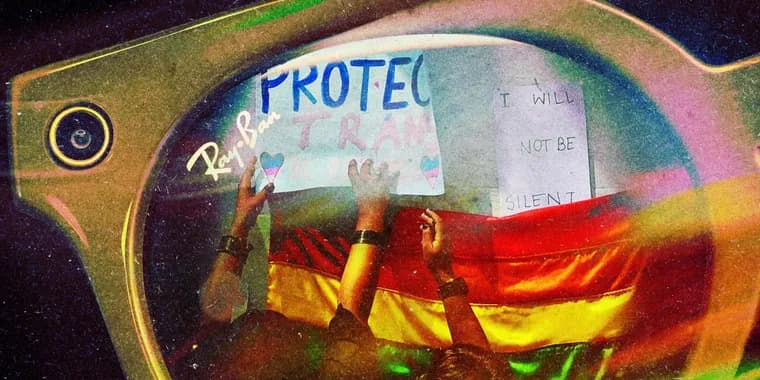
MIT Technology Review reports that Meta's smart glasses, styled to look like ordinary Wayfarers, have become a tool for covert recording and surveillance in India. This spring, at a Delhi protest against a bill that would have narrowed legal recognition for transgender people, a content creator known for rage-bait videos approached Shubnam, a 38-year-old transfeminine graphic designer and educator, and asked why they were wearing 'female clothing.' Shubnam told him to back off, unaware he was recording the exchange on Meta smart glasses. The footage was edited into a mocking reel that drew millions of views and spread from Instagram to X and YouTube, along with transphobic abuse, reaction videos and AI-generated memes; copies remain online. Shubnam told the outlet, 'All it took was one unconsented video to rewind two decades of progress that I made all on my own,' and said they have not worn a sari outside their neighborhood since. Separately, in June, when thousands of young demonstrators gathered to protest problems with India's education system, Delhi police used Meta smart glasses to record them. A petition filed before the Delhi High Court by former Jawaharlal Nehru University Students' Union president Aishe Ghosh alleged that police had filmed protesters continuously for weeks, including while they ate and rested, and had threatened to send footage of student demonstrators to their parents and colleges. In July, India's solicitor general dismissed the case in court as 'luxury litigation'; rather than investigate the students' complaints, police opened 10 criminal investigations against protesters for offenses including rioting, assault on public servants and damage to public property. Some protesters said they never saw the recording LED on the glasses police wore. Experts say the core problem is that these cameras don't look like cameras, so people often don't realize they are being filmed, and that Meta and other makers largely place the burden of noticing on bystanders. Meta says every pair has a capture LED that blinks during recording and cannot be turned off, and that the camera disables if the LED is covered or damaged, but creators have already shown ways to defeat it: Wired reported in March on a market for 'stealth mode' modifications that disable or remove the light. Smart glasses are among the fastest-growing device categories in India's wearables market, and Reliance Jio is expected to launch a sub-$105 rival later this year to Meta's latest model, which carries a $420 price tag in India; Jio did not respond to a request for comment on privacy. Experts including Oxford researcher Janusz Świerczyński, Meri Trustline counselor Sameer Parmar and Internet Freedom Foundation founder Apar Gupta say India's laws on voyeurism and image-sharing were built around more recognizable abuses and offer limited protection when someone is secretly filmed in public and the footage is used to humiliate them; platforms can also take up to 36 hours to act on complaints, long enough for a video to be downloaded and recirculated. The Financial Times has reported that some internal Meta glasses prototypes include AI features that continuously photograph and listen to a wearer's surroundings without triggering the external recording light; Meta says it intends to keep the LED for active photo and video capture but not for these AI perception features. Boston University law professor Woodrow Hartzog warns that companies routinely ship such tools faster than society can adapt, so a degree of normalization sets in before the harms are addressed. Shubnam says the deeper danger is not just that people get used to being recorded, but that they get used to seeing versions of themselves they never consented to.
Key facts
- Meta smart glasses disguised as Wayfarers were used to covertly film transgender activist Shubnam at a Delhi protest this spring; the edited reel drew millions of views and transphobic abuse.
- Delhi police used Meta smart glasses to surveil student protesters in June; a court petition alleged weeks of continuous filming and threats to send footage to parents and colleges.
- India's solicitor general dismissed the protesters' case as 'luxury litigation' in July, and police opened 10 criminal investigations against protesters instead.
- Reliance Jio plans a sub-$105 rival to Meta's glasses, whose latest model costs $420 in India, as smart glasses become one of the country's fastest-growing device categories.
- Experts say Meta's non-removable capture LED can already be defeated by 'stealth mode' modifications, and that India's weak consent norms and a 36-hour platform takedown window make a crackdown on covert recording unlikely.
Why it matters
Smart glasses that look like ordinary eyewear remove the one visual cue, an obvious camera, that has historically let people know they might be filmed. In India, that gap is already being exploited both by individual harassers, as in Shubnam's case, and by police monitoring protesters, showing how the same consumer hardware can enable both private abuse and state surveillance at once.
Who it affects
Transgender people and other marginalized groups who researcher Janusz Świerczyński says bear a disproportionate share of the harm; student protesters and activists like Aishe Ghosh who have been filmed and criminally investigated; ordinary bystanders who must now watch for a small LED to know they are being recorded; and Meta and Reliance Jio, whose glasses (at $420 and a planned sub-$105 price respectively) are driving adoption in one of the world's fastest-growing wearables markets.
How to use it
The only built-in safeguard on Meta's glasses is a capture LED that blinks during recording and cannot be manually switched off; Meta says covering or damaging it disables the camera. People targeted by covert or nonconsensual footage can seek help through safety partners such as Meri Trustline, and can file platform takedown complaints, though Apar Gupta notes platforms can take up to 36 hours to act, often enough time for a video to be downloaded and recirculated before removal.
How solid is it
The account comes from MIT Technology Review's own reporting, built on named, on-the-record sources including Shubnam, Meta, Meri Trustline's Sameer Parmar, Internet Freedom Foundation's Apar Gupta, Oxford researcher Janusz Świerczyński and Boston University's Woodrow Hartzog, plus a court petition filed by Aishe Ghosh; a small number of claims about internal Meta prototypes and a 'stealth mode' modification market are attributed to prior reporting by the Financial Times and Wired respectively.
Risks and caveats
The outcome of Aishe Ghosh's Delhi High Court petition and of the 10 criminal investigations against protesters are not reported. Meta's LED indicator can reportedly already be covered, damaged or removed through third-party modifications documented by Wired, and Meta has said newer AI features that continuously perceive a wearer's surroundings would not trigger the external light at all, which would make covert data collection even harder for bystanders to detect.
“All it took was one unconsented video to rewind two decades of progress that I made all on my own.”
— Shubnam, transfeminine graphic designer and educator